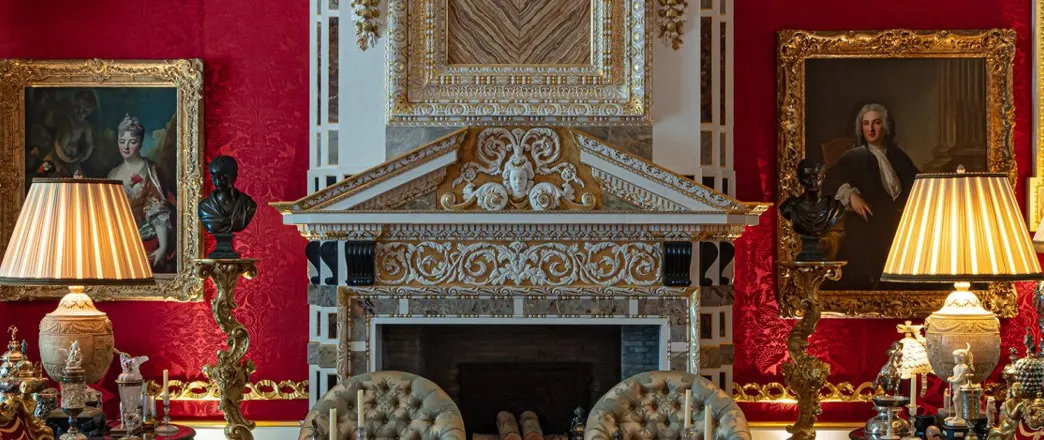
A private Paris interior becomes a collecting opportunity
Sotheby's will offer objects from the Paris residence of Sheikh Hamad bin Abdullah Al Thani in a series of November 2026 auctions. The principal evening sale is scheduled for 4 November, bringing together pieces from an interior developed over decades in collaboration with celebrated decorator Alberto Pinto. The property on Avenue Floquet is being presented through its furnishings and artworks rather than as a property transaction.
The collection is notable for the interplay of European decorative traditions, the presentation of grand reception rooms and an Art Deco sensibility. Prospective buyers can examine how individual pieces contributed to a coherent domestic setting, while recognising that the auction may disperse them into very different surroundings.
A mixture of periods and materials
The opening sale includes important objects in giltwood, marble, silver and silk, while later sessions extend into works of art, glass and porcelain. The diversity reflects a collector's approach that values exceptional craftsmanship across disciplines. A decorative object can be as intellectually complex as a painting when materials, makers and provenance are considered carefully.
A room designed under a renowned decorator's direction can give individual works compelling context. However, ownership of an object from the same interior does not automatically confer the value of the room as a whole. Buyers should evaluate its independent significance, condition and suitability for a new environment.
Multiple sessions require advance planning
The evening sale is followed by a Kunstkammer session on 5 November, an Art Deco sale, a day sale on 6 November and an online offering running from 2 to 9 November. Sotheby's has announced public exhibitions in Paris ahead of the auction dates. This schedule offers opportunities to study related pieces, but the exact lot inventory and viewing access may vary by sale.
For international collectors, the practical arrangements extend beyond registration. Fragile porcelain, silver, old-master paintings and large furniture demand different transport and conservation expertise. Owners should clarify packing, delivery, import regulations and insurance coverage before committing to an expensive object.
A rare glimpse of an assembled aesthetic
What distinguishes the November event is the chance to see how objects chosen across several decades fit into a private conception of luxury. The aesthetic includes highly formal reception spaces as well as finely detailed decorative material, illustrating the relationship between architecture, collecting and commissioned interiors.
The sale is still forthcoming, so no bidding outcome should be asserted. Collectors can use the preview to study makers and context, but final decisions should be supported by condition reports and independent valuation advice where needed. The history of the collection is valuable, while the practical responsibilities of acquiring and caring for each object remain individual. The pre-sale exhibition may be valuable even for visitors who do not intend to bid, offering a chance to understand the relationship between furniture, art and decorative detail in a notable Parisian interior.