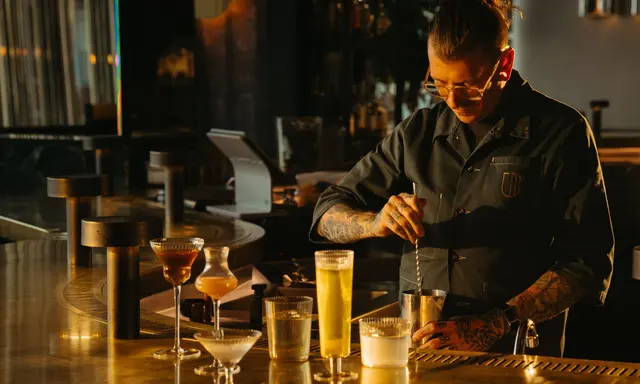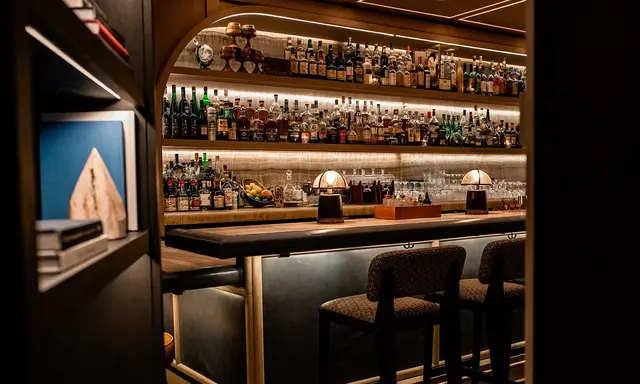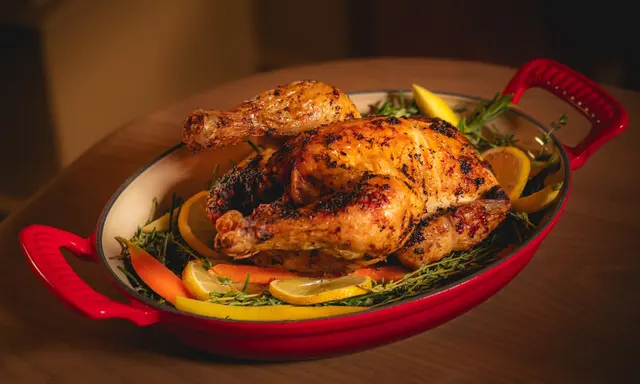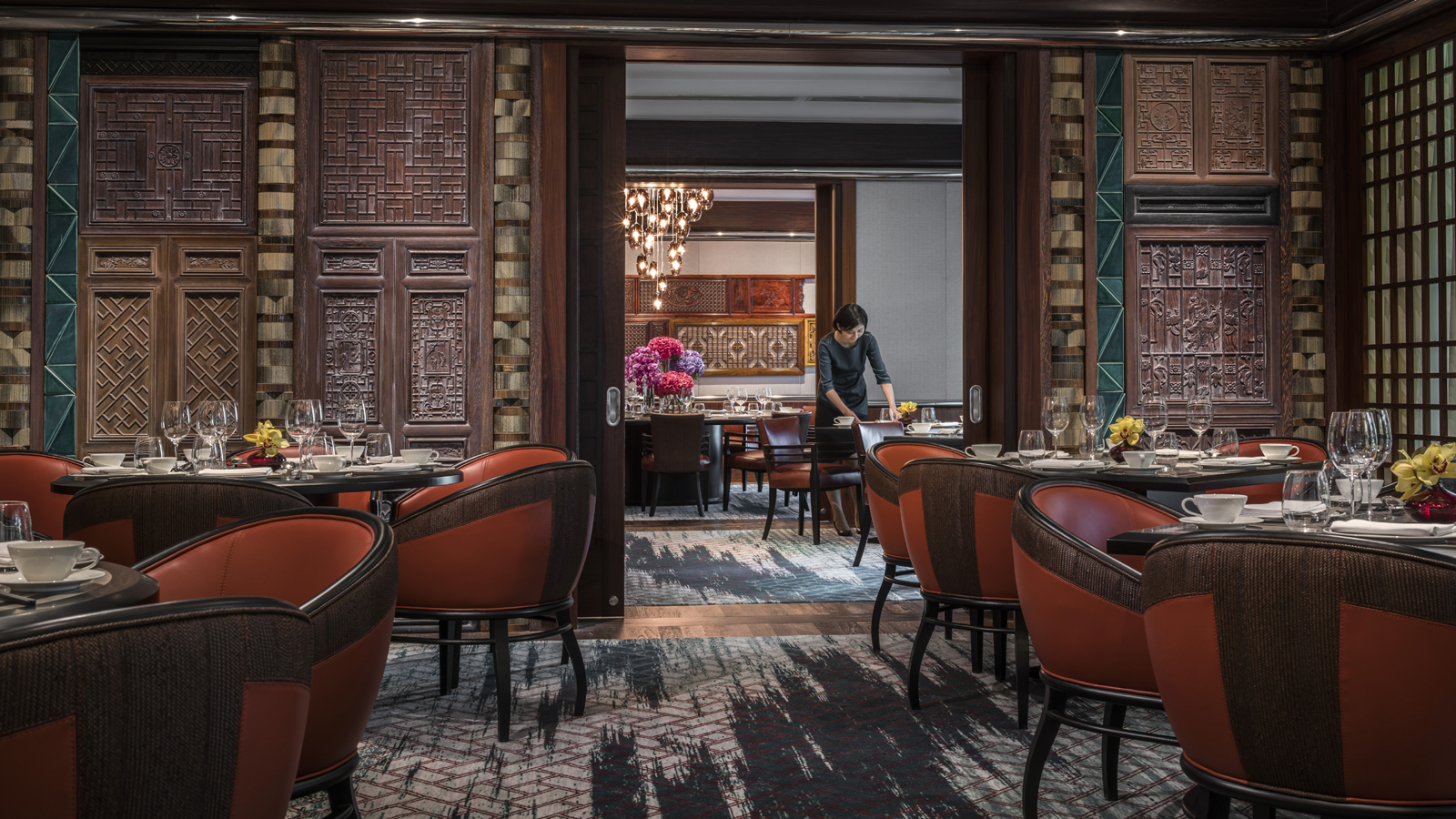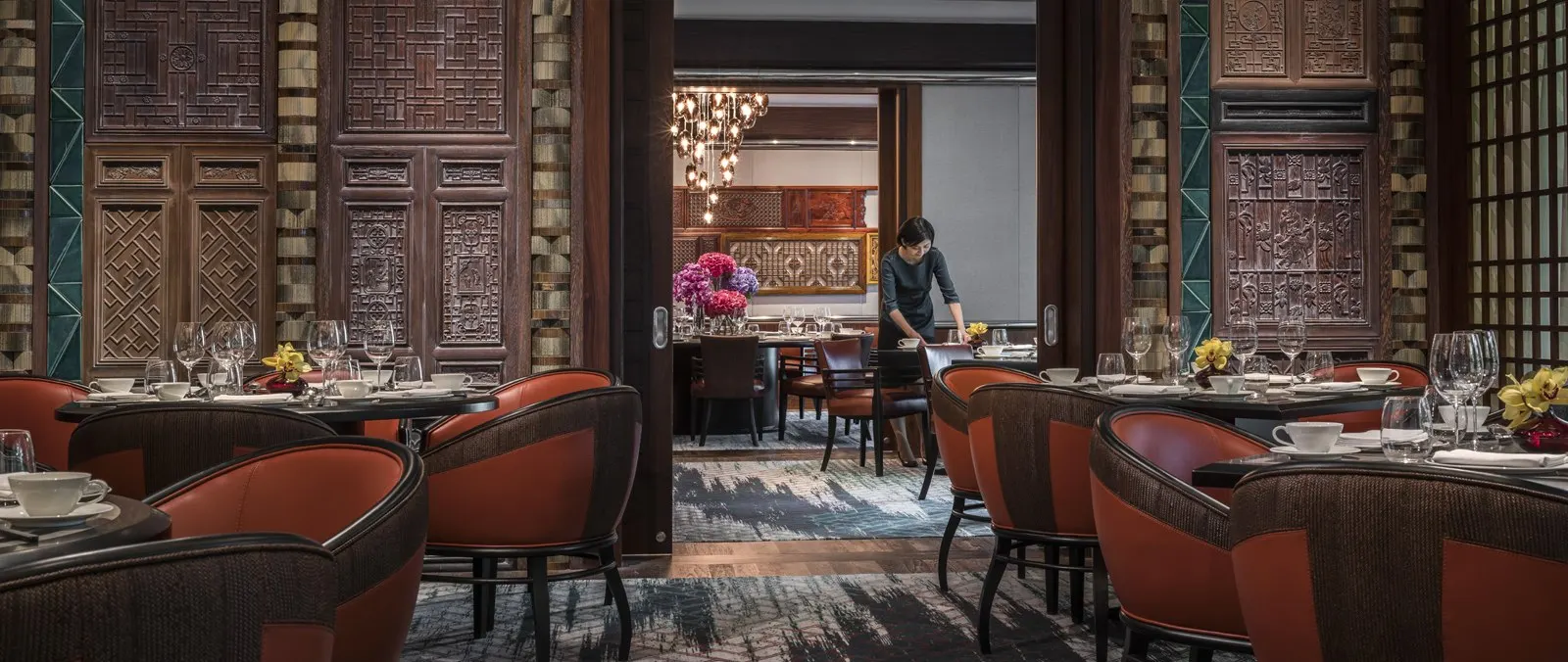
Four Seasons Hotel Singapore has announced a two-night dinner in which three chefs will explore the relationship between Cantonese cooking and contemporary Nordic pastry and cuisine. The event, titled Canton Meets the Nordics, is scheduled for 27 and 28 November 2026 at Jiang-Nan Chun. Chinese Executive Chef Alan Chan joins Singaporean chef Mathew Leong, who works in Norway, and Swedish Executive Pastry Chef Daniel Windelhed for an eight-course menu. The programme, announced on 27 October, combines regional techniques, ingredients from different food traditions and an unusually clear division of creative contributions. For luxury lifestyle readers, it offers a useful example of what a guest-chef collaboration can achieve when the result has a coherent culinary idea rather than simply a collection of well-known names.
Three chefs and a common approach
The hotel's announcement identifies Alan Chan as Chinese Executive Chef at Jiang-Nan Chun, a Michelin-selected Cantonese restaurant within Four Seasons Hotel Singapore. Mathew Leong is a Singaporean chef working in Norway, while Daniel Windelhed brings a Swedish pastry perspective. These backgrounds create an interesting starting point because the chefs share an interest in craft but may approach ingredients and presentation differently. The challenge of a collaborative dinner is not merely to showcase each person's strongest dish. It is to create a sequence that feels considered as a whole, with meaningful transitions between flavours, textures and culinary traditions. That requires communication between the kitchen teams as much as technical ability.
Mathew Leong's international experience
Mathew Leong represented Singapore at the 2025 Bocuse d'Or, a demanding international culinary competition. Four Seasons says he was the highest-ranked Asian chef in that edition. His work in Norway provides a direct connection to Nordic ingredients and methods, while his Singaporean background adds another dimension to the collaboration. That combination should not be reduced to an easy label such as fusion. Chefs working across cultures often develop their craft through detailed study of ingredients and the practical methods of different kitchens. A thoughtful event can show how ideas travel without treating one cuisine as an accessory to another. The result should be judged by the food and the conversation it inspires.
Alan Chan's Cantonese foundation
Jiang-Nan Chun is known for a style of Chinese dining that places considerable emphasis on technique and the balance of individual elements. In the announced dinner, Alan Chan contributes dishes that foreground Cantonese methods, including a crab preparation and a double-boiled soup. These choices matter because Cantonese cuisine can communicate complexity through a seemingly restrained presentation. Slow preparation, careful selection of ingredients and precise management of texture often shape the final experience. The dinner does not claim to represent all Cantonese cooking; it presents one chef's approach within a particular fine-dining setting. Readers interested in food culture should appreciate that regional cuisines are living traditions, not fixed lists of recipes.
The opening course sets a coastal tone
The menu begins with lobster accompanied by sea buckthorn emulsion, Løyrom and yuzu. Those ingredients bring together maritime associations, bright acidity and a Nordic reference through roe. An opening dish has to establish the direction of a meal without overwhelming the courses that follow. The contrast between rich seafood and tart or citrus notes can prepare the palate for more complex flavours later in the sequence. It would be inaccurate, however, to suggest exactly how the dish tastes without having experienced it. The hotel's published ingredients allow an informed preview of the chef's intentions, not an independent restaurant review. The distinction is important when reporting on an event that has not yet taken place.
A shared pork course with aged citrus
Charcoal-Smoked Iberico Pork with Aged Tangerine Peel is described as a joint creation by Leong and Chan. The pairing combines the depth associated with smoke and pork with the fragrance and complexity of aged citrus. It is a useful example of how a collaboration can be more than the juxtaposition of two unrelated dishes. Both chefs contribute to one composition, creating an opportunity for ideas about seasoning and preparation to intersect. The use of aged tangerine peel is rooted in a recognised Chinese ingredient tradition, while charcoal cooking is common to many cuisines. The dish's originality will depend on execution and balance, not on novelty for its own sake.
King crab and the value of precise technique
Alan Chan's Crispy Taraba King Crab with Hua Diao Wine in Golden Crab Sauce is another announced course. The combination brings attention to seafood texture and a richly flavoured sauce. Such a dish can appear deceptively straightforward when presented elegantly, yet seafood is unforgiving of poor temperature control or imprecise timing. Guests may be interested in the details of how the chef balances crispness, moisture and the sauce's intensity. The hotel describes the preparation as an expression of Cantonese craftsmanship. Editorial coverage can explain that intention without making unsupported claims about the exact sourcing of the crab or the degree of difficulty of each kitchen procedure.
Double-boiled soup as a different culinary rhythm
A double-boiled soup featuring soft-shell turtle skirt, Canadian geoduck, fish maw and conpoy appears in the published sequence. The method highlights the Cantonese tradition of building flavour slowly. It is also a reminder that international fine dining can involve ingredients that some guests may not know or wish to eat. Diners should request clear information about provenance, conservation, allergies and dietary alternatives before booking. The presence of an ingredient on a menu is not itself proof of any particular sustainability claim, and independent sourcing evidence would be needed to assess that question. A responsible luxury dining experience welcomes questions and gives guests enough information to make comfortable choices.
Trout and Nordic coastal ingredients
Leong's trout course includes Botan Ebi, leek, pickled ginger, Kristal caviar and blue mussel, with sourdough, Jersey butter and Lofoten seaweed. The composition references northern waters while also using ingredients familiar within Japanese and international kitchens. These details suggest a broad approach to modern Nordic cooking, one that is informed by geography but not confined to a narrow national boundary. Seaweed and shellfish can carry strong associations with coastal places, particularly for travellers who enjoy maritime settings. Yet the menu should not be mistaken for an ecological certification or proof that every ingredient is sourced from the location named. The chef's documented recipe is a starting point for appreciating craft.
A lobster orzo course bridges traditions
The announced Braised Orzo with Australian Lobster in Premium Golden Broth is associated with Alan Chan. Orzo is commonly understood as pasta shaped like grains of rice, while the golden broth and seafood preparation connect with the chef's Chinese cooking approach. A dish like this can create a bridge between traditions because it begins with familiar textures and moves into a different flavour structure. Its success depends on the relationship between the pasta, the lobster and the broth, rather than on the number of geographical references it contains. Travellers interested in contemporary food design may find such a combination especially revealing: innovation often emerges from technique and proportion, not simply from introducing an unfamiliar ingredient.
The savoury finale features duck
Leong's announced duck course combines a fermented plum mole glaze, beetroot, bitter leaves and a warm-spiced jus. The accompanying elements include a duck leg and foie gras dumpling, smoked-tea consommé and kaffir-lime oil, along with a milk bun finished with cherry-blossom glaze. That is an ambitious assortment of flavours and textures. It also introduces ingredients that some diners may prefer to avoid for ethical or dietary reasons. Guests should discuss restrictions before attending rather than assume substitutions are possible during a fixed collaborative menu. Editorial reporting can accurately describe the published composition while leaving the judgement of its balance to those who eventually experience it.
Two desserts express the seasons
Daniel Windelhed's pastry contributions are titled First Bloom and Last Harvest. The former combines green apple granita, elderflower ice cream, cucumber, apple and dill for a fresh, herbal character. The latter moves towards a richer combination of vanilla ice cream, hazelnut choux, blackcurrant gel and brown butter. The contrast between spring-like lightness and autumnal depth provides a clear narrative ending. It shows how dessert can complete the conceptual structure of a meal rather than function as a generic sweet finale. For those interested in pastry craftsmanship, the important details are the interplay of temperature, acidity and texture. The hotel's descriptions help explain the intention, though a genuine sensory evaluation requires tasting the finished dishes.
The discipline behind an eight-course dinner
An eight-course collaboration demands careful planning, especially when chefs accustomed to different teams are working together for only two nights. Service must coordinate preparation, plating, timing and the needs of individual guests. Each course should have enough room to register without turning the evening into a prolonged demonstration. The most effective hospitality makes this complexity feel effortless. A detailed menu also creates a responsibility to provide clear information about allergens, unusual ingredients and the pace of dining. Guests should ask about the expected duration and whether the menu can accommodate their needs. The event's limited format means last-minute changes may be difficult even for an experienced kitchen.
Booking and the announced price
Four Seasons lists the dinner at SGD 398++ per person, including one glass of Champagne on arrival, with reservations through Jiang-Nan Chun. The double-plus notation signals that additional charges may apply, so the final price and booking terms must be confirmed directly. The event is scheduled for 27 and 28 November 2026, and a press release does not establish that seats remain available on either evening. Guests who do not drink alcohol should feel comfortable asking about alternatives. The purpose of the dinner is the food, the chefs and the wider exchange of culinary ideas; consuming a particular beverage is not necessary to appreciate those elements.
Singapore as a place for culinary exchange
Singapore is an especially appropriate setting for a collaboration that crosses culinary traditions. Its dining culture reflects numerous communities, and visiting chefs can engage with an audience interested in both local and international food. But international cuisine should not eclipse the city's own food heritage. Travellers may enjoy a formal hotel dinner as one part of a broader exploration that includes markets, neighbourhood restaurants and independent kitchens. An itinerary that moves between different settings can reveal more about a destination than a succession of luxury reservations. The Four Seasons event belongs within that wider context: it is one curated occasion among many ways to encounter Singapore's remarkable food culture.
A connection to luxury travel by sea
Owners and guests of 12–24-metre luxury yachts may find this event relevant through their interests in fine dining, international travel and ingredients tied to coastal regions. The collaboration does not announce a yacht charter, marina service or boat-specific experience. Its value to a lifestyle magazine serving the yachting audience is the glimpse it offers into another highly organised world where craft, hospitality and attention to detail matter. A yacht itinerary can be enriched by shore-based culinary events, provided the practical aspects of travelling between a vessel and the city are planned separately. There is no need to invent a direct marine partnership to justify attention to an interesting restaurant programme.
What the announced event establishes
Four Seasons Hotel Singapore has confirmed Canton Meets the Nordics at Jiang-Nan Chun for 27 and 28 November 2026, featuring Alan Chan, Mathew Leong and Daniel Windelhed. The eight-course menu and SGD 398++ price are documented in the operator's October release. Its combination of Cantonese methods, Nordic references and seasonal pastry offers a coherent editorial subject before the event takes place, but it should not be presented as an independent review of a meal already served. For luxury lifestyle readers, the collaboration highlights how carefully structured encounters between chefs can make fine dining an opportunity to discover ideas, ingredients and techniques from more than one culinary tradition.
Sources and image credits: Four Seasons Hotel Singapore original 27 October 2026 press release, From Canton to the Nordics: Three Chefs Unite for a Distinctive Culinary Collaboration, with first-party subject-specific photographs in the official downloadable press gallery. Names, dates, menu and published pricing are attributed to Four Seasons; culinary context and travel analysis are independent Luxury Yacht Guide reporting.
Sources and image credits
Reporting based on Four Seasons Hotel Singapore official 27 October 2026 Canton Meets the Nordics collaborative dinner announcement.
Lead photograph: Singapore Brings Cantonese and Nordic Chefs Together at Jiang-Nan Chun — Four Seasons official original photo, 2026. Image: Four Seasons Hotel Singapore official 2026 press gallery, illustrative photograph from original Canton Meets the Nordics announcement; not a claim that it depicts the future dinner. Original official image source.