A different sort of Dalmatian arrival
Šibenik is a compelling stop for an owner or charter guest travelling aboard a 12-to-23.99-metre yacht because it offers an unusual combination of protected marina infrastructure and a city whose heritage reaches right down to the waterfront. Unlike resort towns where the marina is the principal attraction, Šibenik rewards the decision to leave the pontoon and spend time in its streets. The approach through the St Anthony Channel frames the city as a place shaped by water, fortifications and centuries of trade. But a beautiful arrival is not the same as a simple one. Visiting crews should treat the channel, local traffic, wind and berth procedure as professional navigation matters and use current charts and notices. For guests, the reward is a historic centre, an internationally recognised cathedral and a landscape of islands and river scenery that makes a short berth feel like the beginning of a longer story.
A marina designed for a wide range of yachts
The immediate practical choice for this article is D-Marin Mandalina, south of Šibenik's older waterfront. The operator currently advertises 452 berths accommodating vessels from 10 to 70 metres, with a maximum stated draft of 5.5 metres. Those published limits encompass the 12–24m luxury-yacht segment, although they do not promise a berth for every beam, draft or travel date. The company promotes round-the-clock support and an established shore-service environment. It is important to distinguish this marina from other mooring areas in the Šibenik region. A booking at Mandalina is a booking with a specific commercial operator, not permission to tie up at any attractive part of the town quay. A skipper should supply accurate length overall, beam, draft, power needs and arrival time before relying on the operator's general capacity figures. That exchange is the foundation of a calm visit.
Why the berth itself changes the experience
For a mid-size yacht, a secure berth is about more than room to turn. It shapes the crew's workload, the guest's ability to go ashore spontaneously and the choices available if weather makes an anchorage unattractive. Mandalina offers a purpose-built setting with marina services and a connection to Šibenik's heritage and wider cruising waters. Owners with families aboard may value access to organised shore facilities; couples may see the berth as a base for two unhurried evenings in the old town. Charter crews, meanwhile, need to sequence provisions, maintenance and departures around the guest programme. That is why a marina offering a defined service structure can feel luxurious even when the programme ashore is inexpensive. Confirm what is included in the booked tariff, which electrical service is suitable and whether technical assistance is available on the precise date. General website descriptions are useful introductions, not a substitute for a berth agreement.
The channel as part of the city's story
The waterway approaching Šibenik is closely bound to the city's historic defences. St Nicholas Fortress stands by the entrance to St Anthony Channel and forms part of a UNESCO-recognised Venetian defensive property. Official heritage bodies describe it as a strategic sea fortification constructed to control access to the port. From the perspective of someone arriving by yacht, that relationship is vivid: the same water route that now carries leisure craft has long been the protected gateway to the town. It deserves respect rather than improvisation. The passage's marks, traffic and local operational instructions must be taken from current hydrographic publications and harbour authorities. A photograph of a fortress is no indication of the best line for a vessel with a particular draft or height. Treat the landmark as a reason to learn about the destination, while keeping the actual pilotage in qualified hands.
A cathedral that is more than a sightseeing stop
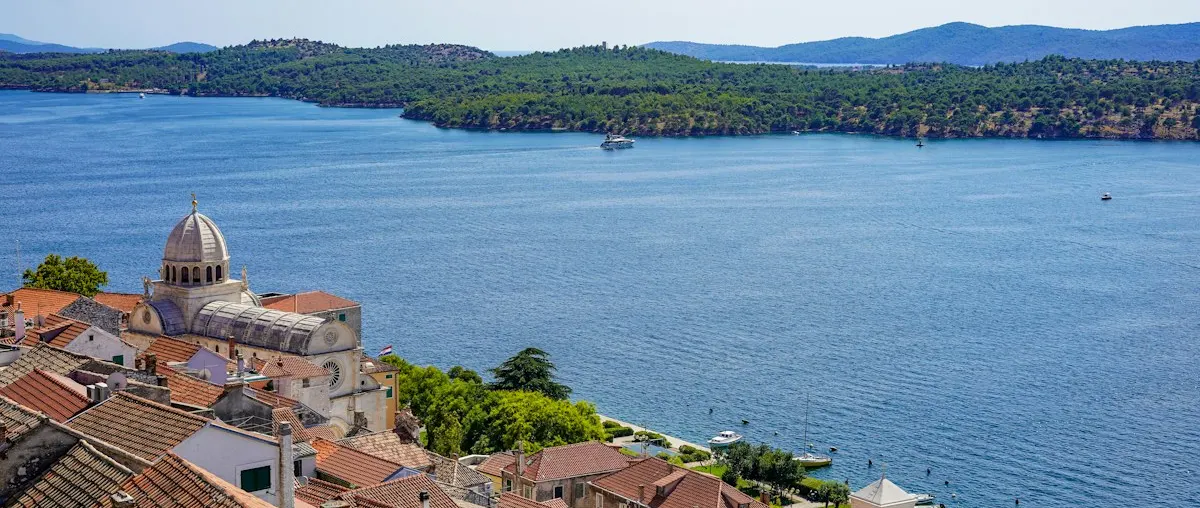
The Cathedral of St James is the other essential landmark. UNESCO recognises it for its architectural importance, including its distinctive transition from Gothic to Renaissance building methods and design. The official tourist authorities also point to its remarkable sculptural details and the wider stone setting of the old town. A brief visit can be satisfying, but the cathedral is most revealing when it becomes the centre of a slower walking route. Approach through the lanes and squares, notice how the scale changes, and allow time for the surroundings as well as the building itself. If access or a formal visit is important, check the current visitor arrangements before leaving the yacht; opening times can change with services, maintenance and seasonal programmes. A successful yacht stop need not insist on seeing every monument. The cathedral alone offers an unusually strong cultural anchor for a few days afloat.
Climbing to see the water from the land
Šibenik's fortresses provide a second perspective on the harbour. The organisation responsible for St Michael's Fortress recommends using it as a starting point for understanding the city's development, then descending through the old streets toward the cathedral. That creates a particularly pleasing reversal for yacht travellers. The morning starts with the vessel seen from the water; later, from elevated ground, the harbour becomes part of a larger picture of roofs, hills and islands. St Michael's Fortress is also used for cultural events, but schedules and access should be checked with the operator rather than assumed. Comfortable shoes, water and a willingness to take the steps at a relaxed pace are more useful than an ambitious checklist. A guest who spends an hour looking from the fort may understand the city more clearly than someone racing between several attractions.
A shore programme built for two nights
The most satisfying stay can be divided into three modest stages. On arrival day, let the crew settle the yacht, complete marina formalities and confirm the next departure window; guests can then enjoy a short early-evening introduction to the waterfront. The following day should be kept free enough to visit the cathedral and one fortress without rushing. Make room for a long lunch and an unscheduled coffee in the old streets. A second evening brings the opportunity to return to whichever neighbourhood felt most appealing. On the final morning, a guest can remain aboard while the crew handles provisioning and preparations. This programme requires little logistical drama yet leaves space for genuine discovery. The difference between a memorable yacht destination and a routine berth is often not an expensive excursion but the decision to stay one night longer.
The wider Šibenik region
The marina also connects travellers with a remarkable broader region. Local tourism sources emphasise the coast, islands and the Krka River landscape, which are among the reasons Šibenik attracts both cultural and outdoor visitors. Excursions into the hinterland may be attractive on a longer itinerary, although they require appropriate ground transport, timing and advance checks of any protected-area rules. Not every island or river attraction should be treated as reachable directly by a particular 20-metre yacht, and a vessel's available draft or berth does not make every nearby waterway navigable. Instead, use the marina as a stable base from which to choose the right means of visiting each site. That approach is especially suitable for families, older guests or an itinerary in which an owner wants several distinct experiences without moving the yacht every day.
The question of 'luxury' in a working port
Luxury yacht travel is sometimes presented as a series of anonymous, polished facilities. Šibenik shows the value of a different balance. The yacht can have professional marina support, dependable shore services and a carefully planned berth while the day's most rewarding experiences are public squares, architecture, local hospitality and coastal scenery. The appeal comes from combining privacy afloat with an authentic destination ashore. It is also a reminder to crews to manage the boundary respectfully. Quiet behaviour near neighbours, responsible waste disposal and adherence to speed and harbour rules matter in a living city. A marina is part of the local economy and shoreline, not an isolated luxury enclosure. Guests who approach the town with curiosity rather than entitlement are likely to take more from it.
Berth questions for a 12–24m owner
Begin the booking with exact measurements: length overall, beam, draft, any tender position affecting the overall dimension, and electrical demand. Ask the operator whether the published berth availability applies to the specific date and whether the intended mooring provides an acceptable clearance and safe access for the yacht. Confirm assistance with lines, arrival timing, waste disposal, water, electricity and whether a fuel visit needs a separate arrangement. If technical work is planned, discuss that before the stay, not after the vessel is alongside. For the shore programme, check local transfers and realistic time needed to reach the old town. Prices should be obtained directly from the marina in the correct currency for the dates and berth size. A listed capacity of 452 is an overall marina figure, not a real-time inventory of suitable berths at every size.
Why heritage and navigation meet here
The two UNESCO-linked landmarks create a coherent narrative. The cathedral represents Šibenik's civic and artistic ambition, while St Nicholas Fortress represents the strategic importance of controlling access from the sea. A yacht visit connects them in a natural order: arrival through the coastal landscape, a secure berth, then a walk into the city. Yet that appealing storyline should not obscure the work of safe seamanship. A crew must follow present-day navigation rules irrespective of how the route once served Venetian defence. The article's descriptions of depth and berth capacity are operator information at the time checked, not pilotage instructions. Current charts, notices and marina confirmation have final authority. Clear distinctions between cultural travel writing and operational navigation are essential for a publication read by owners and professional crew alike.
The lasting attraction
Šibenik deserves time on a 12–24m luxury-yacht itinerary because the town and the marina serve different but complementary purposes. D-Marin Mandalina offers a published berth range that includes mid-size yachts and a professional support environment. The old centre offers exceptional architecture and a sense of history that cannot be reproduced aboard, however beautiful the yacht. St James Cathedral, St Nicholas Fortress and the elevated viewpoints add depth to a stay without requiring a crowded schedule. The most thoughtful visit is therefore simple: reserve a truly suitable berth, navigate responsibly, choose a few meaningful shore experiences and leave enough unscripted time to enjoy them. The reward is not just a safe place to sleep but a memorable connection to a living Adriatic city.