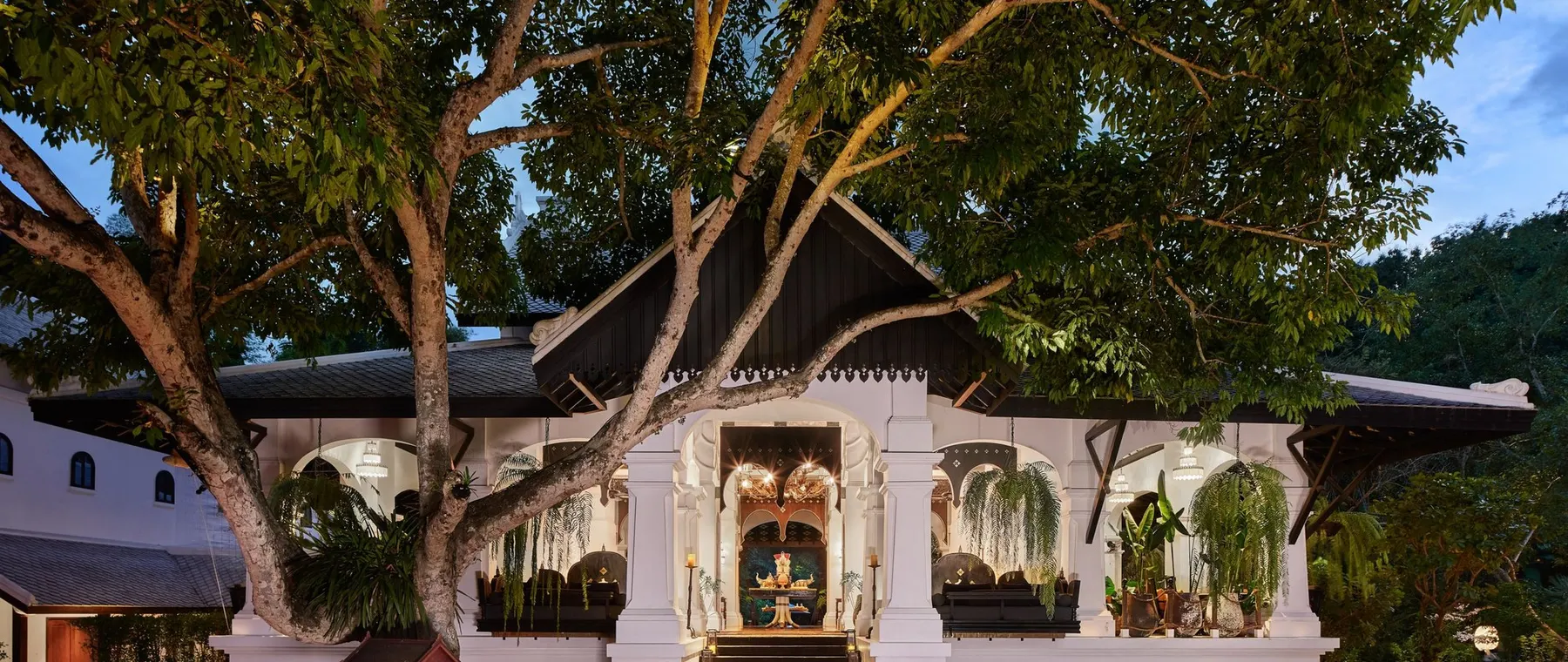
A jungle retreat beyond the town
Rosewood Luang Prabang occupies a wooded landscape near the former royal capital of Laos, offering a contrast to the larger city hotels of Southeast Asia. The property is shaped by a stream, tropical vegetation and a close relationship with its natural setting. It is particularly appealing to travellers who want cultural exploration by day and a quieter private environment in which to spend their evenings.
The surrounding town is celebrated for its temples, traditional architecture and living cultural practices. A successful stay should make space for those encounters rather than treating the destination as scenery surrounding a resort. Transfers should be planned carefully because accommodation in a forest setting is not the same as being able to step directly from a city hotel onto every central street.
Movement within the resort also deserves consideration. Villas and suites may have different distances to the principal restaurant and other shared spaces. Families and guests who need assistance should discuss the accommodation's position and available support, especially during rainy conditions. The degree of seclusion that makes a private villa desirable can create practical inconveniences if it is not suited to the travelling group.
Riverside accommodation with local character
The property offers suites, signature suites and villas that reflect the landscape in different ways. The Riverside Suite is promoted for its views of water and a calm interior influenced by Lao heritage. Anyone choosing a specific category should check the actual bedding and layout, since photographs of several accommodations may be presented together and can create misleading expectations.
A villa may suit a couple seeking extra privacy or a party planning an extended visit. However, more isolated accommodation does not automatically provide a better experience for guests who intend to leave early for excursions each day. A smaller suite closer to facilities may be the practical choice for a visit focused on exploring the town rather than spending whole afternoons at the resort.
Private accommodation works best when service arrangements are clearly understood. Dietary requirements, transfers, laundry and specialist experiences can be coordinated before arrival. A jungle retreat can feel wonderfully removed from city life, but weather and local logistics remain real. Clear planning enables visitors to enjoy the atmosphere without having to spend their own time resolving ordinary operational details.
The Great House and waterfall dining
The Great House serves as the resort's principal restaurant, bringing Lao culinary influences into a setting framed by greenery. Elephant Bridge Bar offers another place for a quieter drink or meeting. The dining programme reflects the property's wish to keep the destination central to the experience, rather than simply transplant an unrelated collection of international luxury dining concepts into the forest.
A private waterfall dinner is among the property's more distinctive experiences. It uses the natural landscape as part of a special occasion, but requires advance arrangements and depends on local conditions. A guest planning an important celebration should ask about weather contingencies, accessibility and dietary requirements, instead of assuming that a beautiful promotional photograph guarantees the same conditions on any evening.
Food experiences outside the main restaurant can be equally revealing. Rosewood promotes a Living Land Farm visit, where guests can learn about rice growing and the relationship between agriculture and regional cooking. This offers an encounter with everyday local work that is different from dining in an elegant resort. The aim should be understanding and participation, not treating a farm as a decorative activity.
Wellness and cultural sensitivity
The property's spa draws on traditional Lao wellness practices and the calm of the surrounding jungle. It provides a setting for recovery during a journey that may otherwise include several flights and active days. Guests with particular treatment preferences should check what is offered during their stay and whether access is included in their accommodation package.
Rosewood also organises a guided Tak Bat alms-giving experience. This is a living religious custom, not a performance created for visitors, and participation requires respect. Guests should follow local advice on appropriate clothing, distance and photography. Taking time to understand why a tradition matters is more rewarding than recording it as another quick stop on a sightseeing route.
Luang Prabang's broader cultural life deserves slow exploration. The city's temples, local craft and markets offer opportunities to see traditions beyond the resort grounds. A knowledgeable guide can help visitors interpret those encounters and avoid inadvertently disturbing daily activities. Building an itinerary around two or three meaningful experiences is preferable to rushing between many places without context.
A balanced stay in Laos
A relaxed itinerary might begin with an afternoon beside the stream followed by dinner at The Great House. Another day can focus on historical sites and the town's food culture, with a later afternoon left free for the spa. A separate day could include the farm experience or another carefully organised outing, allowing the pace of the trip to reflect the destination.
Travellers should confirm onward flights, transfers and any special requirements well before arrival. A visit combining Laos with other countries can involve different transport arrangements and entry rules, none of which should be assumed to be managed automatically through a hotel reservation. Families may also prefer to limit the amount of travel planned immediately after reaching the property.
Rosewood Luang Prabang provides a distinctive combination of privacy and place. Riverside suites, intimate dining and jungle wellness create a comfortable framework, while the historic city offers the substance of the journey. The most memorable visit allows guests to engage with the local environment and customs without filling every moment with another organised activity.