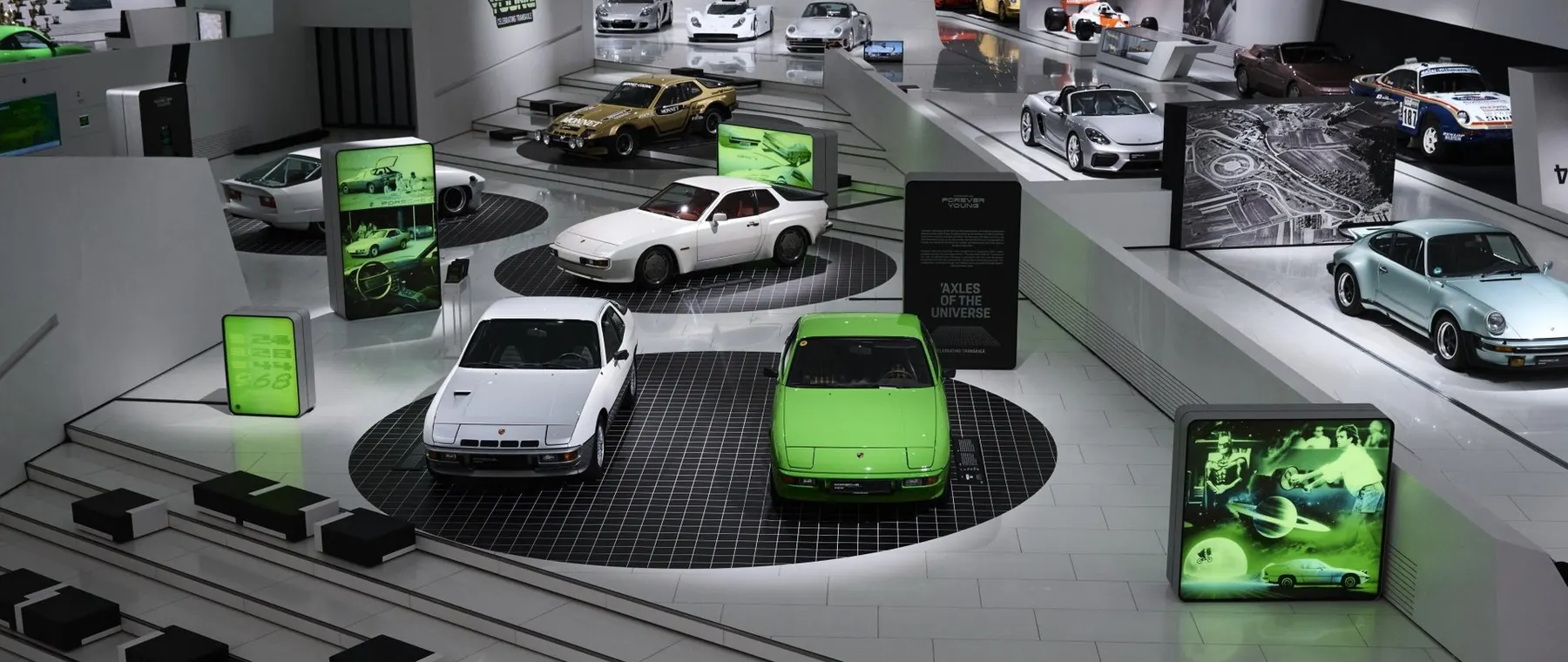
A different chapter in the Porsche story
Porsche's museum team is marking fifty years of transaxle sports cars through a programme titled Forever Young: Celebrating Transaxle. The commemorations revisit a period from 1976 to 1995 in which the 924, 928, 944 and 968 formed a major part of the company's range. Porsche reports sales of almost 400,000 vehicles across this family, demonstrating the commercial significance of a layout sometimes overshadowed by the rear-engined 911.
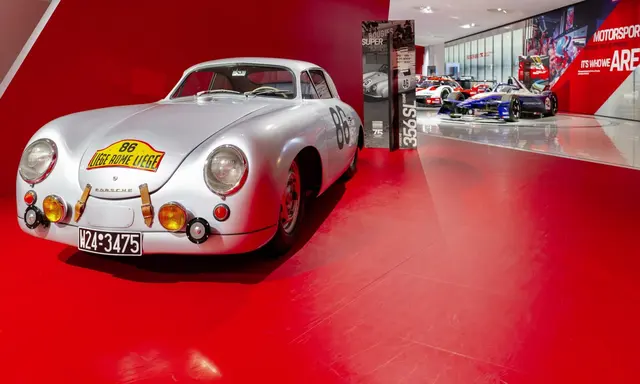
The museum programme uses smaller rotating presentations and appearances beyond Zuffenhausen rather than one unchanging exhibition. It also connects the cars with the culture of the 1980s, when new technology, distinctive styling and changing expectations influenced sports-car buyers. This is a heritage programme in 2026, not the launch of a new production transaxle Porsche.
What the transaxle layout achieved
In the arrangement used by these models, the engine is mounted at the front while the gearbox is placed at the rear axle. A driveshaft within a rigid torque tube connects the two. Distributing major mechanical components across the vehicle offers opportunities to manage weight balance, handling and traction, although real behaviour depends on the entire suspension and chassis design.
The layout helped Porsche offer a character distinct from its rear-engined models, combining long-distance comfort with sporting handling. It is easy to describe a transaxle car solely as an engineering experiment, but the cars were designed for customers who wanted practical transport as well as performance. The model family demonstrates how a manufacturer can explore several identities at once.
The 924 introduces a new customer segment
The 924 began as an EA 425 project associated with Volkswagen in the early 1970s before Porsche adopted the programme and introduced its own model in 1976. Built in Neckarsulm, it remained in production until 1988. Its proportions and accessible positioning opened Porsche ownership to customers who may not have considered the company's more established sports cars.
An entry point is not necessarily a lesser historic object. Surviving 924 examples help explain the commercial circumstances and design ambitions of their time. For collectors, original trim, accurate mechanical specification and documented maintenance can matter more than a casual comparison of horsepower with newer cars.
The grand-touring ambitions of the 928
The 928 made its debut at Geneva in 1977 with a water-cooled V8 engine and a more luxurious touring brief. It combined an aluminium chassis concept and Porsche's Weissach rear axle with a shape that remains distinctive decades later. The intention was to offer substantial performance and comfort over long distances, rather than duplicate the compact personality of the 924.
That design brief explains why the 928 should be evaluated as a grand tourer rather than as a conventional replacement for another model. Its cabin, power delivery and chassis reflect the needs of a different buyer. Its present-day appeal often rests on those particular characteristics instead of a claim that it was the company's single most important sports car.
944 and 968 bring the concept to maturity
The 944 developed the transaxle idea into a broader commercial success during the 1980s, with a more muscular shape and sporting performance. The 968 then continued the line from 1991 to 1995, using a 3.0-litre four-cylinder engine that Porsche rates at 240 PS and 305 Nm. Together they show how the same basic architecture evolved through changing demands for power, usability and design.
These models also became cultural markers of their decades. Pop-up headlights, broad rear windows, angular surfaces and driver-focused interiors distinguish them from many contemporary vehicles. Enthusiasts maintaining examples today are preserving a visual and technical chapter of motoring history that deserves consideration alongside better-known Porsche silhouettes.
Motorsport added credibility
The transaxle family participated in rallies and circuit racing, with examples including the 924 GTP at Le Mans and specialised Carrera GTS and GTR variants. Porsche links the programme to events such as the Monte Carlo and Safari rallies, alongside American racing achievements. Such participation demonstrated mechanical potential under conditions very different from public roads.
Racing history enriches the story, but a normal road car is not mechanically identical to a factory competition derivative. Buyers and visitors should distinguish individual specifications, homologation models and specially prepared race vehicles. The museum's interpretation can help audiences understand those relationships without collapsing them into one interchangeable category.
An anniversary told in changing displays
The programme has featured museum installations, themed weekends, talks and appearances intended to connect engineering with design and social history. Some of its earlier spring events have already taken place, so the anniversary should not be presented as entirely forthcoming. Further locations and current opening schedules should be confirmed against the Porsche Museum's event information.
The verified news is Porsche's 2026 fiftieth-anniversary programme and the historical focus on four transaxle model lines. For owners and new enthusiasts alike, it offers a reminder that the company's identity was shaped by more than one mechanical layout. The different cars remain interesting because they answered different questions about sporting mobility.