A birthday celebrating engineering behind the scenes
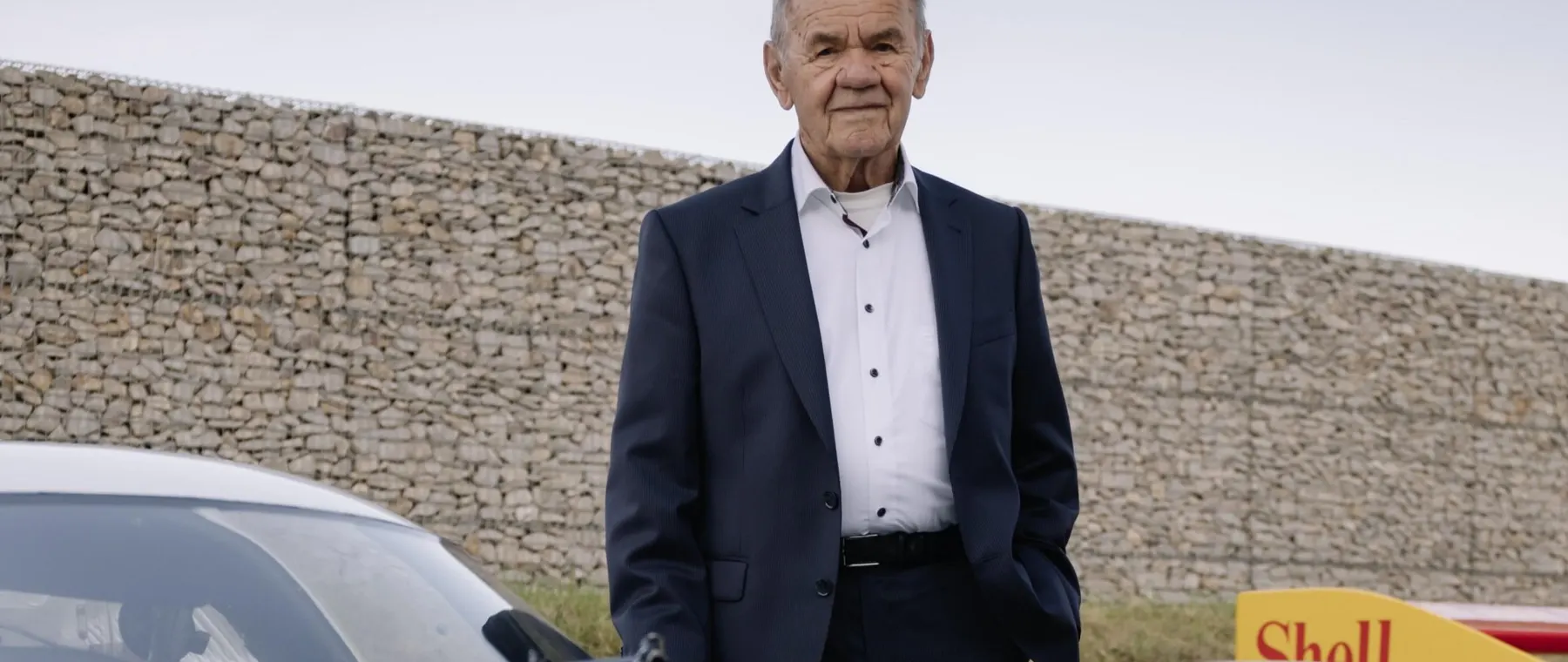
Porsche has marked the 95th birthday of former engineer Valentin Schäffer, whose work contributed to some of the marque's most significant racing engines. Born in Hungary on 8 October 1931, Schäffer joined the company in 1955 and developed a career based on practical knowledge as well as formal technical skill. The October 2026 tribute looks at achievements that are less immediately visible than the shape of a famous racing car.
Porsche's Head of Motorsport, Thomas Laudenbach, has highlighted Schäffer's ability to treat an engine as a system that must withstand extreme conditions. This is a fitting distinction for a career shaped by repeated cycles of building, testing and refining mechanical components. The story concerns the people behind performance rather than a newly announced car.
From engine mechanic to development leader
Schäffer began as an engine mechanic when Porsche's racing programme was still growing. In 1961 he completed technician and master craftsman qualifications, having already gained experience with different engine types and workshop procedures. His practical work included disassembling machinery, inspecting parts and evaluating performance in use.
This background mattered because a theoretical design does not always perform as expected once installed in a car and pushed to its limits. A mechanic who understands how parts wear and respond to heat can provide insights that are difficult to gain from drawings alone. Schäffer built a career from that connection between calculation and physical evidence.
Early work with four- and eight-cylinder engines
Porsche's historical account links Schäffer to the Type 547/2 four-cylinder engine used in the 550A RS Spyder and later to several eight-cylinder racing projects. He has described the Type 771 as a personal favourite, recalling his work to extract additional performance from its exhaust system. That kind of continuous experimentation was characteristic of an era before modern simulation became central to engine design.
Individual engine types demanded different compromises involving cooling, weight, power and reliability. What worked well for one form of racing could be unsuitable for another. The ability to recognise those distinctions and make practical adjustments helped prepare Schäffer for more extensive responsibilities.
Leading racing-engine development
In 1966 Schäffer became head of Porsche racing-engine development, working within a department overseen by Ferdinand Piëch and alongside specialists including Hans Mezger. His responsibilities extended across engines associated with the 906, 910 and 908, before including work connected with the 917's powerful twelve-cylinder units.
An engineering leader must coordinate ideas, testing and production as well as solve individual mechanical problems. The outcome depends on many people and disciplines, and it would be misleading to attribute every important Porsche engine exclusively to one designer. Schäffer's importance lies in the sustained contribution and judgement he brought to the programmes.
The Porsche 917 and records at speed
The 917's air-cooled flat-twelve engines became associated with Porsche's landmark endurance-racing achievements. Schäffer's work included development of engines in the 912 series, with changes intended to increase power without losing reliability. He was present for the company's first overall Le Mans victory in 1970, a historic result achieved by Hans Herrmann and Richard Attwood.
On 9 August 1975 a turbocharged Porsche 917/30 achieved a notable speed record at Talladega, with Mark Donohue averaging 355.78 km/h on the oval. Porsche's tribute identifies the engine variant as Type 912/52. The performance underscores the demands of sustained high speed, where an engine must deliver output under considerable thermal and mechanical stress.
A legacy beyond one racing season
Schäffer remained active in Porsche's engineering work for decades and retired from his main career in 1989. His projects reached from hill climbs to endurance races and the Can-Am series, exposing him to varied technical problems. Porsche's commemorative material emphasises how experience gained at races fed back into workshop development.
The verified news is the October 2026 birthday tribute and the engineering history it records. It is not an announcement of a new museum purchase or a previously unknown race win. For enthusiasts, the value lies in remembering how technical progress depended on individuals whose understanding of machinery was formed through patient and practical work.