A strong sports-car result amid lower overall volume
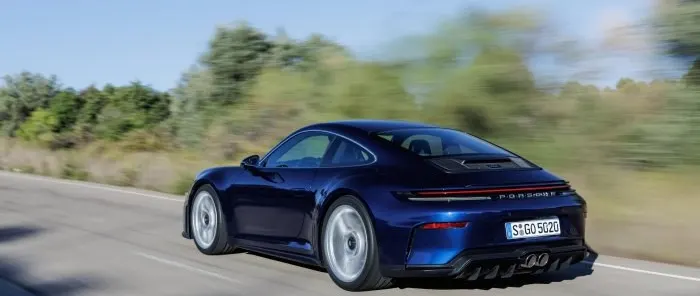
Porsche delivered 178,532 vehicles worldwide between January and September 2026, 16 per cent fewer than the 212,509 delivered in the same period last year. The company announced the nine-month figures on 9 October, reporting weaker overall markets and the effects of changes in model availability. Yet the 911 remains a particular bright spot, with deliveries increasing 12 per cent to 42,217 cars.
That contrast is meaningful for collectors and enthusiasts because Porsche is attempting to prioritise desirable variants and individualisation over the pursuit of maximum volume. It should not be assumed that fewer global deliveries will make every limited model more valuable, but it does indicate that demand differs substantially between product families.
Cayenne still the largest line by deliveries
The Cayenne remains Porsche’s strongest nameplate with 59,586 deliveries during the nine months, only two per cent below its comparative level. The Cayenne Electric began reaching customers in the summer and accounted for 7,002 of that total. Macan deliveries reached 51,025, down 21 per cent; the electric model contributed 23,029 while the combustion-engined version accounted for 27,996.
The transition is complicated by the end of Macan combustion-model production in summer 2026. Customers comparing the latest electrified variants should therefore distinguish changes in supply from changes in underlying interest. A year-on-year sales percentage cannot fully explain delivery times, individual equipment availability or the performance of a car on the road.
Regional trends are far from uniform
North America remained Porsche’s largest sales region with 56,088 vehicles delivered, down 13 per cent. China recorded 21,493 deliveries, a 33 per cent decline, while Germany, Europe excluding Germany and overseas markets also weakened against the prior year. The company describes the market in China as particularly demanding and reiterates a value-oriented approach.
For an international buyer, the regional figures can affect perceptions of demand but do not provide a substitute for checking allocation, local taxes and individual used-car conditions. An enthusiast shopping for a 911 GTS, Turbo or GT derivative should obtain current information from their local dealer rather than infer waiting times or prices directly from corporate totals.
What the figures suggest for the 911 buyer
The 718 Boxster and Cayman family accounted for 3,291 deliveries as supply ran down after production ended in October 2025. Against that backdrop, Porsche says demand for GTS, Turbo and GT models supports its emphasis on more exclusive derivatives and greater customisation. The company has also laid out a longer-term strategy built around its core sports-car identity.
This is an automotive market report rather than an appraisal of any specific collectible car. Buying decisions still depend on mechanical condition, configuration and the circumstances of individual ownership. The clearest takeaway is that Porsche’s total volume contracted in 2026 while its 911 line continued to attract stronger deliveries, highlighting the different roles of its models.