A different approach to dressing for the cold
A day spent outdoors in winter does not necessarily involve continual physical activity. Someone visiting a harbour may spend part of the morning walking and another part waiting for a ferry or enjoying the view from a sheltered terrace. A person visiting a ski resort may alternate between a comparatively warm interior and a cold streetscape. Clothing that is comfortable during one part of the day can become less appropriate as the pattern of activity changes.
On 12 November 2026, American heated clothing specialist ORORO announced four additions to its SureWarm collection. The products range from a fleece hoodie to a more substantial insulated jacket equipped with a removable heated hood. Their common feature is a system of rechargeable electrical heating elements incorporated into the garment. Several designs allow the wearer to control different groups of heating elements separately.
The collection is advertised with prices starting at $249. It is designed around outdoor comfort and everyday use rather than the demands of any particular professional marine activity. For Luxury Yacht Guide readers, the announcements offer another opportunity to examine how functional clothing can fit into a considered leisure wardrobe. Someone who travels between warmer and colder destinations may prefer to invest in a few adaptable garments instead of carrying numerous separate layers. The actual advantages depend on the conditions encountered, the duration of the activity and the characteristics of the garment selected.
A fleece hoodie for relatively informal settings
The first of the announced pieces is the SureWarm Unisex Six-Zone Fleece Heated Hoodie. It has a zip front and six areas of heating distributed across the front pockets, shoulders, back of the neck and middle of the back. The manufacturer describes a control arrangement that allows the pocket elements to be used separately from the core elements or together with them. The hoodie is available in black and in sizes from small to 3XL.
This configuration may be particularly interesting to someone who frequently moves between indoor and outdoor environments. A person taking a short walk around a coastal town might want some additional warmth while maintaining a comparatively informal appearance. Inside a restaurant or shop, the heating can be adjusted or turned off according to the product instructions.
The important distinction is between warmth produced by the garment's passive materials and the additional heat supplied electrically. The usefulness of the fleece when the battery is discharged remains relevant. A traveller should consider the garment's construction and the other clothes it will be worn with, rather than treating the heating system as the only means of maintaining comfort.
The release does not establish the exact expected runtime at each combination of heating settings. It also does not describe the fleece as a waterproof outer covering. The item should be evaluated as a fleece layer with additional heating functionality, not as a replacement for protective outerwear in all circumstances.
Two jacket designs for more variable activities
ORORO has also introduced a core-focused version of its Missoula jacket. The men's SureWarm Missoula Core uses six heating zones, including the pockets, upper arms, back of the neck and middle of the back. It introduces separate control options and what the company describes as dual-source power capability. It is available in black in sizes from small to 3XL.
The design is influenced by workwear but is intended to retain greater mobility than a more heavily insulated garment. The manufacturer's description should not be treated as confirmation of compliance with occupational protective clothing standards. A person needing clothing for a specific professional role should consult the applicable requirements.
The Maverick SureWarm is another six-zone design, available in men's and women's versions. Its softshell construction combines a fleece lining with a shell described as resistant to water and wind. The arms and core can be heated through separate settings. The women's range includes aubergine, black, fog and peanut, while the men's version is offered in black.
A softshell can have particular appeal when someone wants a garment that accommodates ordinary movement without the visual bulk of a substantial padded jacket. Its suitability for a particular environment depends on its actual resistance to wind and moisture and its compatibility with other layers. The description of a water-resistant shell does not establish waterproof performance in sustained rain or heavy sea spray. Readers planning winter sailing should retain appropriate marine clothing specified for the conditions rather than rely on this product alone.
A detachable heated hood and seven separate areas of warmth
The fourth addition is the Overland SureWarm jacket, a more substantial design employing a box-quilted construction and FELLEX G insulation. It incorporates seven heating zones and introduces ORORO's first detachable heated hood. The company describes the hood as providing warmth around the head and ears, alongside elements in the pockets, upper arms and back. Heating of the body and arms can be controlled separately.
The ability to remove a hood allows the wearer to adapt the garment according to the circumstances. In a relatively sheltered urban setting, the extra covering may not be necessary. During a period spent outdoors in cold wind, however, the protection offered by a suitable hood could contribute considerably to comfort.
The nylon shell is described as resistant to water and intended to offer some protection against wind, light rain and snow. The material claims do not establish a particular waterproof rating, and the announcement does not provide a detailed test report. The jacket is offered in black in men's and women's size ranges.
Fit deserves attention with a heated garment because its heating elements are located in specific parts of the clothing. A jacket should allow the wearer to move without placing unnecessary pressure on the battery or other components. The intended underlayers should also be considered when selecting a size. A person buying online can consult the actual garment measurements and the return arrangements rather than depend entirely on the nominal size of another jacket.
Battery power and the practical requirements of travel
The manufacturer identifies its rechargeable batteries as UL-certified. That description is relevant to the stated battery specification, but it should not be extended into an assertion that every possible use of the clothing is safe. Users should follow the instructions for charging, storing, connecting and maintaining the supplied equipment and should avoid operating damaged components.
The runtime of a heated garment depends on several factors, including the settings selected and the characteristics of the battery. Although ORORO describes the collection as intended to provide warmth throughout the day, the November announcement does not supply a comparable runtime figure for every style and setting. A purchaser planning an extended activity should check the manufacturer's model-specific information.
Air travel introduces additional practical considerations when carrying rechargeable lithium batteries. The applicable airline rules and restrictions should be established for the actual battery, which can depend on its energy rating and whether it is removable. A traveller should not assume that a rechargeable garment can be packed in precisely the same manner as an ordinary coat.
The care instructions are another point of comparison. A jacket that is regularly worn outdoors may need cleaning, and its electrical components have to be handled according to the manufacturer's directions. The potential cost and availability of a replacement battery may also be relevant to someone who intends to keep the garment for several seasons.
Selecting a useful addition to a winter wardrobe
ORORO's new products illustrate how heating can be incorporated into different silhouettes rather than sold only as a specially designed expedition garment. The fleece hoodie, workwear-inspired Missoula, Maverick softshell and quilted Overland jacket each address a different kind of clothing preference and anticipated activity. The company states that the expanded collection is available now through its own website, with prices beginning at $249.
The announcement does not establish the individual prices of every size and variant, nor does it provide independent comparisons with unheated jackets. It is sensible to evaluate the complete garment, including its fit, material construction and ordinary insulating properties, alongside its electrical functions.
For affluent readers, the appeal of functional apparel can lie in the freedom it offers to enjoy leisure activities during different seasons. A comfortable walk through a winter destination or a morning spent at a marina may be more rewarding when clothing has been chosen with the actual conditions in mind.
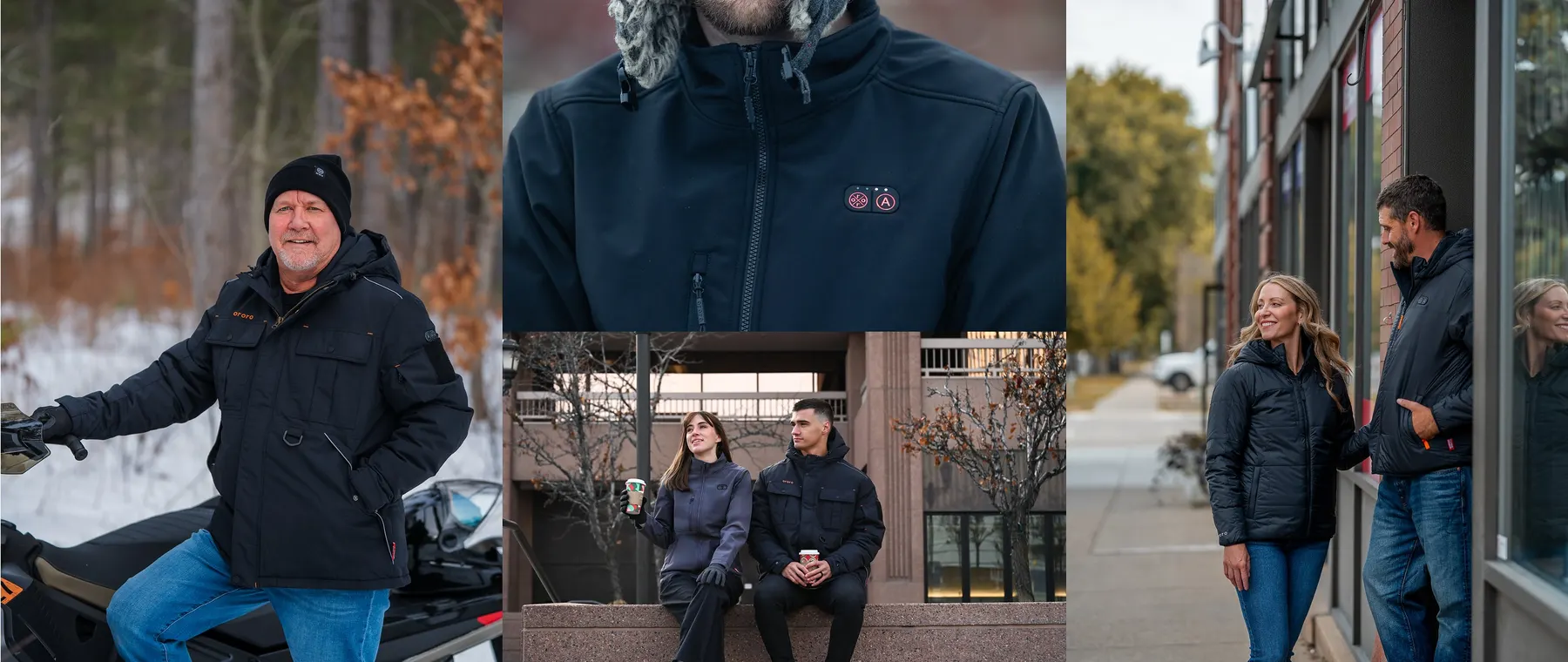
The official campaign collage illustrates the four styles in different settings. It is not a record of a performance test in severe weather. A carefully selected heated layer may be useful as one part of a larger clothing system, provided its limitations are understood. The objective is to enjoy the outdoor experience comfortably, rather than acquire additional technology for its own sake.
Sources and lead image
Source documentation: https://www.prnewswire.com/news-releases/ororo-adds-four-new-styles-to-its-heated-surewarm-collection-for-the-winter-season-302935803.html. Lead image: Official ORORO photographic collage illustrating the expanded SureWarm collection — ORORO Heated Apparel, official campaign photography distributed with its 12 November 2026 announcement.. Official issuer-supplied press photograph, reproduced for editorial coverage of the specific announcement and resized for web display.