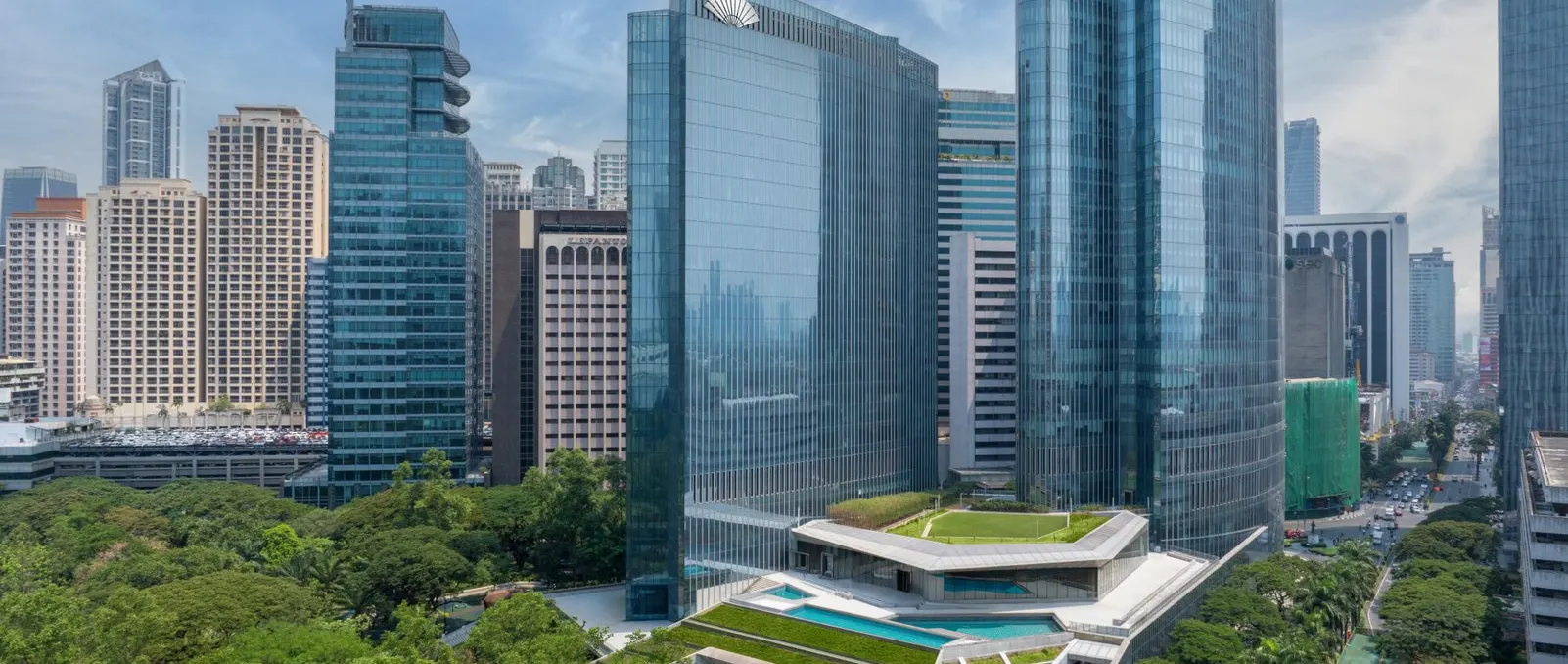
A hotel return with a precise date
Mandarin Oriental welcomed the first guests to its new Makati hotel on 27 November 2026, returning the brand to the Philippine capital after the earlier Mandarin Oriental Manila closed in 2014. The official opening statement calls the property Mandarin Oriental Makati, Manila and locates it above Ayala Triangle Gardens. It confirms 275 guest rooms and suites, five dining venues and a series of newly commissioned Filipino artworks.
For luxury travellers whose time in the Philippines includes coastal destinations or privately arranged yacht cruising, this is a land-side hotel development. The press release does not offer a marina, an included yacht charter or a direct tender landing. Its immediate relevance is a new high-end urban base in the capital, with the transport, dining and cultural choices of Makati rather than a waterfront resort being the principal attractions.
A ceremony precedes the first guests
The company says the hotel was formally inaugurated on 26 November, one day before the opening to its first guests. Its reported ribbon-cutting was attended by Philippine President Ferdinand R. Marcos Jr., First Lady Louise Araneta-Marcos and representatives of Mandarin Oriental, Ayala Corporation and Ayala Land. These are accounts of the official launch ceremony, not endorsements of the hotel's future commercial results.
The distinction between a ceremony and an operating hotel matters to travellers. A building may welcome invited guests and media on one day but begin taking ordinary bookings on another. In this case the brand explicitly gives 27 November as its opening date. Prospective guests should still confirm specific accommodation, restaurant and amenity availability when making plans, because not every feature opens simultaneously.
The old Mandarin Oriental remains part of the story
The new hotel recognises its historical predecessor, which welcomed travellers in Manila for almost four decades before the 2014 closure. Mandarin Oriental describes an emotional handover in which Frank Schuengel, the final guest to check out of the earlier property, returned as the ceremonial first guest of the new one. Duty Manager Rakko Olivares, who had attended to his departure twelve years earlier, participated in the welcome.
That account supplies a human connection across two addresses without suggesting the buildings themselves are identical. Returning visitors may recognise a hotel name and the style of service, but the new Makati property is a new development with different architecture and facilities. The brand's message is continuity of hospitality rather than a claim that the original hotel was physically restored.
Ayala Triangle Gardens creates an urban setting
The hotel occupies an address above Ayala Triangle Gardens in Makati, a central area of Manila associated with business, retail and cultural activity. Its official materials describe nearby galleries, boutiques, markets and restaurants, positioning the stay as a means of exploring the city as well as a place to hold meetings. The park outlook is an important part of its identity.
That location differs from a marine resort. A visitor arriving from a yacht or preparing to travel onward to an island needs to calculate road journeys and any relevant transfers separately. A garden view does not imply sea access, and Manila's coastal geography is not captured by one hotel address. The practical benefit is proximity to Makati's urban destinations rather than immediate access to a beach or harbour.
The room count and design authorship
Mandarin Oriental gives the new hotel 275 rooms and suites and credits Blink Design Group with the interiors. The design narrative emphasises natural light, warm materials, bespoke furniture and handcrafted details made by Filipino artisans. The company speaks of an urban sanctuary, a conventional description that should be understood as its own hospitality positioning rather than a measured comparison with all other city hotels.
Travellers choosing accommodation can assess the actual room plan, views, privacy and work facilities from the hotel's current booking descriptions. Promotional images may show a representative category rather than the exact room assigned. The design credits and broad architectural approach are verified in the opening announcement, but a guest-specific view or a particular furnishing should not be promised without confirming the chosen category.
A large entry-level room category
The release says Deluxe Rooms measure 50 square metres and describes them as the largest in their category in the city. The dimension is useful for understanding the accommodation proposition, although the comparative marketing claim depends on how a room category is defined. A 50-square-metre plan can accommodate different layouts, so square metres alone cannot tell an owner how well a room will function.
Guests travelling with luggage for an extended yacht or island holiday may particularly value usable storage, laundry arrangements and a comfortable place to reorganise belongings. Those services and dimensions should be checked for the exact room booked. The hotel's release describes its designed space, not a guarantee of luggage handling, custom transport or specialised storage for marine equipment.
The Presidential Suite offers a different scale
The company describes its Presidential Suite as a 280-square-metre two-bedroom accommodation with more than 200 degrees of panoramic views across Makati. That contrasts substantially with the Deluxe Room and signals an option for guests who need separate sleeping or gathering zones. It does not establish the suite's availability on any particular date or its final rate.
A larger suite might suit family travel or a combination of business and leisure, but travellers should review configuration, accessibility and occupancy rules before reserving. A panoramic view is not equivalent to a private outdoor terrace unless explicitly included in the room description. Making these distinctions prevents a compelling launch description from becoming an unsupported booking promise.
The Club Lounge and its service model
Mandarin Oriental states that guests in Club rooms and suites receive access to the Mandarin Oriental Club Lounge and personalised services, including 24-hour butler assistance. This is part of the tiered accommodation proposition and should not be assumed to apply automatically to every standard room. The exact scope of support may depend on room class and the hotel's current conditions.
For travellers moving between cities and islands, hotel assistance can simplify ordinary logistics, but the release does not say that the butler service includes marine-clearance paperwork or charter coordination. It is sensible to ask what practical arrangements the team can help with, and to maintain separate booking confirmations for boats, flights and transfers.
Filipino art is central to the interiors
The hotel's new commissioned art collection is presented as a major part of its Filipino identity. The opening release names Olivia d'Aboville, MM Yu, Jon and Hanna Pettyjohn, Stephanie Comilang and Ryan Villamael among the contributing artists. Their presence broadens the hotel's narrative beyond imported luxury design and helps frame it as a place connected to Manila's contemporary cultural life.
The brand's account names artists and describes a curated collection, but does not provide a complete exhibition catalogue in the opening statement. Visitors interested in provenance or acquisition should ask hotel staff for the relevant information rather than assume every displayed object is for sale. The collection offers a way to encounter Filipino perspectives while staying in the city, not a substitute for visiting independent galleries.
Five venues create a choice of dining styles
The press release presents five distinct dining and drinking destinations, making gastronomy one of the property's central attractions. These are Bì Luò, ILÓY, Layara, Alambik and The Lounge. Their formats differ, from Cantonese cooking and all-day dining to Philippine-inspired cocktails, a more concealed spirits bar and an informal lobby gathering place.
For guests with limited time in Makati, choosing between them requires more than seeing the names in a press article. A quiet lunch, private dinner and longer cocktail evening set different expectations. Reservations, age restrictions, current menus and dress arrangements should be checked with the hotel; the press statement does not make specific tables available automatically to every guest.
Bì Luò introduces Cantonese cooking
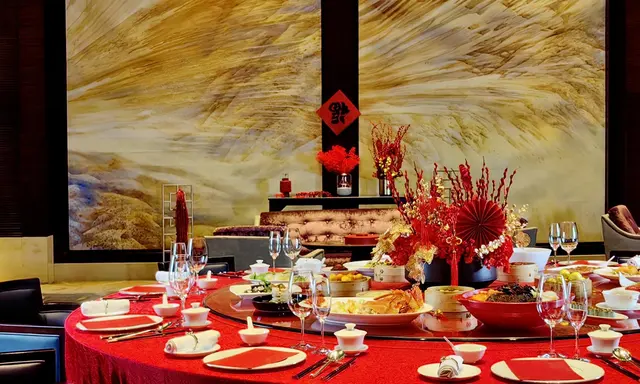
Bì Luò draws inspiration from the Peach Banquet in Chinese mythology and focuses on Cantonese techniques. The hotel names handcrafted dim sum, wok dishes and signature roasts, including Peking duck from a dedicated brick oven. It also describes intimate private dining rooms and warm interior finishes, suggesting an option for celebrations as well as ordinary restaurant visits.
These details establish the culinary direction, not the precise list of dishes served on any future date. Diners should confirm menus, allergy requirements and group options directly. A private dining room may be especially useful for families or professional gatherings, yet its availability and minimum-spend terms are not established by the announcement.
ILÓY takes an all-day approach
ILÓY is described as an all-day dining address combining local and international favourites with thoughtfully sourced ingredients. Its role is different from a specialised tasting venue: the concept is intended to offer familiar choices and new flavours in a bright, welcoming setting. The hotel frames it as a comfortable place for a range of guests rather than a restaurant limited to a single meal period.
All-day service should not be read as an assertion of twenty-four-hour dining. Current opening hours, breakfast entitlements and reservations need confirmation. For travellers coming from long journeys, the availability of a flexible meal option can be valuable, but it cannot substitute for checking service periods on the arrival date.
Layara draws on the archipelago
Layara, a cocktail venue within the hotel, uses the Philippines' many islands as inspiration. Its programme references the colourful sails of the vinta and the movements of the Pangalay dance, with ingredients and stories drawn from Luzon, Visayas and Mindanao. The company is careful to present this as a culturally informed bar concept, not as a boat tour through those island groups.
The maritime references may appeal to travellers interested in the country's coastal cultures. They should not be mistaken for promises about onboard hospitality or charters. A visit to the bar is an encounter with a beverage and design interpretation of heritage; a meaningful island journey requires separate planning, local guidance and respect for the communities visited.
Alambik and the smaller evening
Alambik is the hotel's more concealed cocktail and spirits venue. The brand says its interior includes reclaimed architectural features and vintage machuca tiles and its offering pays tribute to distillation, with rare whiskies, bespoke drinks and cigars. It is a different setting from the all-day public areas, although the opening release does not set out full operating rules or access restrictions.
Guests who favour intimate conversation may ask whether reservations are needed and what seating conditions apply. Availability of a rare whisky or a cigar cannot be assumed from the concept description. For visitors who do not consume alcohol, it is worth asking about alternatives instead of assuming a spirits-led venue offers a particular menu.
The Lounge supplies the informal option
The Lounge is identified as a lobby gathering space spanning morning coffee, afternoon tea and evening conversation. Its role is less formal than Bì Luò and less specialised than Layara or Alambik. For travellers moving through Makati, this kind of space can support a quiet pause between activities without requiring a full dining itinerary.
Lobby lounges vary in noise, seating and availability throughout the day. The hotel has not published a guarantee that every visitor can find a table at the moment of arrival. A group meeting or a guest with accessibility needs should make suitable arrangements rather than relying on the fact that the space is within a luxury hotel.
Wellness will expand after opening
The official announcement says the hotel has a 25-metre outdoor pool overlooking Ayala Triangle Gardens. It also states that the fitness centre with Technogym equipment and The Spa, which plans to offer Filipino healing traditions such as hilot alongside contemporary therapies, are scheduled to welcome guests from early 2027. That distinction is essential when describing what is available on the opening date.
A visitor booking in late November or December 2026 should not assume that the spa and fitness centre are already operating. The hotel gives an expected opening period, not confirmed appointments for those facilities. The pool's existence and outlook are reported in the official release, but usage conditions still belong to the property's current guest information.
Events and the return of a gathering place
The hotel describes the Grand Hall as a pillar-free event venue covering 740 square metres under an eight-metre ceiling, with capacity for up to 1,000 guests. It also names The Salon, The Study and The Studio as venues for different sizes of gathering. These figures convey potential scale, not a guarantee that every configuration can accommodate the published maximum.
Event planners should request the actual seating plan, fire and occupancy conditions and availability for their specific arrangements. The hotel presents its event spaces as part of the new urban destination, but it does not announce a yacht-club partnership or related marine hospitality arrangements. Those should not be inferred from the property's wider luxury positioning.
An opening offer, with conditions
To mark the opening, Mandarin Oriental describes a Legendary First Stay offer for stays until 30 March 2027. The stated package includes breakfast, airport transfers, a choice of curated experiences and a 100-US-dollar dining credit, with terms and availability restrictions. This is a published hotel offer, not a reservation made by this article, and its value depends on the exact room, travel dates and conditions.
For travellers considering an urban stay before or after time on the water, it is worth comparing the offer with the standard booking terms and verifying the transfer details. The reference to airport transport should not be interpreted as a transfer from a marina or a boat. A thoughtful itinerary keeps the land-based booking and any marine arrangements documented separately.
What guests can verify at the new hotel
The confirmed opening involves a newly developed Mandarin Oriental property with 275 rooms, a Filipino art programme, five hospitality venues and an urban Makati setting. The historic connection to the former Mandarin Oriental Manila, the 26 November ceremony and first guests on 27 November are all described in the official release. The company's original 2026 pre-opening press image can illustrate the project without being misrepresented as a photograph of the ceremony.
Potential visitors should verify current operating hours, room details and bookings with the property, especially as spa and gym openings extend into early 2027. In a wider luxury-yacht travel programme, Manila can be a city chapter, but this hotel is not a claim of harbour access. Its actual contribution is a newly opened accommodation and cultural address in the capital.
Original source and photography
Independent editorial reporting based on the 27 November 2026 official Mandarin Oriental Media Centre release https://press.mandarinoriental.com/manila-opening/?lang=eng. The accompanying prior-year official hotel image is sourced from the brand’s June 2026 opening-development press page. © Mandarin Oriental Hotel Group and original photographer. This historic image is not an image of the 26 November ribbon-cutting or a completed spa.