A maritime town for a slower Danish cruise
Kerteminde on the eastern coast of Funen offers visiting yacht owners an opportunity to combine the experience of a small Danish harbour town with two distinctive cultural institutions: the Johannes Larsen Museum and the Viking Museum at Ladby. The town sits beside the entrance to Kerteminde Fjord, with access to the waters of the Great Belt. Its appeal is different from that of a large resort marina because the maritime setting and the town's history are integral to the experience. A visiting yacht need not attempt to navigate the fjord or approach every attraction by water. For a family travelling in a vessel measuring between twelve and twenty-four metres, a confirmed berth at a suitable harbour can provide a convenient base for exploring the town and arranging a separate visit to the archaeological site. The important preliminary step is establishing whether the yacht's actual dimensions and the services it requires can be accommodated.
Assessing the harbour for the individual yacht
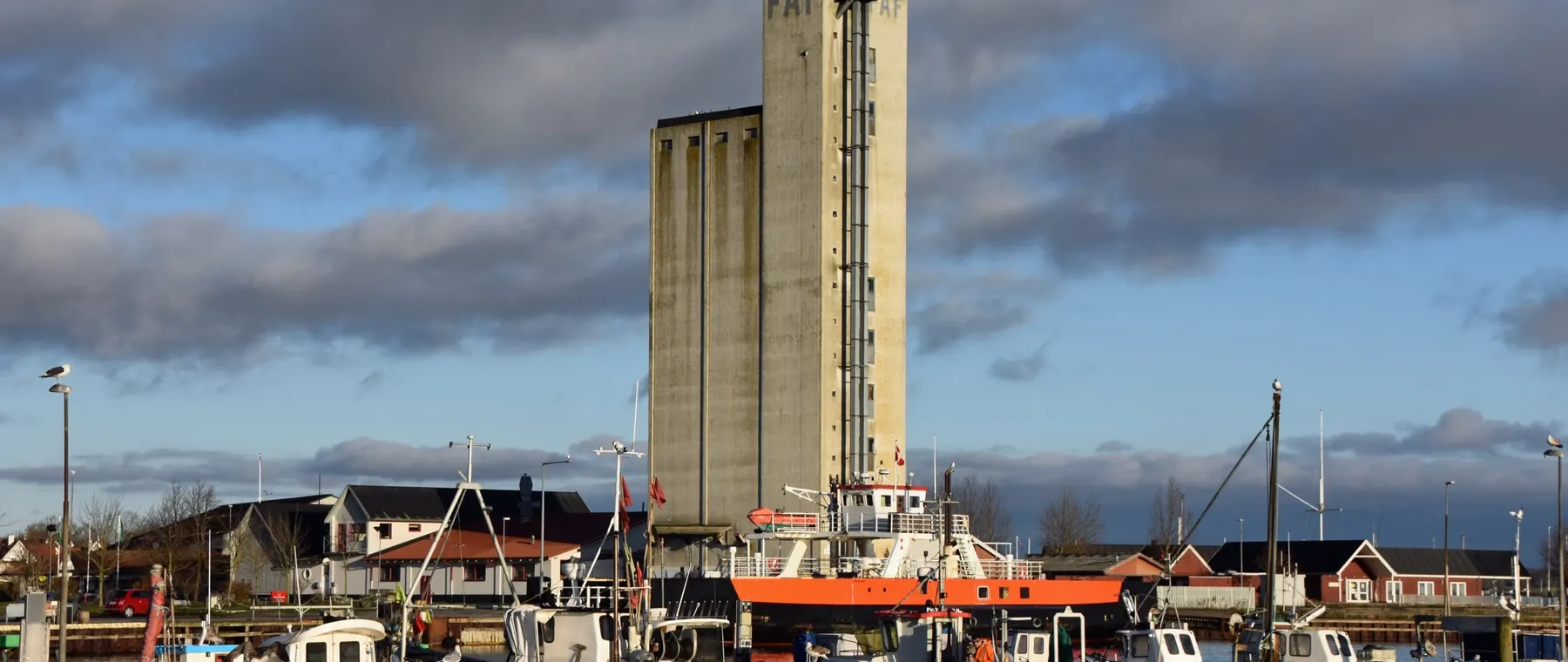
A sheltered-looking waterfront is not proof of suitability for every visiting vessel. The cruising team should establish the available water depth, length and beam limitations, approach conditions and the arrangements for securing the particular yacht. A fifteen-metre sailing yacht fitted with a deep fin keel has different requirements from a broad motor yacht or power catamaran of comparable length. The presence of fishing vessels, excursion boats and local recreational craft also influences how a harbour functions, especially at times when several users are manoeuvring. Owners should consult current official harbour information and obtain agreement for the appropriate visiting space, rather than rely on an image of boats alongside. If an intended berth cannot accommodate the vessel, using another suitable harbour and travelling by land to Kerteminde remains a sensible option. The destination's cultural attractions do not depend upon the yacht being visible from their entrance.
The Johannes Larsen Museum and the view of coastal nature
VisitKerteminde identifies the Johannes Larsen Museum as one of the town's principal cultural attractions. The museum centres on the home and artistic environment of Johannes Larsen and his family, associated with the Funen Painters. A visit can offer a connection between the landscapes seen from the yacht and the ways in which artists have observed them. This is particularly rewarding for someone who has spent time on the water noticing birdlife, variations in coastal light and seasonal changes in vegetation. The artistic significance of such observations does not arise simply from the accuracy with which a scene is depicted. Choices about composition, colour, the treatment of the horizon and the relationship between individual details and a larger landscape can transform a familiar view. Visitors should consult the museum's current programme before travelling, since temporary exhibitions and the availability of individual rooms may vary.
Experiencing the relationship between art and domestic space
An artist's former home provides a different context from a gallery constructed exclusively to display paintings. The relationship of rooms, windows, furnishings and working spaces can suggest how the surrounding environment entered the creative process. Private collectors and yacht owners commissioning interiors may find the distinction particularly interesting. A painting selected for a room is seen in relation to the light, other objects and the people using the space; it need not be treated as an isolated display item. Attention to the circumstances in which an artist worked can also encourage a more informed appreciation of the materials and subjects represented. In a yacht interior, where daylight and the external outlook vary with the vessel's position, the relationship between art and its surroundings requires different consideration from that in a permanent residence. The museum visit is an opportunity for inspiration, not a prescription about how to reproduce the artist's environment aboard a yacht.
Ladby and the burial of a Viking ruler
The Viking Museum at Ladby, near Kerteminde Fjord, preserves Denmark's only known Viking Age ship grave, according to the destination's official tourism information. Archaeological research dates the burial to approximately 925. The ship was drawn ashore and used for the burial of an unidentified ruler, accompanied by animals and possessions associated with the ceremony. The museum displays the remains within a reconstructed burial mound at the location where the grave was discovered in 1935. This offers an unusually direct relationship between a historic place and the archaeological object being interpreted. The ship's appearance, the circumstances of the burial and the surviving objects provide opportunities to consider the significance of seafaring in the society that created it. Visitors should distinguish the surviving archaeological evidence from the imaginative reconstruction used to explain it, paying particular attention to what the researchers have established and what remains uncertain.
Reconstruction and the importance of craft knowledge
The museum's exhibits include a full-size replica of the Ladby ship within its presentation of the burial, together with an embroidered tapestry inspired by the Bayeux Tapestry. Its tourism listing also describes the reconstructed Ladby Dragon, accessible during the summer season. A reconstruction enables specialists and visitors to explore questions that are difficult to appreciate from fragmentary original remains alone. A complete object makes the relationship between dimensions, construction details and intended use easier to understand. It also illustrates the importance of the people who interpret archaeological findings and translate them into contemporary workshop practice. For yacht owners, this can be especially engaging because the relationship between design knowledge and manufacture remains relevant to modern construction. The technical conditions and purposes of a Viking ship differ fundamentally from those of a contemporary luxury yacht, but both offer opportunities to examine how a vessel's form reflects the materials, knowledge and requirements available to the people building it.
Combining the two museums in an unhurried programme
A short stay in Kerteminde can be arranged around two different types of cultural experience. A day devoted to the Johannes Larsen Museum allows time for observation of art and the setting in which it was created. A separate trip to Ladby introduces archaeological interpretation and the history of seafaring. For guests travelling together, this division may be more useful than attempting both attractions in a compressed visit with little time to consider what has been seen. It also allows for differences in the interests and mobility of family members. The location of the Viking Museum outside the centre makes advance arrangements for transport particularly worthwhile. An owner may choose to organise an appropriate private vehicle or other available transport after checking opening hours and access conditions. Current visitor information for both institutions is published through VisitKerteminde, with links to the museums themselves. Confirm individual arrangements before departure.
Living aboard while enjoying the town
A visit by yacht provides a different rhythm from a short land-based excursion. Guests can spend a morning ashore and return aboard for lunch, or reserve a day for quiet time in the harbour before moving on to another destination. Local provisions can form part of the experience, but there is no need to assume that every shop or restaurant will be operating on a particular date. Seasonal changes in the availability of services are important when travelling outside Denmark's main summer boating period. The owner and crew can identify which supplies are best replenished before arrival and which activities are readily available in the town. A well-planned stay avoids making the yacht dependent on a last-minute delivery, a particular restaurant booking or an unconfirmed utility connection. Its advantage is flexibility: the private living space aboard remains available when the guests prefer a quieter evening.
An East Funen visit shaped by conditions
For a wider Funen itinerary, Kerteminde can be considered alongside other ports and attractions in the region, subject to the suitability of individual routes and facilities. The captain should retain discretion over movements based on current charts, local traffic, weather and the yacht's operating characteristics. A cultural itinerary is a framework for arranging time ashore, not a navigational instruction. The official images and attraction descriptions linked below offer a starting point for planning. The accompanying licensed photograph depicts Kerteminde's real harbour and is not a promise of current berth availability. The strongest reason to include Kerteminde is its combination of an everyday maritime landscape, a significant artist's environment and a rare archaeological site. Taking time to appreciate these distinct aspects provides a richer experience of coastal Denmark than treating the town merely as another location at which to tie up overnight.
Sources and photograph
Source documentation: https://www.visitkerteminde.com/kerteminde/plan-your-holiday/johannes-larsen-museum-gdk613615, https://www.visitkerteminde.com/kerteminde/plan-your-holiday/the-vikingmuseum-ladby-gdk613576. Photograph: Kerteminde harbour — Thomas Dahlstrøm Nielsen / Wikimedia Commons, CC BY-SA 4.0. Resized for web display under CC BY-SA 4.0.