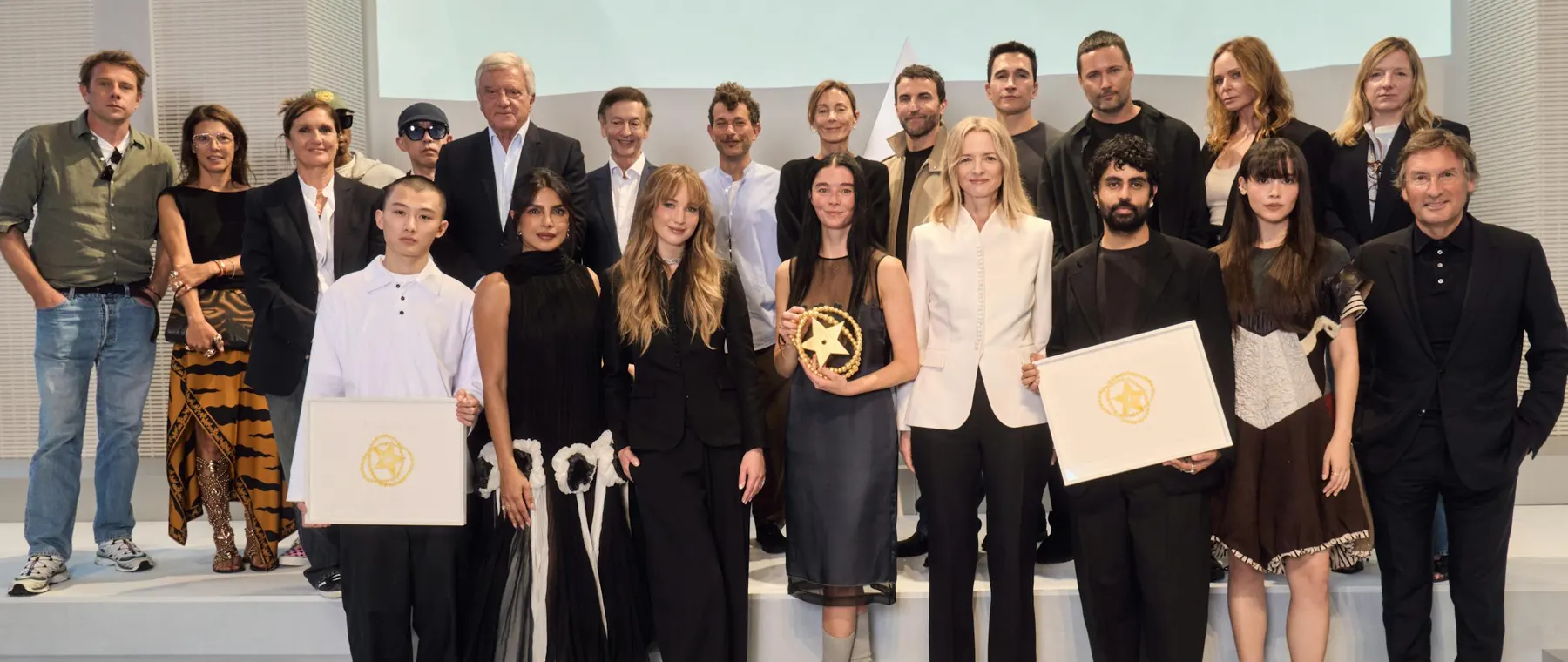
Belgian designer Julie Kegels has won the 2026 LVMH Prize for Young Fashion Designers, receiving a €400,000 award and a year of mentoring from LVMH specialists. The final took place at the Fondation Louis Vuitton in Paris.
The other major awards went to Zane Li’s label Lii and Anil Padia’s Yoshita 1967. Together, the three winners highlight very different approaches to contemporary fashion, from personal womenswear to sportswear-couture hybrids and craft-led production.
Julie Kegels takes the main LVMH Prize
Kegels, 27, was recognised for a womenswear label built around individuality and a multi-layered contemporary wardrobe. Her work now receives both financial support and access to specialists across manufacturing, sustainability, communication and business development.
The mentoring element can be as important as the prize money because young labels often struggle with growth long before they run out of creative ideas. Technical and operational support can determine whether a strong collection develops into a durable business.
Lii wins the Karl Lagerfeld Prize
Zane Li, founder of Lii, received the Karl Lagerfeld Prize and €200,000 with a year of mentorship. The jury highlighted the way the label moves between sportswear and couture influences.
That crossover reflects one of the dominant directions in modern luxury wardrobes. Customers increasingly expect clothing to combine comfort, technical ease and strong design rather than separating everyday pieces from formal fashion.
Yoshita 1967 wins for savoir-faire
Kenyan designer Anil Padia won the Savoir-Faire Prize for Yoshita 1967, a project centred on artisanship, community and handwork. The award includes €200,000, mentoring and additional support from LVMH Métiers d’Excellence.
A collaboration with embroidery specialist Maison Vermont will provide further materials and technical input. This gives the prize practical value by linking a young label directly with established craft expertise.
The winners point toward a broader definition of luxury
The three prizes reward different things: individual vision, hybrid wardrobe design and the preservation of hand skills. Together they suggest that contemporary luxury is no longer defined only by established house names or expensive materials.
For LYG readers, emerging designers are worth following because travel wardrobes often adopt new ideas before traditional formalwear does. The labels that successfully combine craft, comfort and identity are often the ones that become most relevant to modern resort and yacht lifestyles.