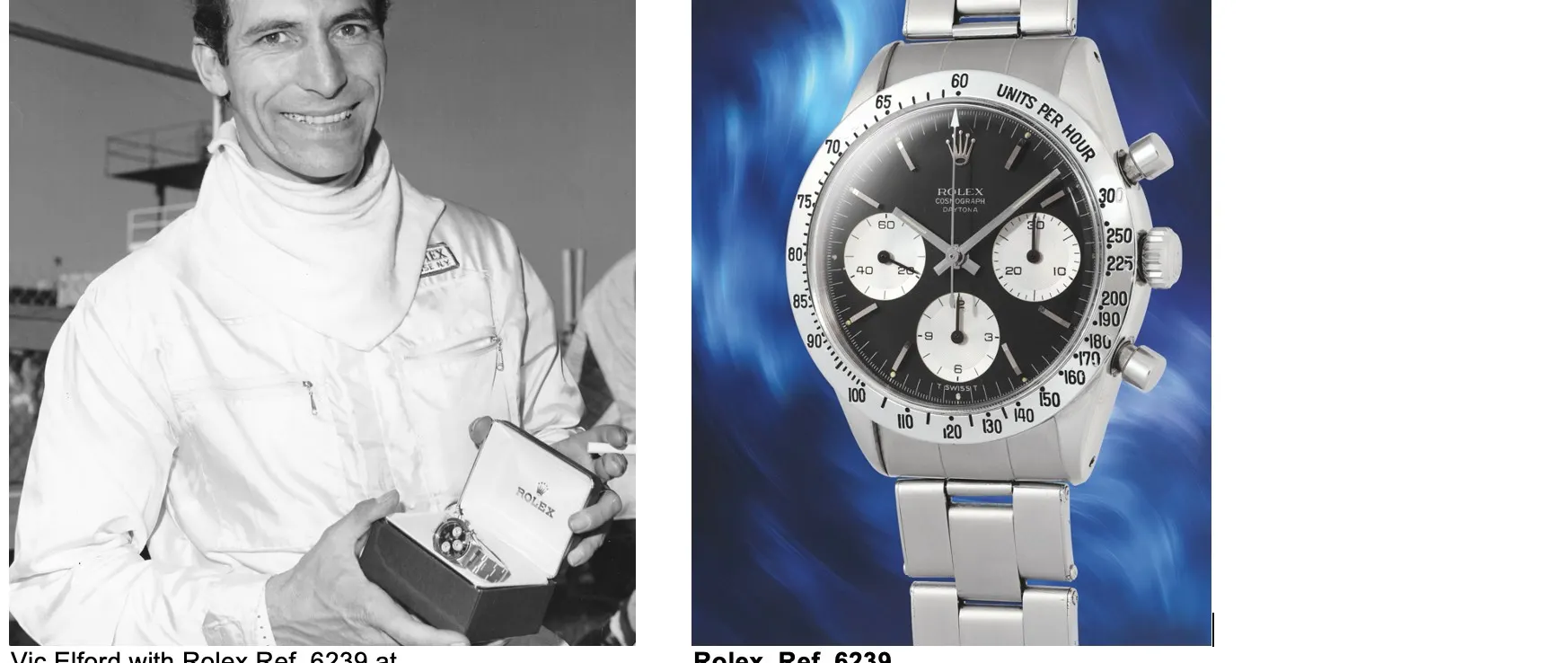
A racing trophy returns to the auction spotlight
A historic racing driver’s Rolex Daytona from Jerry Seinfeld’s collection is attracting interest from collectors of both watches and significant motorsport memorabilia. This development is relevant to owners and guests who pursue luxury motoring, hospitality, private travel or collectible objects alongside their yachting interests.
The auction house estimates the watch at $100,000 to $200,000, a guide rather than a guaranteed selling price. More remarkable than the figure is the association of a particular watch with a documented racing achievement during the early period when Rolex was building its Daytona identity.
The 1968 Porsche victory behind the engraving
Elford was a highly versatile British racing driver who shared victory in a Porsche 907 Langheck at Daytona in 1968. It represented Porsche's first win in a 24-hour endurance race and foreshadowed the company's later success at Le Mans, while a photograph taken after the event documents the presentation of the Rolex.
Phillips identifies this as the earliest known Daytona given to a winner of a motor race, an unusually specific provenance claim supported by period documentation. The model did not start its commercial life with the familiar Daytona identity: Rolex originally called it the Cosmograph, and the association with the Florida circuit developed during the 1960s.
The car is important to the story because Seinfeld later acquired the race-winning longtail, one of a very small production run, at auction in 2014. He subsequently located the companion watch, bringing the two objects together again as tangible reminders of one result in endurance racing.
Documented condition and sympathetic restoration
Many vintage chronographs have changed hands without complete evidence of their early use. This example is accompanied, according to Phillips, by a letter from Rolex USA dated November 2010, a signed provenance letter from Elford, and a 2005 service invoice carrying the matching serial number.
The auction house also describes work commissioned by Seinfeld to return the watch closer to its appearance when presented in 1968. The interventions included matching the hands to the luminous markers, fitting a period-correct domed crystal and repairing a bracelet rivet, rather than attempting a wholesale recreation.
That distinction is significant for collectors because restoration can enhance legibility or correct a past alteration while potentially changing valued evidence of original manufacture. Buyers should review photographs, the condition report and the precise scope of any work before deciding how the history is reflected in the current object.
A watch with two kinds of collecting appeal
The auction will follow a preview tour through London, Geneva and Hong Kong, allowing enthusiasts to examine the watch before it reaches New York. A race-winning driver's watch occupies a special niche between the markets for significant vintage Rolex references and material directly associated with motorsport history.
Provenance makes this an unusually compelling lot but does not remove the need for disciplined bidding. The estimate excludes costs that can arise through the buyer's premium, local taxes, international shipping and insurance, all of which can affect an owner's final expenditure.
The real attraction lies in the link between Elford, the Porsche 907 and the earliest history of the Daytona. The December sale will establish what competing buyers are prepared to pay for that combination, while the watch's documented role in a landmark endurance race is independent of its eventual hammer price.
For readers combining cruising with international travel or collecting, the announcement provides a useful reference point when planning a private itinerary or acquisition. Individual costs, access and conditions should be verified with the company concerned before making a commitment.