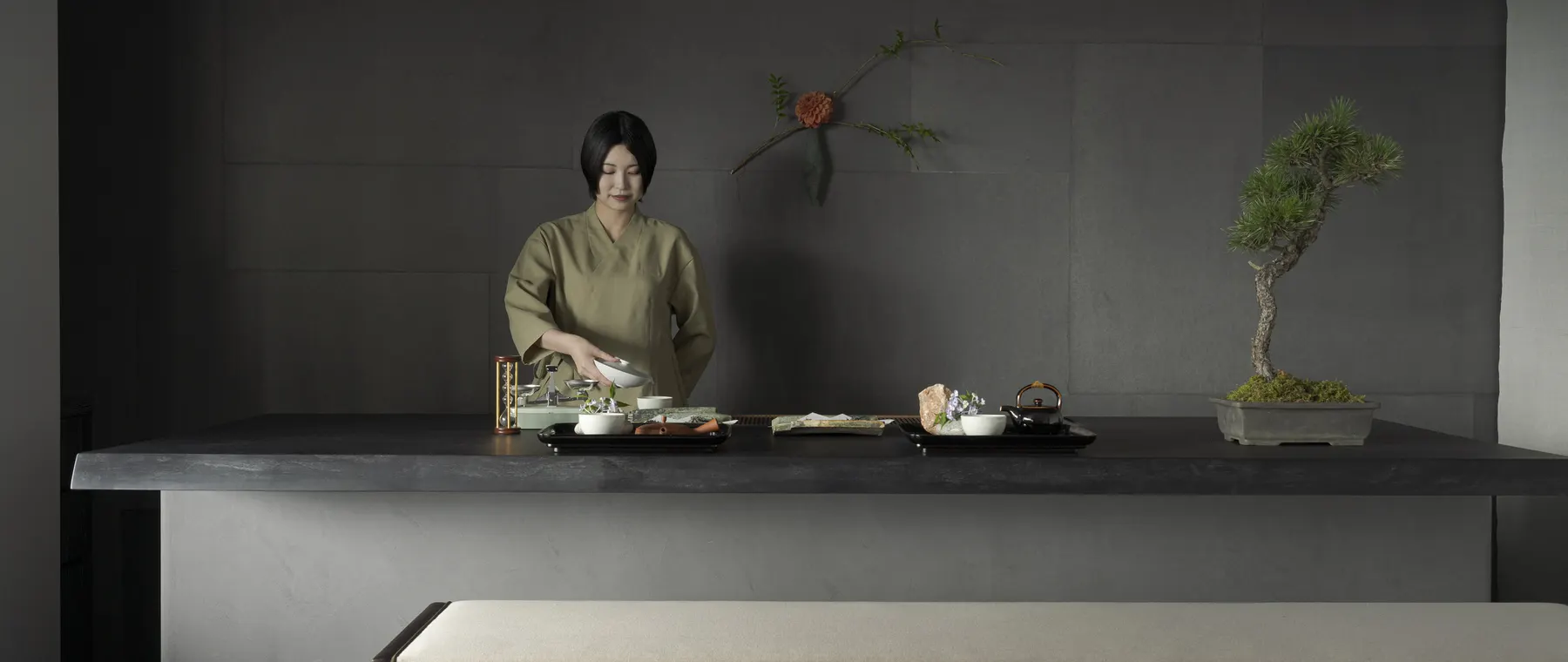
Four Seasons Hotel Osaka is deepening the experience on its GENSUI floor with new cultural rituals and ryokan-inspired amenities included with stays from June 2026. The 28th-floor concept contains only 21 tatami-style accommodations and is designed as a contemporary interpretation of a traditional Japanese inn. This additional layer helps the experience feel considered rather than purely decorative.
At the centre of the update is SABO Lounge, which replaces the usual international-hotel executive-lounge formula with a more distinctly Japanese atmosphere. The aim is to make the floor feel like a coherent experience rather than simply a room category. This additional layer helps the experience feel considered rather than purely decorative.
Tatami rooms create separation
The limited number of GENSUI rooms gives the floor a quieter and more residential character than the rest of the hotel. Tatami, lower visual lines and restrained materials create a sense of pause above the city. This additional layer helps the experience feel considered rather than purely decorative.
For guests spending several nights in Osaka, this separation can make the hotel feel more intimate. It offers some of the calm associated with a ryokan without leaving an urban luxury property. This additional layer helps the experience feel considered rather than purely decorative.
SABO rethinks the lounge
SABO Lounge is designed around Japanese hospitality rather than the usual buffet-and-business format of an executive floor. Food, tea and service become part of the cultural framing. This additional layer helps the experience feel considered rather than purely decorative.
That makes the lounge useful as more than a convenience. It gives guests a setting in which to slow down and understand some of the rituals that shape traditional Japanese hospitality. This additional layer helps the experience feel considered rather than purely decorative.
Local customs become part of the stay
The enhanced programme adds curated experiences intended to introduce guests to craftsmanship, stories and local customs. These elements are included rather than sold as disconnected optional extras. This additional layer helps the experience feel considered rather than purely decorative.
This integration matters because cultural programming can otherwise feel staged. When rituals are embedded into the daily rhythm of a stay, they become easier to appreciate naturally. This additional layer helps the experience feel considered rather than purely decorative.
A hybrid model works well in Osaka
GENSUI combines the service infrastructure of an international luxury hotel with details drawn from ryokan living. The two approaches are not identical, but the contrast is part of the appeal. This additional layer helps the experience feel considered rather than purely decorative.
For LYG readers visiting Japan before or after coastal cruising, the floor offers a way to experience Japanese hospitality without giving up the convenience and location of a major city hotel. This additional layer helps the experience feel considered rather than purely decorative.