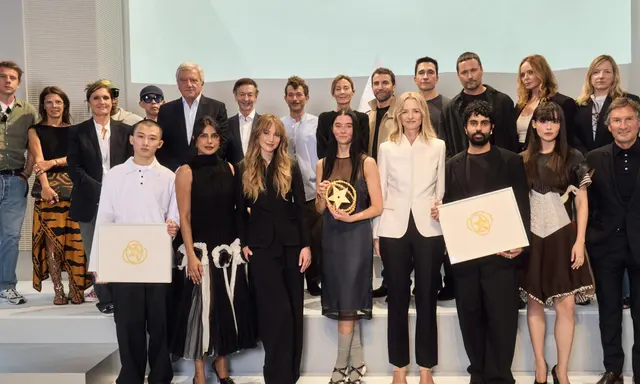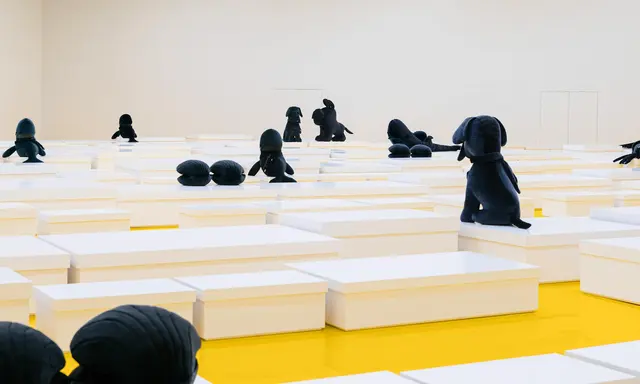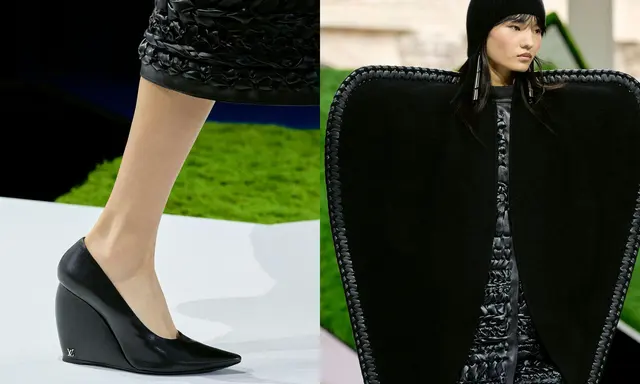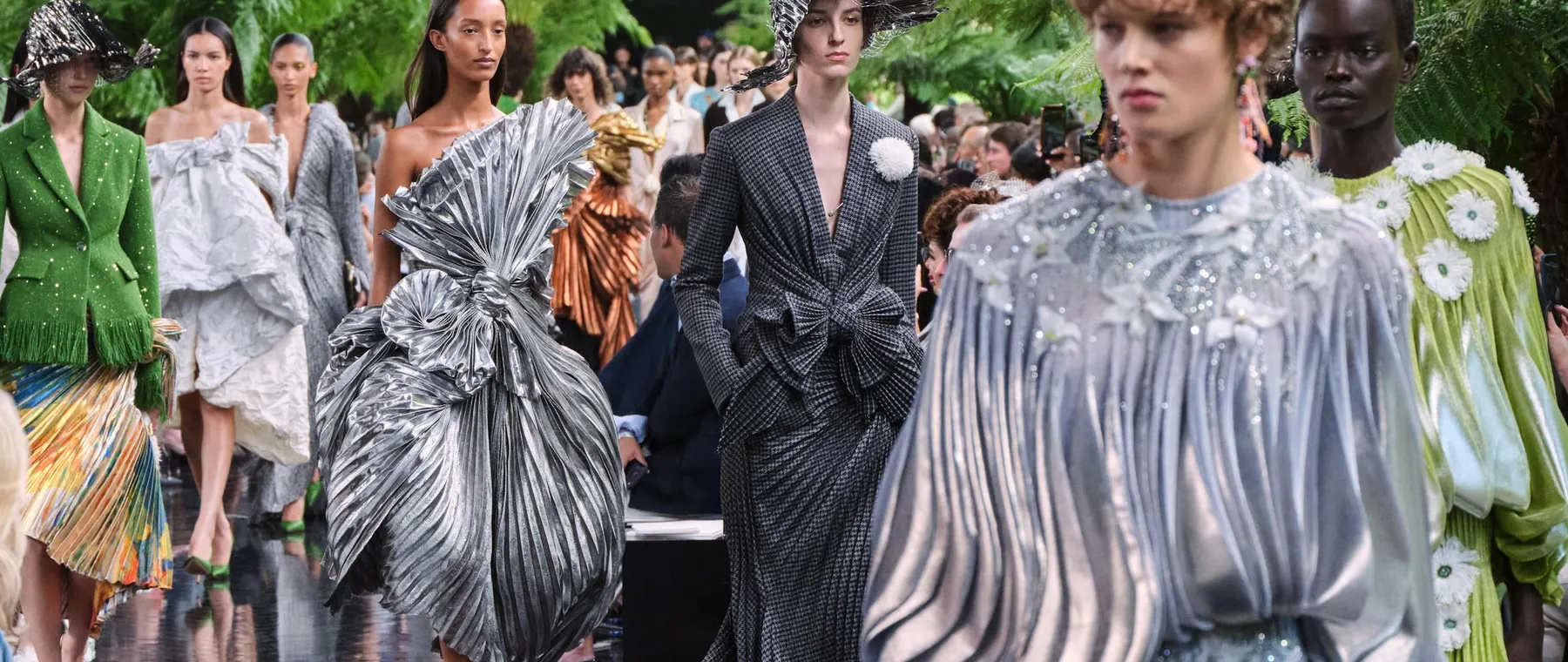
Dior’s Fall/Winter 2026–2027 Haute Couture collection takes sculpture as its starting point, with Creative Director Jonathan Anderson responding to the work of American artist Lynda Benglis. Presented in the gardens of the Musée Rodin, the collection uses couture techniques to explore materials that appear frozen, folded or caught in movement.
The result is a collection where the construction itself becomes part of the visual story. Pleating, knotting, draping and embellishment are used to make textiles resemble materials such as paper and plaster, shifting familiar couture workmanship toward a more sculptural expression.
Metallic fabrics translate the sense of arrested movement
Iridescent and glittering surfaces echo the colour and energy associated with Benglis’s work. Rather than relying only on silhouette, Dior uses surface treatment and fabric manipulation to create the impression that the garments are still changing shape as they are viewed.
Embroidery adds another layer, particularly where it mirrors the artist’s use of paint and glitter. These techniques turn the clothing into a study of texture and reflected light, an approach that can feel particularly vivid in evening settings.
Indian craft references enter the collection
Benglis’s work influenced by Indian craft provides another source of ideas. Dior interprets the artist’s Peacock series through floral ornamentation and beaded embellishment, connecting motifs from Ahmedabad and Santa Fe through the language of the Paris ateliers.
The approach avoids treating inspiration as a single printed reference. Instead, the collection moves between colour, surface, construction and jewellery so the source material influences several different levels of the finished look.
Accessories carry historic textiles and hard stones
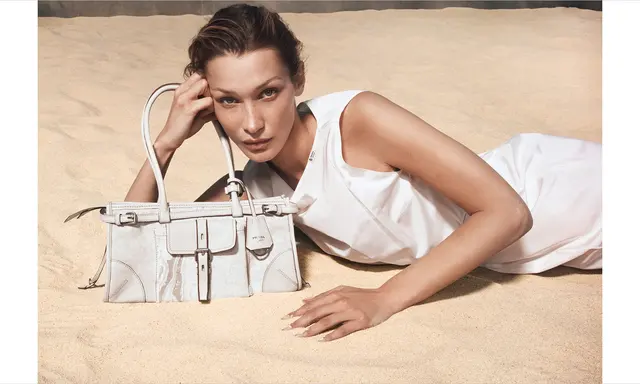
Accessories include Petit Dîner and Lady Dior bags using fragments of antique eighteenth-century chintz and indiennes. Jewellery introduces mother-of-pearl, rock crystal and carved green onyx, bringing mineral and natural surfaces into the same dialogue as the fabrics.
Those details make the collection relevant beyond runway clothing. Bags and jewellery often become the pieces that move most easily between city, resort and yacht wardrobes because they can carry the identity of a collection without requiring a complete look.
Couture continues to operate as a design laboratory
Dior’s collection demonstrates why haute couture remains important even to people who never commission a couture garment. Techniques developed at this level often become part of a wider conversation about material, proportion and craft across fashion and other luxury industries.
For LYG readers, the strongest connection is the emphasis on making difficult workmanship appear effortless. That same quality defines the best yacht interiors and custom objects, where the visible simplicity of a finished piece often conceals a considerable amount of handwork underneath.