A harbour where the Costa Blanca opens to the Balearics
Dénia occupies a distinctive place on Spain's eastern coast. It has a lively waterfront, a historic town and the Montgó rising behind it, while Ibiza lies across a stretch of Mediterranean that has long shaped local maritime life. For yacht owners, that geography encourages two different kinds of holiday: a comfortable stay based in a mainland port, or a considered stepping stone towards the Balearic Islands when conditions and the passage plan permit.
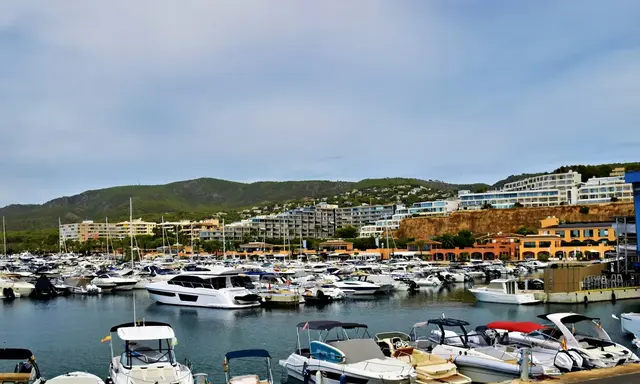
Marina de Dénia gives this combination a natural headquarters. The operator describes a leisure harbour with more than 400 berths for vessels up to 60 metres, although the size and suitability of a particular berth must be checked independently. On a 12–24-metre yacht, the value is less about the maximum headline dimension than about access to the town, support facilities and evenings that remain interesting without organising an elaborate trip.
Choosing the appropriate marina and berth
Dénia has several maritime areas, and not every quay or marina is the same facility. This guide concerns Marina de Dénia, whose official site lists berths, boat services and visitor amenities. A skipper should identify the correct entrance and allocated berth from current marina instructions, then confirm the actual length overall, beam and draught. It would be a mistake to assume that a berth suitable for one 18-metre yacht automatically fits another of the same nominal length.
Ask specifically about shore power, water connections, access arrangements, lines and fendering, fuel procedures and whether a crew member must be present for arrival. If a yacht carries large tenders or unusual deck equipment, mention them before booking. High-season availability can be a practical issue even when a marina advertises considerable total capacity. Early communication tends to produce a quieter arrival than relying on a general online description.
Services matter when the holiday is underway
The marina lists a fuel station, electricity, water, Wi-Fi, security monitoring, a crane and a slipway. It also advertises twenty-four-hour boat service staff, which is reassuring for a visiting owner but should not be mistaken for an unrestricted promise of overnight engineering labour. Technical repairs, lift capacity and contractor appointments require their own confirmation. A good captain separates ordinary marina assistance from specialist work before the yacht reaches the berth.
That distinction protects a holiday. Guests can use the marina as their home base while the crew handles routine enquiries. If a fault needs substantial attention, the plan can be adapted early instead of allowing contractors to dominate every afternoon. On an owner-operated yacht the same principle applies: assign a realistic maintenance window, keep a written list and stop treating every minor item as an emergency. The point of practical support is freedom to enjoy the destination.
From the waterfront into old Dénia
An easy first day is often the best introduction. Dénia is a real Spanish town rather than a marina enclave, so explore its streets, market culture and waterfront gradually. Owners arriving after a passage may appreciate doing very little at first: secure the yacht, wash down, have lunch, then walk ashore for an hour. That gives guests time to recognise the town and decide which places deserve a longer visit on the following day.
Resist the temptation to book every restaurant or shore excursion before arriving. Part of the Costa Blanca's appeal lies in discovering a pleasant square, a lively street or a café that matches the mood of the party. A flexible plan can still include one carefully chosen dinner. For a mixed-age family, alternating shorter walks with time aboard is often more successful than expecting everyone to maintain the same sightseeing pace.
Dénia Castle and a view over the harbour
Dénia Castle provides a natural focus for an excursion from the yacht. Standing above the town, it gives context to the relationship between settlement, port and coastline. The official destination tourism site describes the monument and visitor arrangements; current access, opening hours and any ticket conditions should be checked before setting out. Wear appropriate shoes, allow for gradients and do not assume that every part of the historic site will suit visitors with limited mobility.
The reward is wider than a photograph from the walls. Looking back towards the harbour helps visitors understand why Dénia developed as a maritime place and why the nearby mountain dominates its setting. A castle visit can be paired with lunch in town, then a return to the yacht before the heat or an afternoon breeze becomes inconvenient. It is a compact cultural day with little pressure to travel a great distance.
The Montgó as a different kind of luxury
The Montgó Natural Park changes the tone of a Dénia holiday. From the cockpit, the mountain is a powerful landmark; ashore, it becomes a reason to think about walking routes, landscape and protected nature. The official local tourism information is the sensible starting point for choosing a suitable path. Conditions, access restrictions and seasonal heat can change the character of an outing, so select a route for the least experienced member of the group.
Luxury need not mean an extreme summit walk. A shorter nature excursion with good interpretation may be more satisfying than a rushed climb. Some guests will want photography and plants; others will simply welcome a view that contrasts with several days at sea. Pack water, sun protection and suitable footwear. Keep a clear shore contact plan with someone aboard, especially if the group divides into walkers and people enjoying the marina.
Marine scenery and sensitive coastlines
The coast around Dénia includes the Cabo de San Antonio area, valued for its marine environment. Protected zones require particular care, and permission to navigate nearby is not permission to anchor or undertake activities anywhere one chooses. Confirm the current marine-reserve rules, permitted routes and relevant authority notices before planning swimming, diving or a tender excursion. An owner who treats conservation requirements as part of the itinerary generally encounters fewer surprises.
There is considerable pleasure in observing the coast carefully. A slow coastal passage, when safe and lawful, can be more engaging than trying to stop at every cove. Changes in rock, water colour and mountain backdrop become part of the day's narrative. On a smaller luxury yacht the deck is close enough to the scene for guests to feel involved. Good seamanship and respect for protected areas make that closeness possible.
Considering the Balearic crossing
Marina de Dénia advertises its position roughly sixty nautical miles from Ibiza. That is a helpful statement of regional geography, not a recommended route, passage time or weather guarantee. Wind, swell, visibility, traffic, vessel performance and the particular destination berth all affect a voyage. Owners should discuss whether a Balearic leg belongs in the itinerary only after the captain has assessed current forecasts, charts and formal requirements.
An attractive alternative is to keep Dénia as the entire holiday base. Owners sometimes underestimate how pleasant it is to remain on the mainland, with a familiar berth and short outings rather than repeated packing and check-ins. Families with young children or guests who dislike long passages may particularly appreciate that approach. The possibility of crossing to an island enhances the setting, but it does not oblige every cruise to become an ambitious offshore schedule.
Art beside the pontoons
The marina's own facilities include the Toni Marí Art Gallery, with exhibitions described by its operator. This is a useful reminder that a marina can be a cultural setting rather than a purely technical one. Gallery programming changes, so confirm what is on show during the actual visit. For guests interested in design, sculpture or local creative life, a small exhibition can enrich an otherwise familiar sequence of beach, lunch and cocktails.
Plan the visit around the people aboard, not around a claim that every guest must appreciate art. A short gallery stop followed by an informal drink works well for a group with varied interests. On other days, a longer town excursion may be preferable. The beauty of a yacht holiday is the ability to shift between private relaxation and public cultural life almost at will. Dénia makes that transition particularly uncomplicated.
Dining without making it a performance
A town with a working waterfront has food experiences at several levels of formality. Yacht owners should choose restaurants according to the occasion, dietary needs and the willingness of guests to spend time away from the boat. Ask for current menus, accessible seating where necessary and reliable reservation details. A destination can have an established culinary reputation without every meal needing to be an expensive or heavily planned event.
Consider keeping breakfast aboard, having an unhurried lunch ashore and treating one dinner as the evening's main occasion. On a different day, reverse the pattern and let the galley be the centre of attention. That rhythm makes good use of provisions while leaving room to explore the town. Crew, if carried, also benefit when clear meal decisions replace last-minute changes. Excellent hospitality is often a matter of sensible pacing.
Season, weather and berth rhythm
The Mediterranean calendar alters the experience of Dénia. Warmer months bring more shore activity and potentially greater berth demand; quieter periods can offer a gentler pace, subject to weather and which services are operating. Check actual marina availability and restaurant opening arrangements for the intended dates. The most attractive time for a particular owner may be determined by school holidays, preferred air temperatures or the desire for uncrowded streets.
Wind conditions should continue to govern any coastal outing. A berth in a developed marina does not mean the day outside will be calm, and a pleasant morning forecast should not be stretched into an obligation to leave harbour. Build a shore-based alternative into each cruise day: the castle, a gallery, the old town or a scenic drive. Guests often appreciate a confident decision to remain comfortably berthed more than a marginal trip for the sake of movement.
Practical etiquette and environmental care
The marina highlights recycling and environmental arrangements, reflecting the everyday responsibilities of a busy leisure harbour. Use the designated collection points and ask staff how to dispose of any specialist waste. Keep the pontoon clear of bicycles, tenders and gear, confirm shore-power safety and be considerate about engine noise and late returns. These small matters preserve the tranquillity that guests expect and help a marina serve many different vessels.
Owners should also consider how a city berth affects security habits. Lock access as appropriate, brief guests on marina entry arrangements and keep a record of who is ashore. A simple telephone contact list prevents confusion when groups split up. If children or first-time yacht visitors are aboard, show them how to find their berth from familiar landmarks. The destination becomes easier to enjoy once practical questions have been answered quietly.
A three-day outline with room to breathe
Day one might involve arrival, securing the yacht, an easy waterfront walk and dinner without a hard timetable. On the second day, visit the castle and town, with an optional gallery stop if the exhibition appeals. Reserve a third day for the Montgó landscape or a permitted coastal excursion according to conditions and guests' interests. Any Balearic passage should be considered separately, not squeezed into a nominal free afternoon.
This framework is deliberately flexible. A long lunch may become the highlight, or the party may discover a greater interest in hiking than first expected. A good itinerary is one that can change without inconvenience. With berthing, services and town life close together, Dénia rewards that adaptability. It gives a 12–24-metre yacht enough support to feel comfortable while leaving guests free to experience the Costa Blanca at their own pace.
Why Dénia earns a place on a yacht itinerary
Dénia is strongest when understood as a balanced cruising destination. Its marina provides a practical headquarters; its castle and urban life offer culture; and the Montgó and protected coastal scenery connect the journey to the landscape. The Balearics are part of its geographic story, but they do not have to dictate the route. This breadth is especially attractive for owners trying to satisfy guests with different interests.
Before committing, confirm the actual berth, marina services, navigation requirements and any environmental restrictions directly with the relevant operators and authorities. Then leave enough space to enjoy the town. The memory of a Costa Blanca call may come from a castle view, a quiet evening on deck or the welcome simplicity of returning to one's own yacht after a day ashore. Dénia makes each of those possibilities credible.