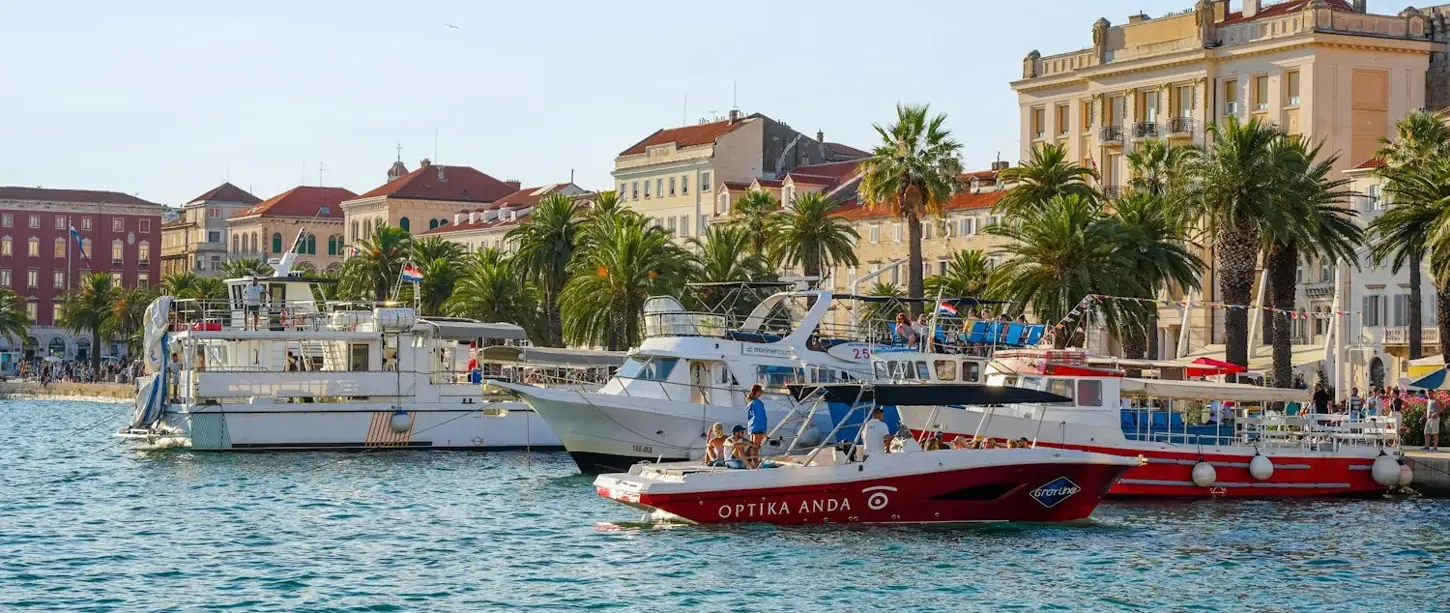
A Dalmatian city built for arriving by sea
Split is one of those Mediterranean destinations where the experience begins before anyone steps ashore. The waterfront, the old town and the islands beyond create a compelling scene from a yacht's deck. Yet Split is also an active transport port, with ferries and commercial movements that demand attention. For a 12–24-metre luxury yacht, the rewarding approach is to combine an organised marina stay with a city visit that never loses sight of practical harbour discipline.
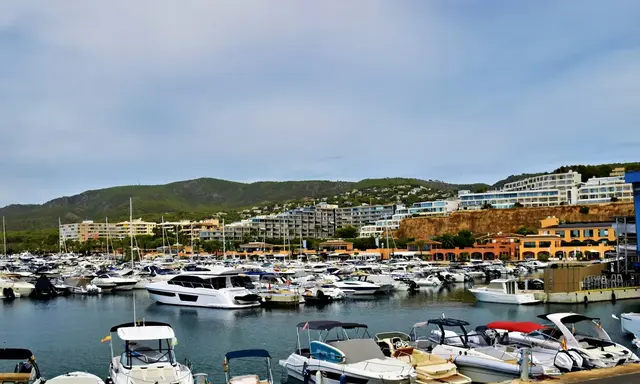
ACI Marina Split occupies a position across the water from the historic centre, giving its guests a view that changes from morning light to illuminated buildings after dark. The operator lists 318 sea berths and fifteen dry positions. Those totals describe the facility, not a confirmed berth for a specific yacht. Reservation, dimensions and skipper instructions remain essential, especially when a busy city is also a major nautical starting point.
The marina as an urban base
ACI's marina is at Uvala Baluni 8. Its location lets owners enjoy the historic centre without having to move the yacht every time they want a restaurant, market or museum. The operator lists a range of amenities, including service support, a restaurant, laundry and internet access. As with any developed marina, details such as power supply, fuel access and maintenance appointments should be confirmed for the yacht and dates involved.
An urban berth is an especially good arrangement when the group has different preferences. One guest may choose an early cultural walk, another a long breakfast on deck and a third a swim later in the day. Everyone can return to the same floating home without committing the entire party to a charter-style timetable. That independence is a meaningful advantage for owner-operated and privately crewed yachts alike.
Harbour traffic is the first priority
Split's picturesque waterfront can make the harbour appear simpler than it is. ACI explicitly warns about the adjoining port environment, including restrictions on anchoring and areas where berthing is not permitted. Its notices also describe changes along the western waterfront that must be checked against current navigation information. Skippers should rely on current official charts, local notices, VHF instructions and the marina's own approach guidance.
This is not a place to improvise a scenic anchorage near busy traffic simply because a photograph suggests open water. Build an arrival plan that allows for ferry movements and harbour control, and tell guests when the yacht needs a quiet, undistracted bridge. Once secured, the operational pressure falls away. Professionalism on approach is what permits the relaxed culture and dining that brought everyone to Split in the first place.
Diocletian's Palace is a living district
The historic centre is often described through Diocletian's Palace, the Roman-era complex that remains central to Split's urban character. It is not a museum isolated behind a single entrance. Streets, buildings, shops and daily life coexist within a layered cityscape. UNESCO recognises the historic complex of Split with the Palace of Diocletian for its outstanding heritage significance, making it a natural focus for an owner who enjoys history and architecture.
Allow more time than a quick photograph at one gateway. The interest is in the changing scale of the streets, the way older structures are reused and the movement between enclosed stone passages and open squares. Travellers with mobility needs should investigate walking surfaces and access, because historic stone streets are not uniformly level. A short guided introduction may help a family appreciate the site's complexity without making the afternoon feel like formal study.
A waterfront promenade after the stones
After a morning among historic buildings, return towards the waterfront for a change of tempo. Split's seafront offers a place to watch the city rather than examine it. In a busy season, finding a quiet moment may require choosing the hour carefully; at other times, the activity itself is part of the pleasure. There is little reason to hurry back aboard when a leisurely drink offers a view of people moving between ferries, cafés and old streets.
On the yacht, that same scene looks different. The historic skyline becomes a backdrop rather than a destination. Owners who alternate between both perspectives tend to remember a city more vividly. It also helps guests who may not love long walks feel included. A social evening aboard can draw together separate experiences: one person explored Roman architecture, another the shops and somebody else simply enjoyed the marina.
Food, markets and a Croatian sense of place
A real city brings a wider dining choice than an isolated resort pontoon. Explore Split's food scene with an eye to seasonal dishes and the needs of the group, but avoid assuming that any one menu represents the whole Dalmatian region. Restaurant ownership, opening times and standards change, so confirm current arrangements through the venue. Advance reservations make sense for an important evening, while an informal lunch can remain delightfully unplanned.
Provisioning is another dimension of a city stay. Crew can seek appropriate suppliers and organise deliveries rather than relying solely on the marina's immediate shops. On a smaller yacht, thoughtful fresh purchases may be preferable to overfilling storage for a long trip. The best culinary itinerary often includes a simple galley meal, a waterfront lunch and one dinner ashore, leaving everyone with a sense of place and an appreciation for the boat's independence.
The islands across the water
Split's coastal position creates a natural temptation to go island-hopping. Brač and Šolta are among the nearby names that appear in Dalmatian itineraries. But attractive proximity on a map should not be confused with a guaranteed day trip. Distance to a particular harbour, winds, sea state, traffic and berth availability all affect what is sensible. The captain should choose a route and fallback port from updated charts and forecasts.
For guests, the most memorable island day may be modest: a comfortable passage, a permitted stop and time to enjoy the shoreline. Avoid making a checklist of many islands in one afternoon. On a 12–24-metre yacht, moving slowly enough to notice the coast often yields a richer experience than chasing a long route. If a wind change makes the outward trip unappealing, Split itself provides more than enough interest for an equally successful day.
Making a multi-day stay worthwhile
Some owners book Split as a single embarkation point and depart almost immediately. That is efficient for a charter handover, but it can miss the city's layered appeal. Consider two or three nights if the schedule permits. One day can focus on the palace and old streets; another on markets, food and a slower waterfront afternoon; a third might be held open for a permitted coastal excursion if conditions are right.
Build rest into the plan. After a warm day exploring stone streets, guests may prefer a return to the air-conditioned yacht rather than a second lengthy activity. A well-run boat offers that private retreat without losing the energy of the city. Crew who know when not to fill the diary can make a short port call feel like a genuine holiday. Split rewards curiosity, but it also rewards time to absorb what has been seen.
Understanding the seasons
High-season Split is lively, with substantial visitor and boating activity; quieter periods bring a different rhythm but can also mean changes to services and weather. The best dates depend on the owner's preferences rather than a single universal recommendation. Confirm berth availability well ahead for peak weeks and check current operating hours for attractions and restaurants during shoulder seasons. The marina can be a reliable planning anchor, but not a guarantee of perfect conditions outside.
Weather has the final say over any island outing. A protected marina berth and an inviting café do not prove that an exposed passage will be comfortable. Keep at least one land-based alternative for each intended sailing day. A city with UNESCO-recognised heritage is ideally suited to this approach. Guests should not feel that staying in port represents a failed holiday when the alternative is an avoidably uncomfortable trip.
Technical needs and crew logistics
ACI Marina Split advertises nautical services, with additional facilities available in and around a major port city. For specific mechanical, electrical or hull work, ask the marina what is actually offered onsite and what requires an outside contractor. Book specialists ahead where possible. A repair that appears routine at the planning stage may require parts, restricted operating hours or movement to another facility.
The guest programme should be separate from that timetable. If necessary, send passengers ashore for a history or food excursion while the captain supervises work. On an owner-operated yacht, set a realistic limit on maintenance time so the holiday does not become an endless checklist. It is reasonable to handle essential safety matters immediately. It is equally reasonable to postpone a cosmetic task that would otherwise absorb a perfect afternoon in the city.
Environmental care in a busy marina
Good conduct on the pontoon is especially important in an urban port shared by many vessels. Keep lines, hoses and equipment neatly stowed, dispose of waste through designated systems and avoid unnecessary engine running. Confirm local requirements for grey water, black water and other materials rather than assuming practices from the previous marina apply. The quality of a shared harbour depends in part on hundreds of small decisions made by visiting crews.
Guests should also be briefed about movements between the marina and town, the berth's location and the importance of respecting working quays. A beautiful public waterfront is not an invitation to wander into operational ferry areas. With those basics established, everyone can move confidently between city life and private yacht space. The calmer the logistics are, the more luxurious the experience will actually feel.
A sensible city-to-island sequence
An effective sequence begins with arrival and an unhurried marina evening. Visit the palace and historic centre the next morning, taking a break aboard if the day is hot or the streets busy. Use the following day for a second city interest or an island excursion chosen after evaluating the weather. If departure is planned early, complete provisioning and marina accounts the afternoon before rather than turning the final morning into a rush.
Leave the travel plan open to revision. The party may discover that Split's architecture deserves another day, or conditions may create a particularly attractive opportunity offshore. Neither change undermines the holiday. Owners who allow the destination to influence the itinerary often have the most memorable cruises. A schedule should protect essential reservations and navigational decisions while remaining generous about the pleasurable details.
Why Split works from a luxury yacht
Split's defining quality is the meeting of living history and maritime movement. The old centre supplies cultural depth, the waterfront brings urban energy and the islands promise further cruising possibilities. ACI Marina Split gives a clear base from which to enjoy all three, provided the berth is confirmed and the skipper treats the working harbour with appropriate caution.
For 12–24-metre yachts, the pleasures are direct and human-sized: walking into a remarkable city, dining without a hotel transfer and returning to one's own deck as the lights come on. Verify the latest marina information, current navigation rules and any island restrictions before setting out. Then give Split the time it needs. It is a port where slowing down may be the most rewarding decision of the entire cruise.