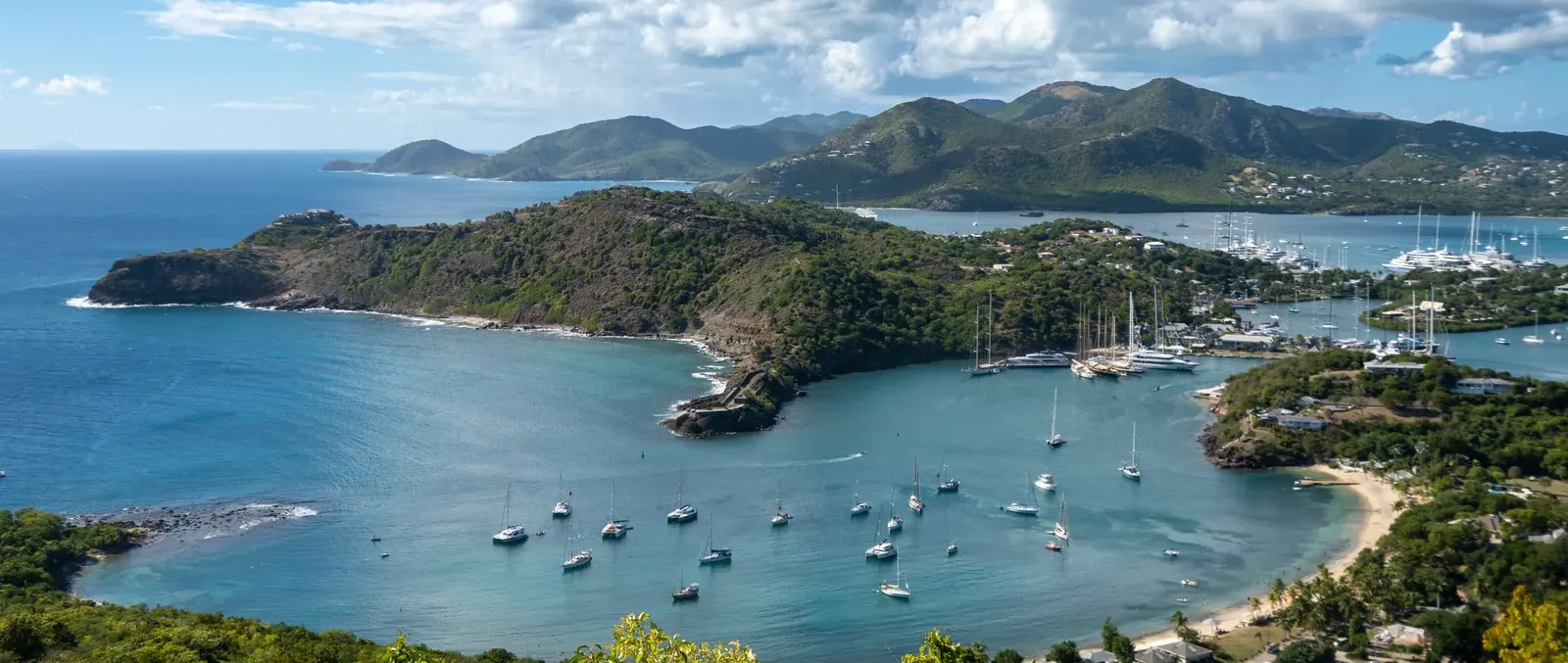
Two harbours, one memorable coast
The south coast of Antigua offers a compelling combination for yacht owners: the historic Nelson's Dockyard at English Harbour and the broad sailing setting of nearby Falmouth Harbour. They are neighbours, but not interchangeable berthing destinations. The first is associated with Georgian naval heritage and the UNESCO-listed landscape, while the second accommodates a lively modern yachting community. For an owner of a luxury sailing or motor yacht in the 12–23.99-metre range, the appeal is being able to step from the cockpit into history, restaurants, walking routes and practical marine services. It is a destination whose cultural depth rewards a stay longer than a quick overnight stop.
The Dockyard is still a living maritime place
Antigua's National Parks Authority describes Nelson's Dockyard as an active historic dockyard rather than a preserved collection of empty buildings. Its Georgian-era architecture remains part of a functioning harbour, and the surrounding National Park is inscribed on the UNESCO World Heritage List. The setting gives visitors a direct sense of how maritime infrastructure shaped island life. This is not a theme-park recreation: working berths, businesses and yacht crews share the space with heritage visitors. Owners should respect the fact that a protected historic setting may have practical constraints and rules different from those of a modern commercial marina.
Falmouth Harbour has a different energy
Falmouth Harbour is often associated with sailing and the broader Caribbean yachting season. Its scale allows a different pattern of marina operations, anchoring and shore activity from the inner historic basin, although exact suitability depends on draft, depth, current rules and available space. The Antigua and Barbuda Yachting and Marine Association publishes approach and entry information, including the routes to local marina facilities. A visitor should consult the current charts and local harbour operators rather than use descriptive travel writing as navigation guidance. The advantage of staying in Falmouth is that English Harbour's heritage landscape remains close enough to explore without turning the day into a major expedition.
Choosing a berth by actual dimensions
A yacht's overall length is only one part of the booking conversation. Beam, draft, the need for shore power, tender arrangements and intended length of stay can all change the options. National Parks Antigua lists marina facilities at English Harbour and notes nearby sailmakers, chandlery and refit services. Other operators serve the wider Falmouth area. An owner should contact the relevant marina directly, confirm actual berth availability and ask about any additional park or harbour fees. Antigua's yachting association cautions that charges may apply beyond the marina berth itself. That is a practical reason to request a written estimate rather than rely on a single headline nightly rate.
Arrival paperwork is part of the pleasure
An international yacht arriving in Antigua must attend to entry procedures, and the port-of-entry guidance available through the yachting association identifies customs and immigration arrangements for yachts coming through Falmouth Harbour. Rules and office locations can change, particularly across different nationalities, registration types and intended activities. The skipper should check the authorities' current requirements before arrival and keep identification, crew lists and vessel documents organised. A relaxed Caribbean visit becomes considerably more enjoyable once everyone knows which papers are needed and who must report ashore. No general article can substitute for the current official instructions applicable to an individual yacht.
An architectural walk through the harbour
After the practicalities are complete, Nelson's Dockyard invites slow exploration. Stone buildings, historic naval workshops and the relationship between quays and hills are part of the attraction. The National Parks Authority provides information about heritage tours and the UNESCO site. Visitors who know only the harbour from race-week photographs can gain a different appreciation by walking between buildings and looking out from the waterfront. It is worth allowing time to read the historical context rather than merely taking pictures. The maritime past belongs to Antigua and to the people who preserve and interpret the site, not simply to visiting yacht owners.
Beyond the waterfront
The surrounding landscape is one of the main reasons to treat English Harbour as a stay rather than a fuel stop. Shirley Heights and other viewpoints are associated with the National Park area, and the island tourism authority also identifies nearby Fort Berkeley and Dow's Hill among the historical attractions. Heat, walking surfaces and travel times should inform any shore excursion, particularly for guests not accustomed to tropical conditions. A morning heritage visit followed by a slower afternoon aboard can be more enjoyable than an overloaded schedule. The day should retain space for looking over the bay and recognising the coast from another angle.
A social season without requiring a regatta entry
Antigua is a major sailing destination, with race programmes and visiting fleets adding to the waterfront atmosphere at different times of year. Yet a luxury yacht holiday does not need to follow a race calendar. Outside a major event, owners may find the pace easier for exploring. During a regatta, the spectacle can be exciting, but berth demand and noise may increase. Visitors should check the dates of current sailing events and decide which atmosphere suits their crew. The destination's value lies in the diversity of experience: some people arrive for competition, others for the landscape, and many simply for the pleasure of being near boats.
Food and time ashore
The harbours attract a range of dining and casual gathering places, reflecting their long relationship with seafarers and visitors. Opening hours and menus shift with the season, so choosing a specific restaurant should be done using current information rather than a list that may soon be outdated. The stronger recommendation is to use the location well: breakfast looking towards the water, a heritage walk before the midday heat, and a dinner that does not require a long journey back to the boat. The modest luxury of having everything within reach is especially welcome after an offshore passage, when the crew may want rest as much as entertainment.
Provisioning and repairs
A boat that has crossed from another island or completed a longer ocean passage may need more than fresh groceries. Sails, rigging, refrigeration, electrical systems and ordinary deck equipment can all demand attention. National Parks Antigua specifically points to chandleries, sailmakers and yacht carpentry and refit services nearby. That is encouraging, but it is not a guarantee of spare-part stock or immediate contractor availability. Owners should make contact in advance for specialised work, ask about access to the boat and leave suitable time. Keeping maintenance separate from the most enjoyable shore activities helps a holiday feel like a holiday.
Environmental responsibilities
The dockyard landscape's protected status is a reason to take local environmental expectations seriously. Anchorage choices, waste disposal, tender movements and shore access should follow the relevant park and harbour rules. A small luxury yacht can still have a significant impact through careless anchoring or disposal practices. Good seamanship includes understanding where visitors are permitted to anchor, using appropriate facilities and leaving protected areas undisturbed. The current operator or park authority is the correct source for any restrictions. Respect for the surrounding environment is not a decorative addition to the experience; it protects the very harbour character that attracts visiting crews.
How a two- or three-day stay might work
A sensible short visit starts with a straightforward arrival and time to settle the yacht. Use the first afternoon to walk near the berth and discover the waterfront without making fixed commitments. The next morning can be devoted to the historic dockyard and neighbouring viewpoints, with the hottest part of the day reserved for a relaxed lunch or time on board. A further day allows a longer island excursion or a practical maintenance appointment before sailing onwards. The sequence is a flexible editorial suggestion, not a booked itinerary. Weather, entry formalities and the crew's preferences should determine the real order.
Plan for the boat and the guests
Before choosing English or Falmouth Harbour, evaluate the boat's draft and berth needs alongside the holiday's priorities. A crew that values walking straight into a heritage site may have different preferences from one needing extensive technical support or space for a tender. Guests arriving by air will need a reliable transfer plan, and those aboard for a week may prefer a berth with easy provisioning access. It is worth checking whether a marina expects advance reservations around major events. Honest planning produces a more satisfying experience than choosing a berth from a postcard view and discovering its limitations only on arrival.
Why the harbours remain distinctive
Many Caribbean destinations offer beaches, warm water and beautiful anchorages. Antigua's English and Falmouth Harbours add a particularly vivid maritime layer: a living UNESCO-listed dockyard beside a modern sailing hub. That combination connects visiting yacht owners with centuries of port history and a present-day community that understands boats. The official National Parks and yachting association sources underpin the essential heritage and arrival information; the lifestyle appeal comes from taking enough time to experience both sides. For a luxury yacht of manageable size, this is a place to step ashore, wander, learn and return to the cockpit with a stronger sense of where the boat has brought you.