A harbour city best approached with a plan
Plymouth gives visiting yacht owners something unusually satisfying: a genuinely active port, a historic waterfront and several marina choices close to the city rather than a waterfront designed solely for tourism. The approach through Plymouth Sound is memorable, but it is also a working maritime environment. Naval activity, commercial shipping and leisure traffic coexist, which makes local notices and navigational information essential. For an owner-operated luxury yacht between 12 and 23.99 metres, the city is an appealing stop on an English Channel itinerary if berth length, draft and the route to the chosen marina are checked early. Its attraction is the combination of practicality ashore and the atmosphere of a place shaped by the sea.
Choose the marina before the evening plans
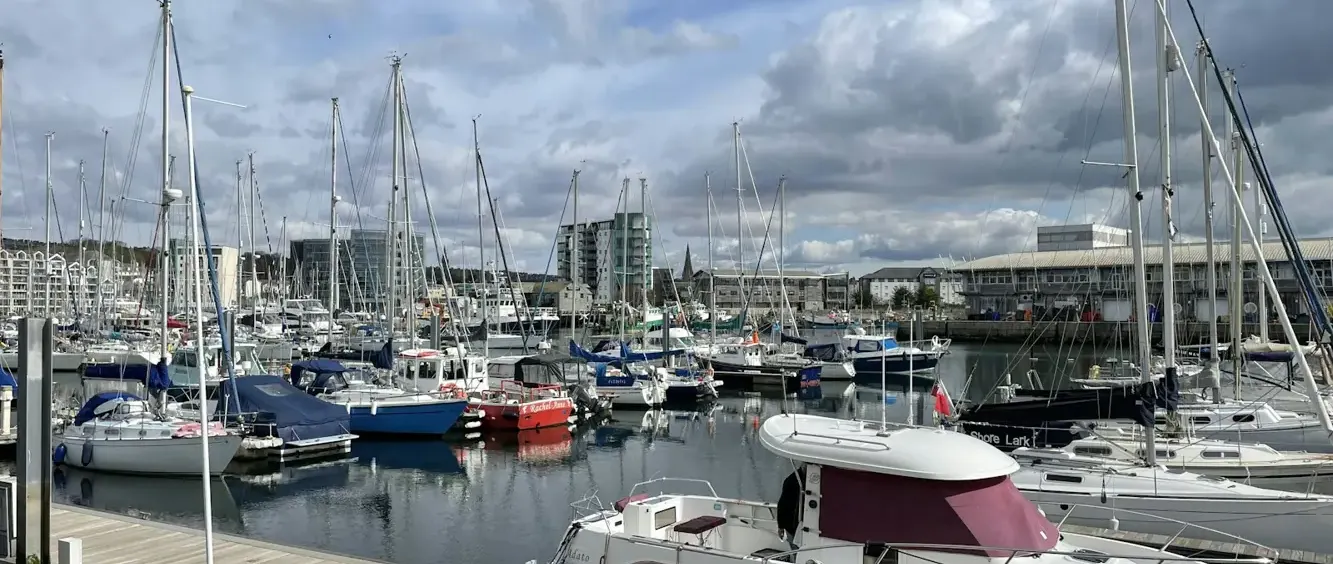
Visit Plymouth identifies several marinas serving different parts of the harbour. Sutton Harbour Marina is particularly convenient for the Barbican and city centre; Mayflower Marina sits farther along the waterfront; Plymouth Yacht Haven and Queen Anne's Battery provide other options. They should not be treated as identical parking spaces. Each has its own approach, access arrangements, utilities, facilities and available berth sizes. The operator of Mayflower Marina describes capacity for boats up to about 20 metres, making advance confirmation especially important for larger yachts. A destination can be excellent for a particular boat without every marina being suitable for it.
The famous lock at Sutton Harbour
One detail distinguishes Sutton Harbour from a straightforward open basin. Plymouth's marine protected area navigation information describes a traffic-light-controlled lock, approximately 44 by 12 metres, with VHF Channel 12 used in its published guidance. A lock passage changes the rhythm of arrival: the skipper must account for operating instructions, traffic, lines, fenders and the movement of other craft. These published particulars should be confirmed before arrival, as operations and local notices can change. Owners who do not want the lock arrangement can explore alternative berths elsewhere in Plymouth, subject to availability. Knowing the access system in advance prevents a relaxed arrival from becoming an unnecessary scramble.
An alternative beside the Barbican
Cattewater Harbour Commissioners advertise a visitor Mayflower Pontoon with approximately 60 metres of alongside space and access directly onto the Barbican. This is distinct from the privately operated Mayflower Marina, despite the shared historical name, so visitors should be precise about which facility they are contacting. The harbour authority states that bookings may be affected by port-safety requirements. That practical caveat is worth noticing in a busy port where operational priorities cannot always match a private cruising timetable. For a yacht that fits the berth and conditions, stepping ashore near the old streets can be an attractive way to experience Plymouth without a long transfer.
Walking the old streets
The Barbican rewards unhurried exploration. Cobbled lanes, old buildings, independent shops and waterfront hospitality sit beside a harbour still used by working boats. Plymouth's maritime heritage is often told through the Mayflower story, but the area is richer than one departure narrative. Sutton Harbour's official material also points to the Plymouth Gin Distillery and its historic premises. A yacht stop need not turn into a hurried sightseeing checklist; spend a morning walking by the quay, look for the relationship between buildings and water, then return after dinner when the harbour lights change the atmosphere. The compact layout is particularly appealing to owners who prefer to explore on foot.
The Hoe and a view of the Sound
A walk from the Barbican towards Plymouth Hoe opens the waterfront out again. From above the coast, the Sound becomes easier to understand as a broad maritime landscape rather than merely the channel taken on entry. Visit Plymouth highlights Smeaton's Tower, the well-known lighthouse landmark, among the places close to Sutton Harbour. The Hoe is also a good place to put the harbour's geography into perspective after a long coastal passage. Conditions can be windy, and views depend on the weather, but that uncertainty is part of the appeal. The same location may feel serene at sunrise and dramatic when weather arrives from the southwest.
Eat well without overcomplicating the evening
Plymouth offers enough restaurants and informal places around its older waterfront to make a short yacht stay feel like a proper city break. The simplest approach is to match the evening to the crew's energy. After a demanding passage, choose somewhere within walking distance of the berth and keep the following morning flexible. On a rest day, a longer wander into the centre may be worthwhile. Local seafood has an obvious connection to the port, but menus and opening times vary, and no particular venue is guaranteed to be open. The pleasure is discovering a place with a working maritime identity rather than trying to manufacture a luxury itinerary from restaurant rankings.
Supplies and maintenance belong in the itinerary
A longer stop can be used to replenish groceries, inspect equipment and deal with minor maintenance before continuing along the coast. Mayflower Marina's information refers to visiting berths and access to city facilities, while other marina operators describe utility connections and local services. Owners should check shore-power compatibility, water availability, waste arrangements and fuel procedures with their actual berth provider. Large-city convenience is helpful, but equipment parts may still need ordering and specialist technicians may not be available on demand. Time set aside for these tasks is often the difference between an organised cruise and one that becomes dominated by small avoidable problems.
An active port requires attention
Plymouth is not a sheltered resort basin isolated from commercial traffic. Visiting crews need current navigation charts, a working radio, awareness of port-control requirements and the latest local notices. The Plymouth marine protected area guide directs mariners to the relevant harbour information rather than treating a tourist map as a sailing instruction. Details such as traffic directions, restricted zones and movement of large vessels require particular care. This guide offers lifestyle context, not pilotage directions. The captain should make navigation decisions using official harbour notices, up-to-date charts, weather data and direct information from the chosen marina.
A port with choices for different owners
The city's variety is a strength. Someone on a compact sailing yacht may value quick access to the Barbican, while a larger motor-yacht owner might place more weight on approach clearance, pontoon dimensions and service arrangements. A family visiting with children may want easy walking routes and reliable shoreside facilities; a cruising couple may prefer a quieter marina away from the busiest evening streets. There is no single correct Plymouth berth for every boat. Contacting two operators with the yacht's actual overall length, beam and draft is a sensible first step, especially in a place where the available basins have different operational characteristics.
The wider South West coastline
Plymouth also makes sense as part of a longer South West England itinerary. Crews moving between Devon and Cornwall can use the city as a practical pause for provisions, cultural exploration and weather planning. The value of the stop is not that every nearby harbour is easy to enter; tidal streams, exposure and local conditions still deserve respect. Instead, Plymouth provides a flexible centre from which to assess the next leg. An owner can decide to spend an extra afternoon ashore if forecasts deteriorate, rather than pressing onwards merely because an itinerary has been written. This flexibility is an understated form of luxury.
Seasonal rhythms change the experience
Summer brings more visiting craft and activity along the waterfront, while shoulder-season visits can offer a different atmosphere. Actual berth availability, restaurant operations and local events change with dates, and a yacht owner should not assume that any facility operates identically throughout the year. The South West also experiences weather that can disrupt coastal plans outside peak season. A sensible luxury-yacht itinerary leaves room for a second night when needed. A good cruise is measured by how much of the destination is enjoyed, not by how many harbours a crew manages to tick off before heading home.
A simple arrival checklist
Before booking, send the marina accurate overall dimensions, expected arrival window, likely services required and any accessibility needs. Ask for the current approach guidance, VHF channel, lock or gate procedures, visitors' fees and the best arrangement for late arrival. Confirm whether a reserved berth is alongside or a finger pontoon and whether additional fendering is advised. Check the harbour authority's current safety information independently. Once alongside, orient the crew to the shore exits and local facilities before setting off to explore. These unglamorous details make it much easier to enjoy the city as a guest rather than spend the first evening solving avoidable problems.
Why Plymouth deserves more than a fuel stop
The strongest reason to visit Plymouth by luxury yacht is the way the harbour and city belong to one another. Boats come in through a significant working port and their crews can walk into streets bearing centuries of maritime history. Choosing a berth is a serious practical decision, but once that is done, the rewards are immediate: the Barbican, the Hoe, architecture, food and the freedom to leave the yacht secure while exploring. The official local sources establish the marina choices and important arrival features; the rest of this guide is an editorial invitation to take time. Plymouth works best when treated as a destination, not merely a night on the passage plan.