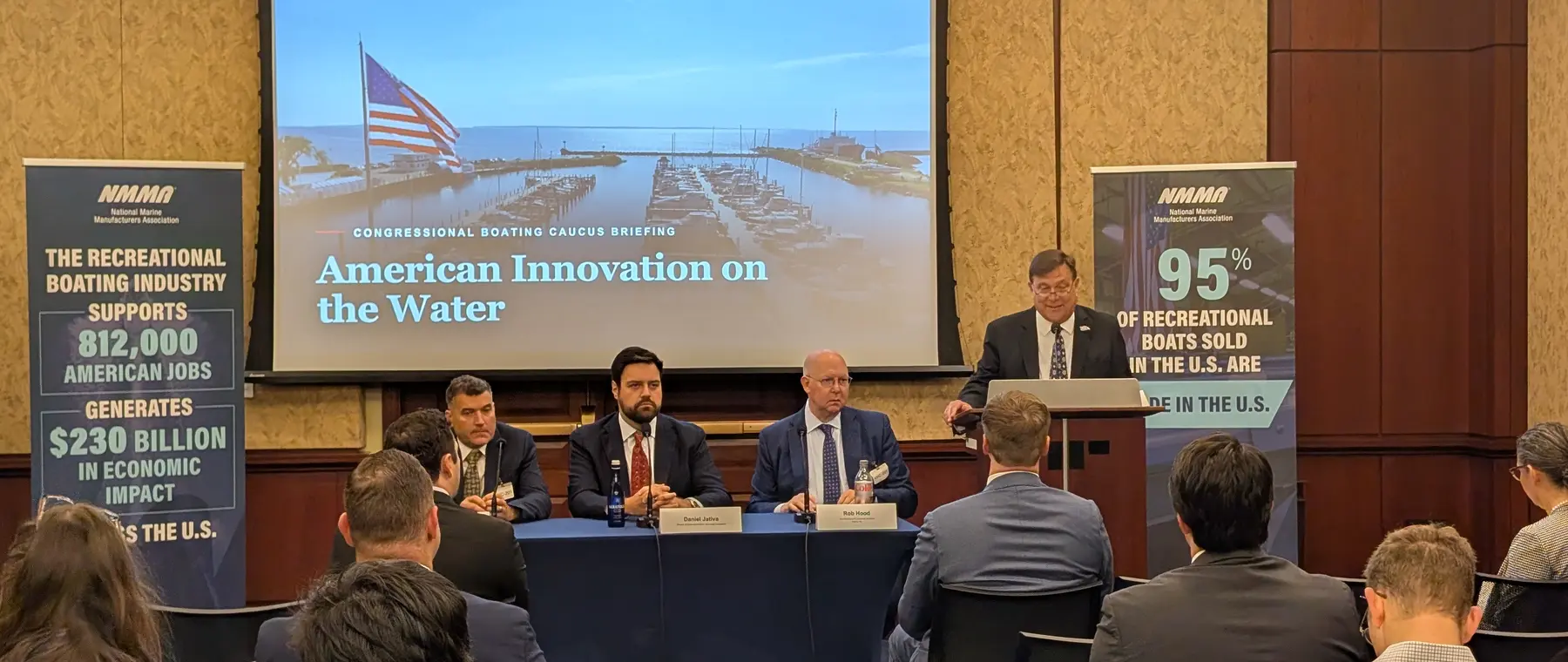
Marine technology often reaches owners through a new helm display, propulsion package or control system, but the wider industry sees those products as part of a much larger manufacturing and investment story. NMMA brought that argument to Capitol Hill in September through a briefing focused on American marine innovation.
The session included representatives from Yamaha’s US Marine Business Unit, Brunswick Corporation, the National Marine Electronics Association and Polaris. It was held for congressional staff as part of the Congressional Boating Caucus.
The briefing focused on technology already reaching boats
Participants highlighted developments intended to make boating safer, more efficient and easier to use. These areas include propulsion, connected electronics, manufacturing processes and systems that reduce the workload placed on owners at the helm.
For LYG buyers, the relevance is practical rather than political. Many of the technologies discussed in industry forums eventually appear on production yachts as joystick control, integrated navigation, digital switching, assisted docking or more efficient propulsion.
Manufacturing scale formed part of the case
NMMA said recreational boating supports approximately $230 billion in annual US economic activity and more than 812,000 jobs across 36,000 businesses. The association also said 93% of US boatbuilders are small businesses.
Those figures help explain why technology policy and manufacturing conditions matter to the marine sector. Even large yacht brands depend on broad supplier networks made up of much smaller specialist companies producing electronics, components, materials and services.
Innovation increasingly crosses company boundaries
A modern yacht may combine propulsion from one manufacturer, displays from another, network standards developed elsewhere and software that links several systems together. The briefing brought companies and industry bodies together because no single manufacturer controls the complete ownership experience.
That interdependence is one reason standards and compatibility matter so much. Owners benefit most when new technology integrates cleanly rather than creating another isolated screen or proprietary system that complicates servicing.
The owner ultimately judges whether innovation is useful
Industry briefings can emphasise research and investment, but the market test remains simple. A new system has to make a boat safer, more reliable, easier to operate or more enjoyable enough that owners value it.
For LYG readers, the most important trend is therefore continued convergence. Propulsion, navigation, connectivity and control are becoming parts of one digital ownership environment rather than separate pieces of equipment selected in isolation.