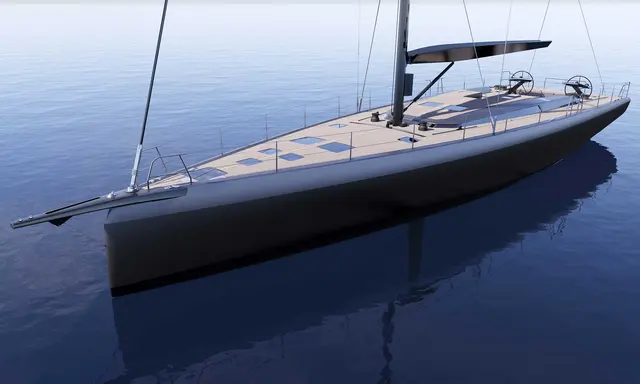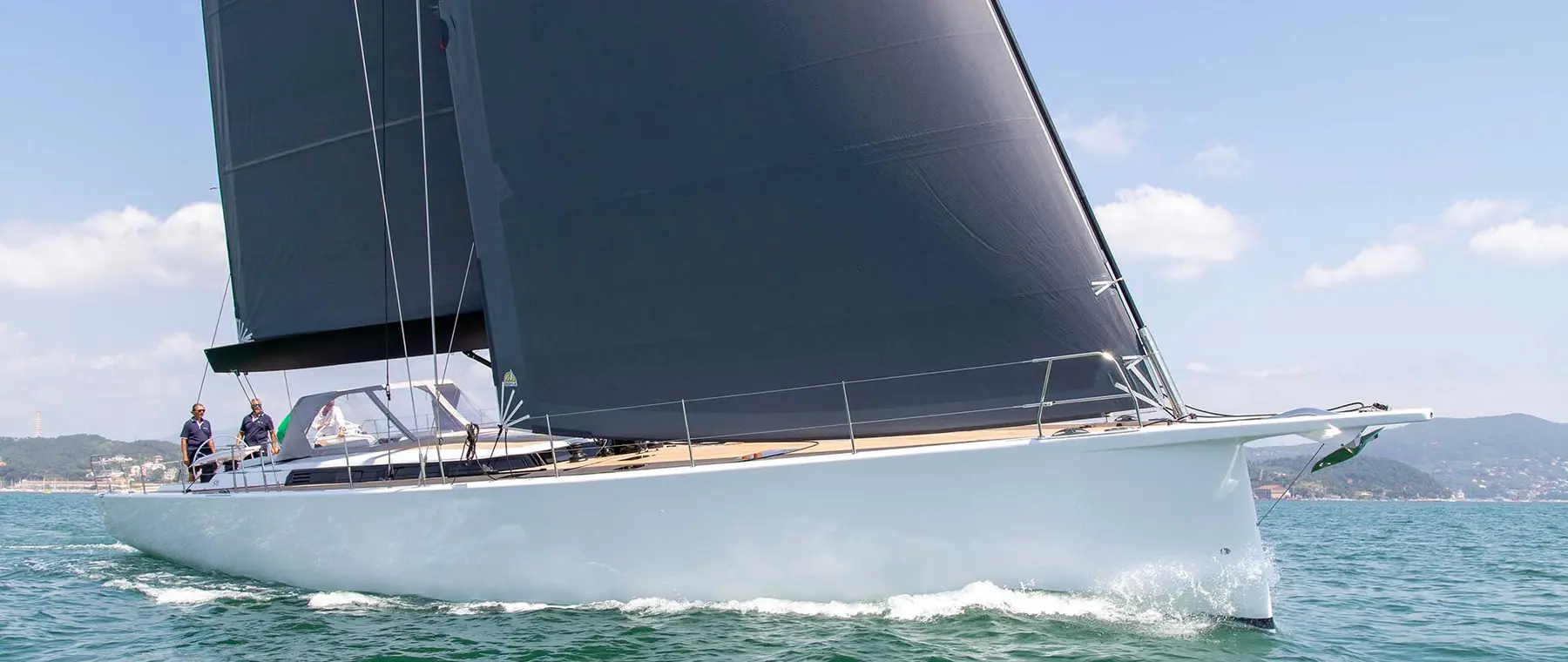
ICE Yachts is giving the 21.30-metre ICE70 Sport its world premiere at Cannes 2026, presenting a performance-focused fast cruiser developed with Felci Yacht Design. The new model combines a lifting keel, carbon rig and lightweight composite construction with accommodation and systems intended for extended cruising.
The ICE70 Sport sits below the 23.99-metre ICE80 Blue Water but follows the same broad philosophy of combining race-influenced engineering with luxury-cruiser usability. Its hull uses an epoxy-infused glass-and-carbon hybrid structure, while the deck is full carbon and the rig is supplied by Axxon.
A lifting keel balances depth and access
The Cariboni hydraulic lifting keel changes draft from 2.75 to 4.47 metres, allowing the yacht to reduce draft when approaching shallower waters and extend it when sailing performance becomes the priority. That range gives owners more flexibility than a fixed deep keel while preserving the righting moment expected from a performance cruiser.
Variable-draft systems add moving components below the waterline, so successful ownership depends on careful installation and maintenance. The value is strongest for owners who genuinely use shallow harbours or anchorages rather than carrying the additional complexity without taking advantage of it.
Carbon rig and electric winches support performance
The yacht uses an Axxon carbon mast with a furling boom and Harken electric winches, combining a high-performance sail plan with systems intended to reduce crew workload. The published sail inventory includes a 150-square-metre mainsail, 115-square-metre jib and a 388-square-metre A2 gennaker.
Those numbers underline that this remains a powerful sailing yacht even though the deck systems are designed to make handling more manageable. Owners should still match the sail plan to crew experience, because powered winches and furling systems reduce physical effort but do not remove the need for sound seamanship.
Yanmar propulsion and cruising systems sit below deck
Auxiliary propulsion is provided by a 230hp Yanmar 4LV through a V-drive shaft line, with an Onan 13.5kW generator supporting hotel loads. ICE Yachts lists 1,080 litres of fresh water and 1,000 litres of fuel, giving the technical package a clear long-range cruising brief.
The combination of a shaft drive and conventional diesel generator may appeal to owners who value established service networks and familiar machinery. It also keeps the propulsion package separate from the yacht’s high-performance sailing systems, which can simplify troubleshooting during extended cruising.
The Sport model broadens ICE Yachts’ Cannes line-up
Cannes gives ICE Yachts a platform to show the ICE70 Sport beside the larger ICE80 Blue Water, demonstrating how the yard is applying similar design principles at two sizes. The smaller yacht may be particularly attractive to owners who want serious performance but prefer to remain closer to the scale of a conventional owner-operated cruiser.
The final measure will be how comfortably the yacht shifts between its two intended roles: fast sailing and relaxed cruising. A successful balance would make the ICE70 Sport relevant to buyers who might otherwise have to choose between a more extreme performance yacht and a heavier bluewater cruiser.