Professional voters put multibeam sonar first
The National Marine Electronics Association selected Furuno’s DFF3D as the 2026 Product of Excellence winner in the Fishfinder category. The award is voted on by NMEA members and certified installers, so the result reflects professional experience with marine electronics rather than a single laboratory comparison.
Although fishfinding is the obvious use, multibeam sonar can also help owners understand seabed shape, locate underwater structure and build a clearer picture of the water around the yacht. Those capabilities are especially useful to cruising owners who fish, dive or regularly explore unfamiliar anchorages.
A 120-degree view replaces a narrow slice
The DFF3D operates at 165 kHz with an 800-watt output and can show a 120-degree swath from port to starboard. Furuno quotes side-beam detection to about 200 metres and direct-down detection to around 300 metres, with actual performance depending on installation, bottom conditions and the water itself.
That wide coverage is the main difference from a conventional single-beam sounder, which samples a much narrower portion of the seabed. The DFF3D can therefore show not only depth but also the direction in which fish schools or underwater features lie relative to the vessel.
Four display modes make the data easier to interpret
Furuno provides Cross Section, 3D Sounder History, Triple or Single Beam Sounder and Side Scan modes. The 3D history view can place fish-school icons over a representation of the seabed, while Side Scan is designed to reveal structures such as wrecks or changes in bottom shape to either side.
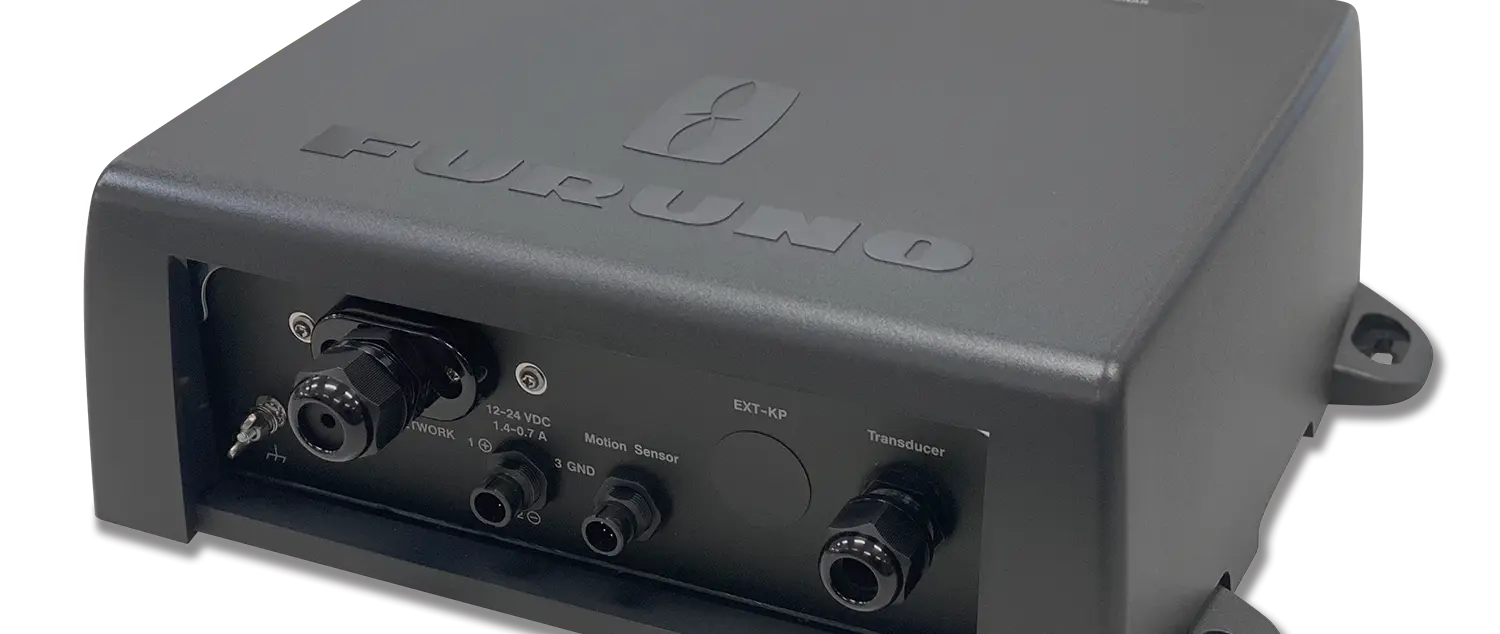
The transducer includes a motion sensor to stabilise the displayed information when conditions become rough. That matters because a yacht rarely remains perfectly level at sea, and removing some of the vessel motion from the data can make underwater features easier for an owner or skipper to understand.
Why it matters beyond serious sport fishing
On a luxury yacht, electronics increasingly serve several roles instead of one narrowly defined task. A multibeam sonar can support fishing, diving, seabed awareness and route planning around local features, making it relevant even when catching fish is only one part of the owner’s cruising programme.
The NMEA award does not mean every yacht needs this level of sonar, because installation cost and transducer requirements still have to make sense for the vessel. It does, however, highlight the continuing movement from simple depth numbers toward richer underwater information on the same multifunction displays used for navigation.
Official sources: www.nmea.org; www.furuno.com.