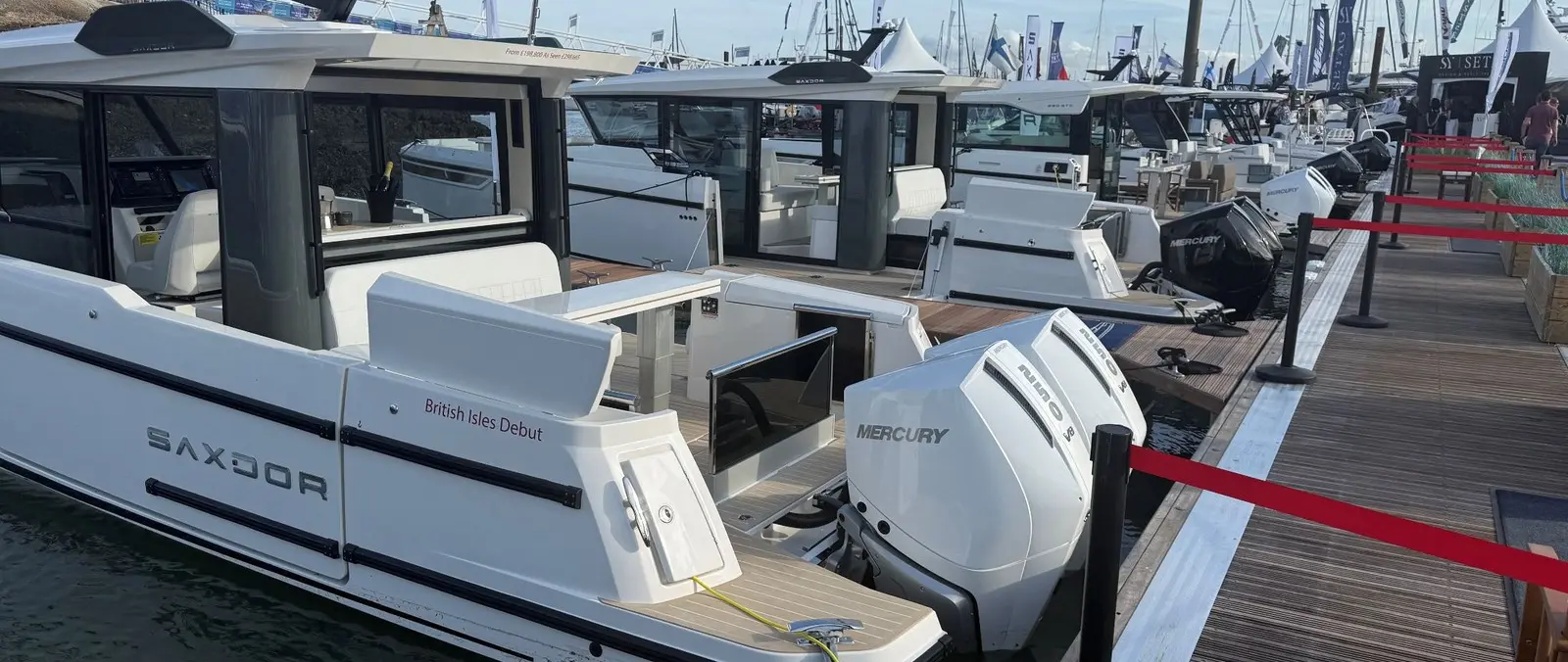
An engine share snapshot from Southampton
Barrus reports that Mercury engines accounted for 54% of engines in the Southampton International Boat Show's main open display areas in September 2026. Yanmar, also distributed in the UK by Barrus, represented 40.5% of inboard engines fitted to vessels on display, according to the company's figures released on 1 October.
These are shares of equipment aboard boats exhibited at one show, not a comprehensive audited measure of nationwide engine sales. The distinction is important when interpreting manufacturer claims about leadership in a competitive market.
Two different propulsion segments
Mercury's broad range includes outboards used on sports boats and some larger leisure craft, while Yanmar is a significant supplier of diesel inboard engines for cruising vessels. The configurations involve different installation, service and operating considerations.
Buyers of 12–23.99m yachts should focus on the engine package specified for their chosen boat rather than assuming a popular brand automatically delivers the best performance. Hull design, gearbox, propulsion system and load can all matter.
Dealer networks and servicing
Barrus highlights the strength of its UK dealer network as an explanation for the prevalence of its brands at Southampton. For an owner, parts availability and trained technicians can be as valuable as performance at delivery.
An international yacht may operate in several jurisdictions over a season, where dealers vary in their available expertise. Warranty coverage and diagnostic equipment should be confirmed for the intended cruising region.
Fuel consumption and range
Fuel use depends on engine load, displacement, hull condition and operating speed. A single figure quoted for an engine cannot establish the range of a completed boat without a realistic consumption curve.
Before a purchase, prospective owners should ask for sea-trial data with a typical cruising payload and clear reserve assumptions. That approach makes comparisons between diesel inboards and alternative arrangements more useful.
Yanmar and inboard integration
A diesel inboard installation can involve shaft drives, saildrives or other mechanical arrangements, with differing access and maintenance requirements. Proper ventilation and exhaust engineering remain fundamental in each case.
The prevalence of Yanmar at the show does not establish that every displayed installation was identical. Technical compatibility and suitability for a yacht's expected duty cycle take priority over market-share figures.
What the Southampton numbers mean
Barrus chief executive Graham Knox connected the show's results with customer trust and continued support from builders and dealers. The company has distributed marine equipment for decades, giving it a substantial role in the British supply chain.
The October announcement offers a specific exhibition snapshot worth reporting. Owners should combine that market context with independent engineering advice and the practical availability of service.
Maintaining modern propulsion
An engine installation should allow safe access to filters, fluids and diagnostic points. Common maintenance tasks become more difficult when machinery is fitted without considering the person who will later service it at a marina or during a voyage.
Owners considering a repower must assess not only the engine itself but also controls, mounting, exhaust, cooling and the driveline. Professional engineering review is essential before replacing a propulsion package.