One night at Formentor
On 11 October 2026, the dining room at Shima became the setting for a deliberately small collaboration between two accomplished kitchens. Four Seasons Resort Mallorca at Formentor brought Ramón Freixa, the Spanish chef associated with two Michelin stars and three Repsol Suns, together with its executive sous chef Javier Hoebeeck for a four-hands dinner.
The resort announced details after the event, describing an intimate service with limited seating and a tasting menu paired with Ruinart Champagne. It was a one-night collaboration rather than the introduction of a permanent restaurant or a recurring tasting menu. That distinction makes the dinner interesting as an expression of Formentor's culinary direction rather than a promise of what a future guest can necessarily book.
Why a four-hands dinner feels different
A chef residency often allows an invited personality to recreate familiar signatures in a new room. A four-hands format can be more revealing because two culinary approaches must occupy the same progression of courses, finding room for contrast without pulling the diner in opposing directions.
Freixa's reputation is built around technically precise, highly expressive cooking. Hoebeeck's approach, as characterised by the hotel, emphasises Mediterranean seafood, seasonal produce and an international sense of flavour. The value of pairing them lies in seeing whether the shared menu can carry both personalities without becoming a sequence of unrelated showcases.
A journey beginning at the coast
The opening kitchen aperitifs established the dialogue quickly. Hoebeeck's bluefin tuna tartare on crispy corn introduced a crisp texture against the fish, while Freixa answered with baby squid presented in its own ink. Even on paper, the dishes communicate different instincts: one builds around freshness and contrast, the other uses depth and concentrated marine flavour.
That opening suits a resort whose identity is intimately connected with the Mediterranean. Formentor's landscape and the sea beyond are more than a picturesque background when seafood sits at the centre of a menu. The choice of ingredients can echo a location without pretending that every dish is strictly traditional to the island.
Beans, red mullet and a dialogue in texture
In the first course, Hoebeeck paired red mullet with Peruvian peppers, bringing a South American note into the conversation. Freixa offered ganxet beans in their own broth with cockles, a preparation that draws attention to a quieter balance of legumes and shellfish.
This sort of pairing is a useful illustration of why tasting menus benefit from careful sequencing. A vibrant pepper-led dish may awaken the palate, while a more restrained broth can ask the diner to slow down and examine texture. Neither style has to be declared superior for the conversation to become compelling.
The central seafood expressions
The second course became more elaborate. Hoebeeck prepared a marine chawanmushi featuring sea urchin, wild mushrooms and truffle, combining a Japanese custard technique with ingredients of pronounced aroma and depth. Freixa's companion dish, Purity, placed Jerusalem artichoke and langoustine alongside Java pepper and almond pil-pil.
Both creations demonstrate the chefs' willingness to move beyond literal regional boundaries. What matters in a successful service is whether the flavours reinforce the individual ingredient rather than masking it. A menu that uses sea urchin, langoustine and truffle together must be particularly disciplined in managing richness and salinity.
A dramatic final savoury chapter
The final savoury course drew again on the richness of Mediterranean waters. Hoebeeck's Mediterranean parihuela used red prawn, eel and blue crab, interpreting a seafood tradition with several distinct textures. Freixa's Red Lobster Wellington centred on Mediterranean red lobster, an ambitious ingredient in an equally elaborate presentation.
These were not modest dishes, and that was part of the evening's intended theatre. In a dining setting reserved for a small group, there is room for the chefs to make visible both their technique and their personal vocabulary. The question for guests is how the progression feels as a whole, not simply which plate makes the most striking photograph.
The sweet finish and Champagne pairings
Dessert continued the two-chef conversation. Freixa presented Shallot, which the hotel described through banana and Oloroso sherry, while Hoebeeck offered Corn & Aji Amarillo, working with corn textures and yellow chilli. Petit fours completed the service, bringing an intentionally playful finish to a complex tasting sequence.
Ruinart Champagne accompanied the dinner as an integrated pairing, rather than appearing only at the beginning. The advertised price was €250 per person including the pairing. That is a record of this particular event's format and should not be read as the tariff for dining at Shima on an ordinary evening.
Shima as a stage
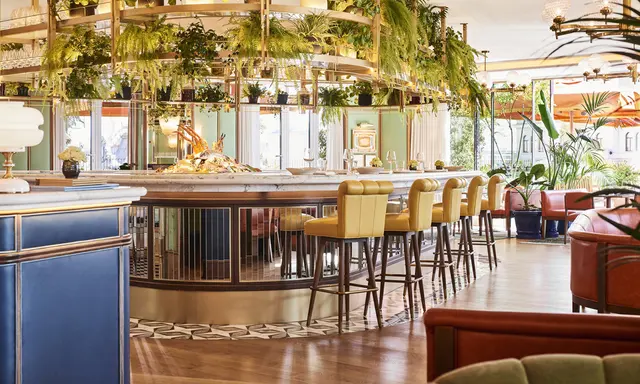
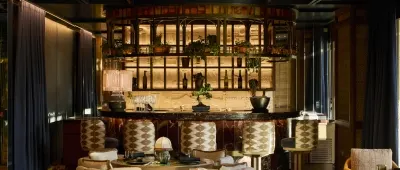
The restaurant's design and outlook contribute to the character of such collaborations. At Four Seasons Mallorca, Shima brings contemporary Asian influences into a setting overlooking resort gardens and the Mediterranean. It provides a distinctive backdrop for a menu with Japanese technique, Spanish ingredients and chefs whose experiences span multiple traditions.
The dinner also formed part of a larger annual programme of guest chefs, mixology collaborations and special services at the resort. Such events allow a destination hotel to act as a cultural and culinary meeting point, offering returning guests an evolving reason to revisit the same coastline.
What the collaboration suggests for luxury travel
The Freixa-Hoebeeck evening is best understood as an example of the experience-led direction of high-end hospitality. Travellers seeking an exceptional meal may be drawn not solely by a celebrated chef's name but by the particular combination of people, season, wine and setting that makes one evening impossible to reproduce exactly.
No future repeat of this menu has been announced in the hotel's release, and the 11 October service is complete. Its lasting relevance lies in demonstrating the ambition of Mallorca's dining scene and the willingness of resort kitchens to collaborate across styles. For culinary travellers, such programmes are worth watching well before their next Mediterranean journey.