Madrid welcomes a chef from Buenos Aires
Four Seasons Hotel Madrid has introduced a meeting of two culinary worlds at Dani Brasserie, bringing Argentine chef Gonzalo Aramburu together with the hotel's executive chef Antonio Soriano. The collaboration was announced for the evening of 22 October 2026, with one specially arranged dinner rather than a permanent new restaurant concept.
For travellers following the evolution of fine dining, the attraction lies in the chef's particular perspective. Aramburu leads the Buenos Aires restaurant that bears his name, described by the hotel as Argentina's only establishment with two Michelin stars. His arrival in Madrid offers a glimpse of a contemporary Argentine culinary identity in a city with its own deeply rooted restaurant culture.
An Argentine identity beyond familiar clichés
Argentine food is often reduced in international conversation to its celebrated beef and grilling traditions. Those traditions matter, but the country's contemporary kitchens also work with a more varied range of regional ingredients, farmers, fish, vegetables and fine-dining techniques. A guest-chef evening provides a stage for exploring that broader vocabulary.
Four Seasons says Aramburu's menu will focus on Argentine produce and its relationship to the people who grow and supply it. The emphasis on producers is meaningful: it places an ingredient in a geographic and human context before the kitchen transforms it. The official announcement does not publish a complete dish-by-dish menu, so any description of specific plated creations would be speculative.
Two chefs and one service
Aramburu is joining Soriano within Dani Brasserie's culinary programme, an arrangement requiring collaboration between a visiting chef and the host's established team. The guests may see a single evening's work, but behind such events lie careful coordination over equipment, suppliers, sequence, service pacing and wine choices.
That practical partnership is important because celebrated chefs do not work in isolation. A demanding dish depends upon the kitchen's precise timing and familiarity with ingredients. A well-designed collaboration allows the visiting style to remain recognisable while ensuring the consistency expected of a restaurant operating inside a leading luxury hotel.
The meaning of two Michelin stars
The distinction attached to Aramburu's Buenos Aires restaurant brings significant attention, but awards should be treated as a guide to the chef's reputation rather than a promise that every visiting meal will duplicate the home restaurant. This is a different venue, with different ingredients, staff and a separate one-night format.
The true interest for guests is the opportunity to encounter a philosophy outside its usual setting. The hotel describes Aramburu's work in terms of identity, product, creativity and emotion. Those ideas can be tested through the organisation of a menu, the degree of restraint on a plate and the choices that shape a wine pairing, not simply through a chef's awards.
A conversation between Madrid and Buenos Aires
Spain and Argentina share language and long cultural connections, yet their gastronomic expressions have developed in distinct climates, landscapes and traditions. Positioning the event as a dialogue between the cities gives its setting more meaning than a simple celebrity-chef appearance.
A hotel in central Madrid can provide the international guest list and service structure for that conversation, while a visiting Buenos Aires chef brings knowledge from a restaurant shaped by South American ingredients. Soriano's role is to help make that encounter coherent in the setting of Dani Brasserie. Guests are invited to experience an exchange, not choose which city cooks better.
Naked at Dani Brasserie
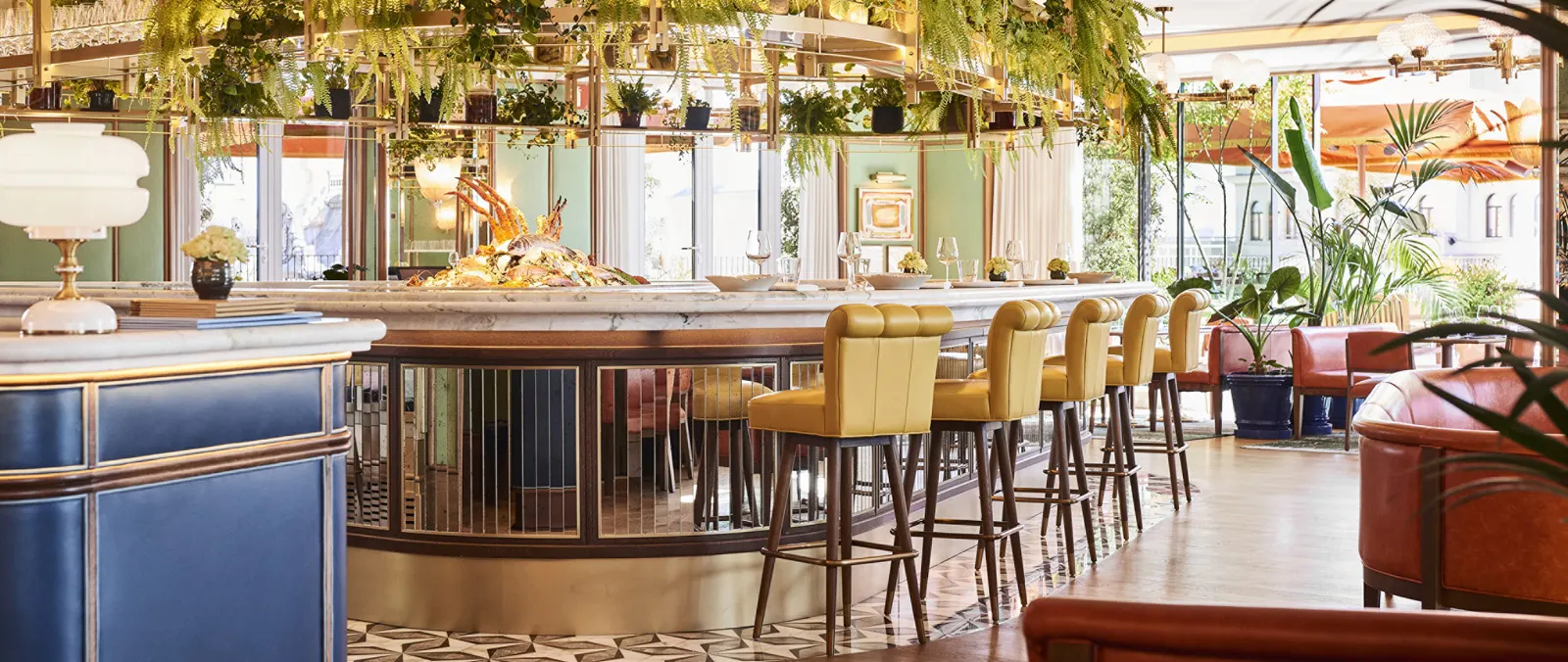
The dinner was arranged for Naked, the designated space within Dani Brasserie at Four Seasons Hotel Madrid. The hotel set the time at 8pm on Thursday 22 October and announced a fixed price of €195 per guest, including the menu and a wine pairing. Those are the event's stated terms, not the restaurant's usual à-la-carte prices.
The date places the collaboration just behind us as of this report. Four Seasons did not announce a second public seating or an extended residency in its release. Readers planning a future Madrid visit should contact the hotel directly for the current restaurant programme rather than assume the Aramburu tasting will be repeated.
Why short-lived culinary events matter
A one-evening dinner can sometimes achieve something that a permanent menu cannot. Chefs can take creative risks within a defined occasion, and returning guests can discover a fresh aspect of a restaurant they thought they knew. The format also rewards careful reservation planning, a familiar part of luxury travel.
There is, however, a limit to what can be assessed from advance information alone. Without independently sampling the plates or confirming how service unfolded, the responsible approach is to describe the announced collaboration and its intended culinary focus. A polished event announcement is not the same as an observed restaurant review.
Craft rather than spectacle
The most compelling aspect of this Madrid initiative is its emphasis on the relationship between a chef, a product and a sense of place. Those ideas are relevant across contemporary fine dining, where complex techniques can sometimes overshadow the origin of what is being cooked. Aramburu's participation puts Argentine producers and culinary identity at the centre of the conversation.
For luxury travellers, such programmes are another reason to watch a hotel's calendar rather than treat dining as an afterthought to accommodation. Four Seasons Madrid's 22 October collaboration illustrates how an international city hotel can connect guests with a culinary tradition from another continent, even during a single carefully orchestrated evening.