A rough diamond with a coastal history
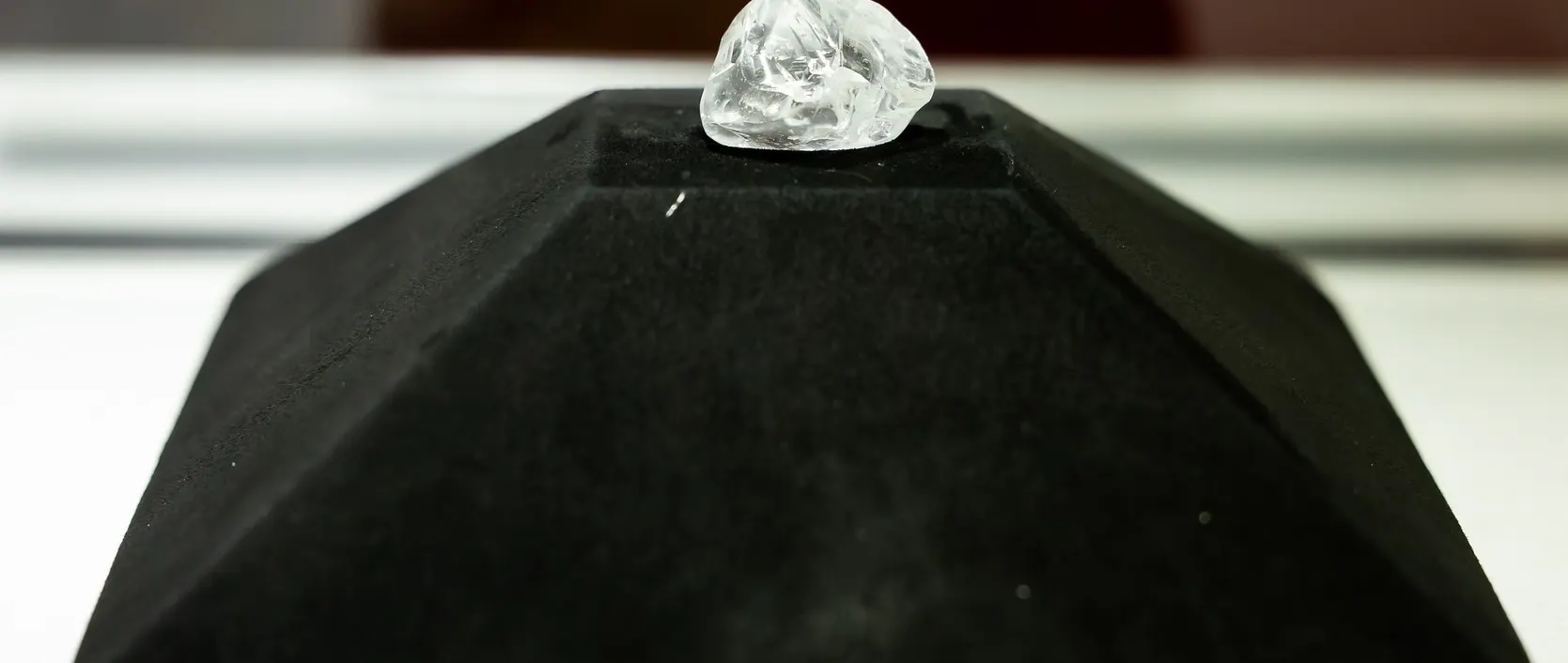
A diamond encountered in its rough state can look considerably different from the brilliant object displayed in a jewellery shop. Its external form has not yet been reorganised into the carefully arranged sequence of polished surfaces that will determine much of the appearance of the finished gem. On 18 November 2026, De Beers Group announced the Washington presentation of Owishi, a 176-carat natural diamond recovered at Namdeb's Southern Coastal Mine near Oranjemund in Namibia.
The presentation, organised with Grandview Klein Diamond Group at The People's House: A White House Experience, is part of a wider journey through which the companies intend to draw attention to the origin of the stone and the work involved in turning it into polished material. De Beers describes Owishi as the largest diamond of its kind recovered at that mine in more than twenty years. The announcement does not specify a final polished weight or a valuation.
The choice to show the rough stone is interesting because it gives visitors a glimpse of a stage of jewellery production ordinarily absent from the experience of selecting a finished piece. For readers interested in gems and the natural environment, especially those familiar with the landscapes of southern Africa, the origins of this find offer a particularly compelling connection between the earth, the river systems and the Atlantic coastline. Its exceptional size is not the only aspect of its history worth considering.
From the interior of southern Africa to the Atlantic
De Beers describes the journey of this diamond in the context of the geological processes that have concentrated valuable stones along Namibia's southern shores. Natural diamonds form deep within the Earth under particular conditions. Over long geological periods, material carried towards the surface can become exposed through the weathering of the rocks in which it was transported. Erosion and rivers can subsequently move resistant minerals far from their original deposits.
The Orange River is a prominent part of the account of Namibia's coastal diamonds. Material carried downstream reaches the Atlantic, where the movement of water and sediment can distribute it along the coast. The resulting deposits are therefore connected with environments very different from those in which the diamonds originally formed.
For someone accustomed to thinking about the sea primarily as a place of recreation, the story illustrates another dimension of a coastline. Beaches and marine sediments are part of a continuing interaction between the land and the water. Their composition reflects the geology of the regions from which the material arrived and the physical processes through which it was subsequently redistributed.
The company's account provides a broad explanation of Owishi's geological origins rather than a detailed scientific determination of the precise path followed by this individual diamond. It does not establish a measured age for the specimen itself. The interest lies in its association with a well-known diamond-bearing coastal region and the unusually long natural history preceding its recovery.
Why the rough weight is only the beginning
The carat is a unit of mass equivalent to one fifth of a gram. Owishi's announced weight of 176 carats therefore describes a rough diamond of 35.2 grams. This figure is not an indication that a polished diamond of the same weight will become available. The conversion from rough to polished material involves decisions about which parts of the original stone to retain, how to arrange the surfaces and whether to produce one principal stone or several separate gems.
Those decisions cannot be made solely on the basis of the exterior shape visible in the official photograph. The characteristics within the rough, including inclusions and areas that may affect the feasibility of particular cutting choices, need detailed examination. The specialists responsible for planning the work must consider how the final proportions of each piece will influence its appearance.
A polished diamond's value and visual character are not directly proportional to its mass. The relationship between its colour, clarity, cut and carat weight is important, and other factors can contribute to the market's assessment of a particular stone. A large rough diamond may therefore present a series of competing possibilities rather than one inevitable outcome.
At the time of the Washington announcement, De Beers has not provided a complete technical grading report or a definitive plan identifying the number and shapes of the polished stones that will result. It would be premature to attribute a particular colour or clarity grade, estimate the final yields or suggest that the original rough weight establishes the eventual commercial value. Those matters will become clearer as further details are released.
The importance of where the work is carried out
Following the American tour, Owishi is expected to return to Namibia for polishing at the Grandview Klein Diamond factory. The companies describe the involvement of Namibian artisans with extensive experience in diamond manufacturing as a significant part of the project. The arrangement draws attention to the distinction between recovering a rough mineral and performing the specialised work through which it becomes suitable for jewellery.
Cutting and polishing require expertise that is different from the work associated with extraction. The value of a particular approach depends on a detailed understanding of the material and the ability to implement the chosen plan with precision. A decision that removes part of the stone cannot simply be reversed. The work is therefore an important illustration of the relationship between technical knowledge and craftsmanship.
For Namibia, the location of these activities also has a broader economic significance. In a country associated with the production of rough diamonds, the presence of skills and facilities for subsequent manufacturing can allow different stages of the industry to take place domestically. The economic effects depend upon the actual employment, business arrangements and distribution of income arising from those activities.
The November announcement does not provide a timetable for completing the polishing of Owishi or identify the design of any jewellery that will incorporate the finished material. It is an account of the planned next stage. The prospect of following the stone through that transformation may be particularly interesting to people who usually encounter diamonds only once the manufacturing process is complete.
Provenance and the questions worth asking
Owishi was officially named at a ceremony in Windhoek on 30 September 2026. Its name, according to De Beers, refers to a rare form of honey found beneath the ground in Namibia. The association places the stone within a cultural context as well as a geological one. The company also connects the 176-carat weight with the American commemoration of the 250th anniversary of its founding in 1776.
The announcement introduces the company's ORIGIN programme, which uses its Tracr platform to provide information about the geographic sources of eligible natural diamonds. De Beers describes a retail experience in which customers scan a code to learn about the stone's origin and the associated industry. These are claims concerning the company's own traceability system. The existence of such a system does not automatically establish the accuracy or completeness of every claim that might be made about a separate diamond.
A person buying jewellery can ask for documentation specific to the item under consideration. A gem grading report, where applicable, can describe characteristics of the diamond, while provenance information addresses a different question concerning its origin and history. Neither should be assumed to establish all the matters potentially relevant to an ethical purchasing decision.
For many customers, these considerations are relevant even if they are buying a relatively small stone. The opportunity to understand how a piece came to be made may contribute to the pleasure of wearing it or presenting it to another person. The interest is not limited to the acquisition of exceptional diamonds.
Economic contribution and the wider context
Namdeb is part of an equal partnership between the Namibian government and De Beers Group. In its November statement, De Beers reports taxes and economic contribution in Namibia of $431 million during 2025 and a workforce of 3,624 supported by its operations. It also describes entrepreneurship and wildlife research programmes associated with its activities. The figures and accounts are those presented by the company, rather than independent findings arising from an investigation of the industry.
Diamond extraction, manufacturing and trade involve complex economic and environmental questions. A single exceptional stone cannot serve as a complete measure of the social benefits or impacts of an entire sector. Evaluating those questions requires broader information about working conditions, revenues, environmental management and the experiences of the communities concerned.
For Luxury Yacht Guide readers, the immediate news is the presentation of a remarkable rough diamond and its planned return to Namibia for further work. No retail price, jewellery design or opportunity to acquire a polished Owishi stone has been announced in the source. Its current importance lies in the story of the material itself. The natural processes that placed it near the Atlantic coast and the human decisions that will determine its final appearance offer a perspective on jewellery that extends beyond the finished object in a showcase.
Sources and lead image
Source documentation: https://www.prnewswire.com/news-releases/de-beers-group-in-collaboration-with-grandview-klein-diamond-unveils-namibias-176-carat-owishi-natural-diamond-in-washington-dc-302943973.html. Lead image: The rough Owishi diamond displayed before cutting and polishing — De Beers Group, official photograph accompanying its 18 November 2026 announcement.. Official issuer-supplied press photograph, reproduced for editorial coverage of the specific announcement and resized for web display.