Mandarin Oriental puts dining and culture under one new banner
Mandarin Oriental has announced a group-wide approach to hospitality called Restaurants, Bars & Experiences, or RB&E, bringing dining, design, music, cultural programming and social atmosphere together as deliberate parts of the guest experience. The announcement, dated 2 November 2026, describes a change in how the luxury-hotel operator develops and manages restaurants and bars rather than simply a new naming convention. It also identifies actual venues in Hong Kong and planned concepts in Mallorca, giving travellers more tangible points of reference. For Luxury Yacht Guide readers, the interest is in destinations where a dining reservation might be worth making independently of a hotel stay, whether during a city visit, an island holiday or a journey between yachting destinations.
From traditional food and beverage to destinations
Hotels have long treated food and drink as vital guest services, yet some restaurants have become attractions in their own right. Mandarin Oriental's new framework makes that ambition explicit. The group says individual venues should have a distinctive identity and a reason for local residents as well as international visitors to return. A restaurant's appeal may depend on its chef, room design, music, service rhythm, bar programme and the people it draws, not merely a menu. The announcement does not mean every dining room is immediately being redesigned or renamed. Instead it sets a strategic direction for concept creation, programming and operations across the company's existing and developing portfolio.
A test begins at Mandarin Oriental, Hong Kong
The best-defined example is the phased rejuvenation of Mandarin Oriental, Hong Kong. The company says the project will bring together fourteen restaurant, bar and experience venues, combining existing names with new ideas. Terrace Boulud is among the referenced established concepts, while The Pizza Bar by Daniele and Thistle & Jade are scheduled to open on 2 November 2026, with Blake Foyer to follow. The programme also envisages a wellness-oriented dining concept linked to nutrition. These names describe a broader destination within the hotel, not fourteen simultaneously completed new restaurants. As work advances in phases, guests should check the opening status and reservation conditions of the particular venue they hope to visit.
The Pizza Bar and Thistle & Jade add different reasons to visit
Mandarin Oriental mentions The Pizza Bar by Daniele and Thistle & Jade as two new additions to the Hong Kong collection, each contributing to the idea of a venue with its own audience. The press announcement does not provide a full menu, seat count, price range or service hours for these individual concepts. It would therefore be misleading to describe a signature dish or guaranteed nightly programme on the strength of the group strategy alone. What can fairly be said is that the hotel is broadening its culinary mix while seeking to preserve its long association with Hong Kong hospitality. Visitors should use the venue's current booking information rather than relying on a launch date as proof of availability on a specific evening.
Local guests are central to the model
A hotel restaurant that appeals only to overnight guests may struggle to feel like part of its city. Mandarin Oriental argues that its RB&E venues should be culturally relevant to local communities as well as attractive to travellers. That has implications for programming, access and service. A hotel bar might become a regular meeting place for residents, while a restaurant could build a following around its chef or distinctive atmosphere. The result, if executed well, can give a visitor a more authentic sense of the destination than an interchangeable dining room. It is nevertheless an ambition described by the operator, not independent evidence that every venue will achieve this position.
Mallorca links the concept to a yachting coast
The plan also names Mandarin Oriental Punta Negra in Mallorca, where the group intends to bring Leña, Matsuhisa, Sobretaula and Jacinta together as a restaurant-and-bar destination within the resort. That is especially relevant to readers cruising the Balearic Islands and spending time ashore near Puerto Portals. A guest might select a restaurant for a particular cuisine and atmosphere while using the resort as a base for a wider coastal stay. The November announcement identifies the intended collection of names but does not give a definitive opening timetable or published menu prices for each venue. Travellers should confirm what is actually operating rather than assume the entire programme is open on the publication date.
Why a collection of venues can matter to travellers
When a resort offers several distinct places to dine, a multi-day stay can feel less repetitive. Guests may choose a relaxed meal one evening, a more formal restaurant the next, and a bar for music or socialising on another occasion. The quality of that variety depends on clear differentiation, not simply the number of outlets. Mandarin Oriental's strategy explicitly seeks individually conceived venues rather than identical concepts copied across hotels. For families and couples moving between a yacht and a hotel, access, dress codes, booking windows and transport arrangements can be as important as the style of cuisine. A carefully managed dining programme is valuable when it offers genuine choice without sacrificing service consistency.
Michelin-recognised kitchens remain part of the picture
Mandarin Oriental points to established dining operations in Asia as evidence that the new framework has credible foundations. It names The Bay by Chef Fei in Shenzhen as holding two Michelin stars, OPUS by Chef Alessio Durante in the same city as holding one, and Jiang by Chef Fei in Guangzhou as retaining two. The group reports that its Restaurants, Bars & Experiences venues collectively hold 33 Michelin stars. These are the hotel's own November statements; Michelin recognitions can change with guide editions, and diners should check the current official guide for a particular restaurant before booking on the assumption of a specific rating. Awards do not resolve personal preferences regarding cuisine, price or atmosphere.
Vienna demonstrates the multi-concept approach
The company's Austrian example includes Le Sept and the Atelier 7 family of venues: Brasserie, The Café and Izakaya & Bar. These names signal different settings and dining rhythms within a single hospitality destination. A traveller seeking a quick afternoon stop may not want the formality or pace of an evening restaurant, and a visitor interested in Japanese-influenced bar dining may have another preference again. The announced strategy aims to make these distinctions legible while keeping a common expectation of service. It does not publish universal menus or reservation policies for the Vienna venues. Their current operating arrangements should be checked at property level rather than inferred from the corporate presentation.
Craftsmanship moves beyond the kitchen
Christian Gradnitzer, Mandarin Oriental's Group Director of Restaurants, Bars & Experiences, identifies chefs, pastry chefs, sommeliers, bartenders, hosts and service teams as contributors to a successful venue. This broadens the conventional focus on a celebrated chef alone. A carefully built cocktail programme, a thoughtful wine pairing, confident front-of-house management or well-chosen music can all change a guest's experience. The group also describes closer collaboration among its specialists and more visibility for their craft. For discerning travellers, this is an interesting promise, but the measure will be consistent execution on the night of a visit, not the number of disciplines included in the corporate description.
Leadership is being adjusted for the programme
Mandarin Oriental has appointed James Norman as Regional Director of Restaurants, Bars & Experiences Operations for Europe and the Americas. The company describes experience with Ritz-Carlton, Kempinski and Mandarin Oriental across several regions and presents the appointment as support for operating quality, concept development and staff growth. Gradnitzer retains the group-wide RB&E leadership role. A new leadership title does not mean every hotel restaurant receives an immediate management change; it establishes a clearer organisational responsibility for translating the strategy into practice. The distinction matters when reading a corporate announcement: the existence of a plan should not be confused with completed transformation at every property.
Technology and personal service have different jobs
The operator says technology and guest insight will help teams respond more effectively to preferences and manage day-to-day demand. It does not announce a particular booking platform, tracking system or new guest-data product in this release. From a guest perspective, useful technology might help a restaurant remember a dietary requirement or coordinate a booking, but warmth and attentiveness still depend on people. Travellers should feel able to communicate preferences directly, especially where allergies, accessibility needs or special occasions are concerned. A promise of more intuitive service is valuable only when the necessary information is handled appropriately and the operational team can deliver it consistently.
Design, music and culture can make a restaurant distinctive
Mandarin Oriental's programme emphasises the atmosphere of a place: how it looks, sounds and feels, as well as what is served. This reflects a wider luxury-travel interest in experiences that carry a sense of local identity. Yet the most convincing expression of that idea usually comes from specific decisions: an interior suited to its surroundings, a coherent music policy, a menu that respects its culinary influences and staff who understand the narrative without reciting a script. A formula imposed identically across continents could undermine the very originality the programme seeks. The company acknowledges this by describing concepts that can develop while retaining the character of their individual destinations.
Collaborations have a place, but they are not the entire strategy
The group refers to recent culinary collaborations, including A. Wong at Mandarin Oriental Mayfair and a dialogue between Thomas Seifried and Richard Ekkebus, as illustrations of the creative exchanges it wants to encourage. Visiting chefs and special events can generate interest, but a venue also needs to work on an ordinary evening. The November framework includes commercial discipline, talent development and repeat local business alongside high-profile programming. Travellers should distinguish an occasional collaboration from a permanently available restaurant offering. Where an event is important to a planned visit, it is sensible to confirm the date, booking terms and participating chef directly with the hotel.
The distinction between a concept and an opening
Several forms of information sit side by side in the announcement: a strategy for the whole company, new leadership, venues named for Hong Kong's phased programme, and restaurants planned for Mallorca. They are not all at the same stage. The two Hong Kong concepts identified for 2 November have a stated opening date, while Blake Foyer is described as following later. Mallorca's proposed group of restaurants is a forward-looking destination plan. A responsible report must preserve those distinctions so guests do not arrive expecting unfinished facilities to be ready. Menus, prices, seasonal schedules and individual opening dates should be confirmed with each property as the projects progress.
What the change means for the luxury traveller
The enduring question is whether the place is worth visiting for its own sake. Mandarin Oriental wants its bars and restaurants to become destinations that attract city residents, resort guests and international visitors through distinct identity and quality. The concept could strengthen the link between luxury hotels and local cultural life, particularly in cities like Hong Kong and coastal destinations such as Mallorca. It may also give yacht owners more interesting choices when arranging dining ashore. The evidence so far is a verified corporate strategy with named examples, not an independent performance assessment. Its success will be measured through guest experiences, consistent execution and whether individual venues maintain a character of their own.
Primary source: Mandarin Oriental Hotel Group, 2 November 2026: “Mandarin Oriental Introduces Restaurants, Bars & Experiences”. Planned concepts and future openings are described as plans; no unannounced menus, prices or opening dates have been invented.
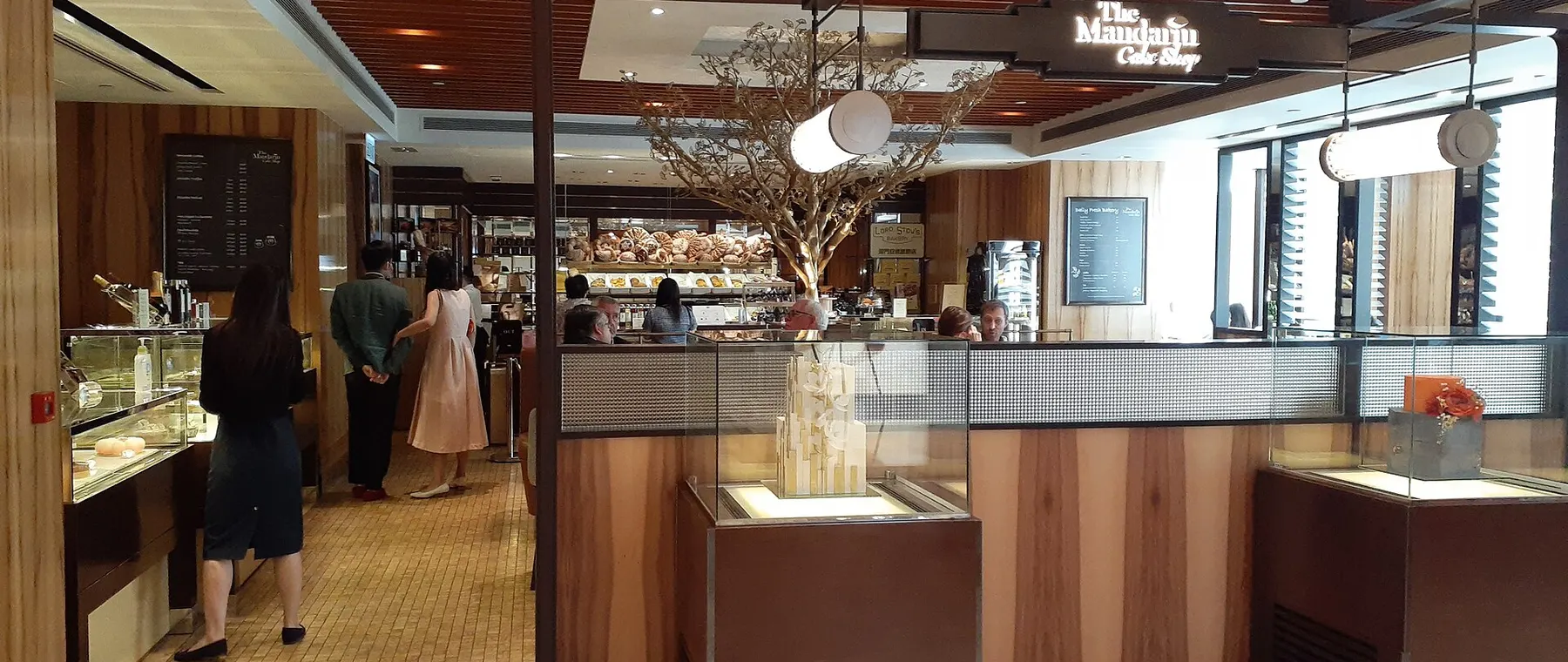
Photograph and licence: Mandarin Oriental Hong Kong café photographed in October 2020 by OANGOSHAUO Yaominza on Wikimedia Commons, CC BY-SA 4.0; resized for web. This is a historical contextual photograph, not one of the new Restaurants, Bars & Experiences venues opened in 2026.