Three wine auctions open Christie's Hong Kong luxury calendar
Christie's will put fine wine at the front of its Hong Kong Luxury Week programme in November 2026, with three live auctions scheduled for 19 and 20 November. The auction house's announcement of 3 November describes private cellars spanning Burgundy, Bordeaux and Italy, including prestigious older vintages and significant single-owner holdings. The wine auctions coincide with the sixtieth anniversary of the company's Wines & Spirits department and the fortieth year of Christie's operations in Asia. For collectors, the attraction is not merely the prestige of a label but a chance to examine curated stock, follow individual provenance claims and weigh the full costs and practical responsibilities that come with buying rare bottles.
The first sale takes in three separate cellars
The 19 November sale titled Finest and Rarest Wines: Three Stunning Cellars brings together holdings that Christie’s says reach across major European wine regions. Announced highlights include Domaine d'Auvenay and Domaine Leroy from the 1990s and 2000s, Domaine des Comtes Lafon Montrachet from the 2000s, Château Haut-Brion vintages 1926 and 1929, and a magnum of Sassicaia 1985. Those examples illustrate different collecting interests. Burgundy producers have strong associations with individual sites and vintages; a historic Bordeaux bottle can be significant because of its age and survival; a large-format Italian wine may appeal because of vintage and presentation. Each lot, however, needs to be assessed on its own evidence.
Why vintage alone is not an appraisal
A bottle dated 1926 or 1929 naturally draws the eye, but its age does not automatically establish quality, suitability for drinking or authenticity. Collectors need to consider storage history, fill level, closure integrity, label and capsule condition and any specialist observations made before sale. Older bottles can also be acquired for historical rather than immediate drinking interest. The Christie's news release lists the two early Haut-Brion years as highlights but does not provide a tasting assessment or a guarantee of remaining quality. A responsible buyer should request condition notes and compare those notes with the lot's estimate, provenance and intended purpose. Even a highly regarded wine can have a different risk profile after decades in storage.
Mr. Aki Asami's cellar supplies the second programme
A separate live auction on 19 November, The Distinguished Cellar of Mr. Aki Asami, is presented as an important collection centred on Domaine de la Romanée-Conti. Christie's says it includes 57 bottles of Romanée-Conti, accompanied by other sought-after wines from Harlan Estate, Petrus, Domaine Leflaive and Emmanuel Rouget. The number is a headline inventory statement, not a claim that all 57 bottles form one lot or share identical condition. The auction catalogue will determine how bottles are divided, the range of vintages and the relevant estimates. Collectors should avoid extrapolating a whole-cellar valuation from the quantity alone, or treating a familiar estate name as a substitute for lot-by-lot inspection.
The special standing of single-owner cellars
A well-documented collection can be attractive because it presents a clearer narrative of acquisition and storage than a series of unrelated bottles. That does not mean provenance is beyond question, and the distinction between a named owner, a documented chain of custody and verifiable conditions of storage should remain clear. Bidders can ask what records accompany each lot, whether bottles have been professionally examined and how any known imperfections are described. A single-owner story can explain the character of a sale, but it is not a blanket guarantee. The catalogue's specific evidence, the auction terms and independent advice are more useful to a purchasing decision than an assumption that a distinguished owner necessarily maintained every bottle identically.
A broad Burgundy-led third sale follows on 20 November
The next day's event, The Grand Cellar: Legendary Wines from Burgundy and Beyond, is described by Christie's as an offering of more than 500 lots from a significant private collection. The auction house says the vintages span the 1940s to the 2010s and identifies producers including Domaine de la Romanée-Conti, Domaine Armand Rousseau, Coche Dury, Henri Jayer, Domaine Leroy, Jacques Selosse, Krug and Petrus. The breadth of that period is important. Bidding on a wine from the 1940s requires different expectations from acquiring a bottle produced a few years ago. Prospective buyers can use the catalogue to distinguish old bottles kept for historical interest from younger examples intended for future cellaring.
Champagne and Bordeaux extend the choice
Although Burgundy is prominent in the announced producer list, the third sale reaches into Champagne and Bordeaux as well. These categories involve different bottle types, closures, storage considerations and collecting traditions. Prestige Champagne can be sensitive to prolonged heat exposure and rough transit just as still wine can, while mature Bordeaux may have acquired significant sediment over time. A sale summary cannot answer how a specific bottle should be handled. A serious collection plan therefore includes safe receipt and storage as well as the decision to bid. There is little value in securing a rare wine only to expose it to avoidable transport and temperature problems after the auction.
What is known and what remains to be verified
The official 3 November release establishes the sale names, the 19–20 November schedule, the anniversary context and selected estates and headline quantities. It does not publish a complete lot-by-lot condition register within that short announcement. Nor does it specify the final hammer prices, which cannot exist before the sales take place. Any precise estimate, provenance statement, bottle size or condition assessment should be taken from the current lot entry, not guessed from a press summary. Luxury Yacht Guide has intentionally not attached invented prices to Château Haut-Brion, Sassicaia or Romanée-Conti examples. A collector should be able to distinguish announced contents from a forecast of financial performance.
The Hong Kong location and preview dates
Christie's lists its Asia Pacific headquarters on the sixth floor of The Henderson, 2 Murray Road, Central, as the Hong Kong sale location. The wider Luxury Week preview is scheduled from 18 to 25 November at the same building; a Shanghai preview runs from 9 to 13 November at Christie's Shanghai Art Space in BUND ONE. The announcement states that pre-registration is required and warns that preview dates and venues can change. It does not guarantee that every wine lot can be personally inspected at every event or throughout the entire viewing period. Visitors who are travelling specifically for an individual bottle should consult the specialist team and confirm whether relevant viewing arrangements are available.
How bidders can compare the three sales
Although all three events sit within the Wines & Spirits programme, their character appears different from the published summaries. The first combines notable bottles from three cellars and several wine regions. The second highlights a named private collection with a particular concentration of Romanée-Conti. The third offers a wider lot count and a timeline stretching over many decades. A collector seeking one historically significant object may approach the first differently from someone building a vertical of vintages in a producer's range or replenishing a mature cellar. The best approach is to establish a clear collecting aim before comparing lots, estimates, conditions and potential transport arrangements.
Buying costs extend beyond the hammer
An auction purchase is more expensive than the winning bid alone when buyer's premiums, applicable taxes, shipping, insurance and storage charges are included. A cross-border purchase may involve import procedures or restrictions that differ by destination. Auction-house terms and current local rules are the authority for the precise amounts. The Christie's release does not present a universal total-cost formula for all bottles or all buyers. Prospective bidders should obtain an itemised estimate before committing capital, with a particular eye on old or unusual bottle formats that may need specialist handling. A prudent budget also allows for secure storage at the destination rather than assuming immediate consumption.
Transporting collectible wine after the sale
Temperature control, careful packaging and reliable documentation are vital after any major wine purchase. Bottles should not be left in a vehicle or transit location where temperatures can fluctuate sharply. Shipping arrangements need to account for the age of closures and the possibility of sediment or fragile labels. Where a seller or specialist carrier offers advice for an old bottle, that guidance deserves consideration alongside insurance terms. Buyers based aboard yachts face an additional question: whether conditions on the vessel are sufficiently stable for the proposed collection. A yacht's motion, heat and humidity can make a shore-based professional cellar the more conservative choice for valuable long-term holdings.
The difference between cellaring and drinking
The term 'fine wine' can cover two quite different intentions. Some buyers acquire bottles for a special dinner, while others are interested in preserving a rare vintage as an object of collection. The practical considerations are not identical. If a bottle is intended for drinking, the buyer may want expert advice about its probable maturity and suitable serving arrangements. If it is intended for long-term keeping, records, storage and insurance become central. No press release can guarantee how a decades-old wine will taste upon opening. Christie’s listed producers and vintages help readers identify what will be offered, but cannot provide an outcome for the individual bottle.
What a catalogue examination should include
A serious review begins with a lot number and the exact lot description. Buyers can confirm the number of bottles, sizes, producer, vineyard designation, vintage and estimate. They can then read condition reports, photographs and disclosed provenance, noting any missing information that warrants a specialist enquiry. The meaning of an original wooden case, a label mark or an unusual fill line can vary depending on the bottle's age and type. For a multi-bottle lot, condition may not be identical across all contents. Treating every item as a separate physical object is more reliable than treating a famous producer's name as an assurance of homogeneity. Catalogue amendments should be checked immediately before bidding.
Why the auction matters to the wider luxury calendar
Hong Kong Luxury Week also includes jewellery, watches and handbags later in November, but the fine-wine programme has its own identity and timetable. Christie's marks sixty years of its Wines & Spirits department in 2026, making the sale sequence part of a longer collecting history. For Luxury Yacht Guide's readers, it connects travel, hospitality and specialist collecting with the practical discipline of stewardship. A bottle can be enjoyed in an extraordinary setting, yet its authenticity, storage and careful handling remain essential. The responsible value of an auction preview is that it allows collectors to prepare questions while there is still time to study the objects.
A preview, not a report of sold prices
At the time of writing on 7 November 2026, the three Hong Kong wine auctions have not taken place. No sell-through rate, achieved price or record result should be asserted. The verifiable development is that Christie’s has announced three distinct offerings on 19 and 20 November, including Mr. Aki Asami's named collection and a separate sale with more than 500 lots. The details provide enough substance to plan a specialist visit and examine the catalogues without making speculative promises about the market. Anyone considering a purchase should confirm current sale arrangements and obtain professional advice where questions of authenticity, condition or cross-border importation arise.
Primary source: Christie's official Hong Kong Luxury Week announcement, 3 November 2026. This report focuses on the 19–20 November wine auctions; it does not reuse the separate watch or jewellery previews as its news subject.
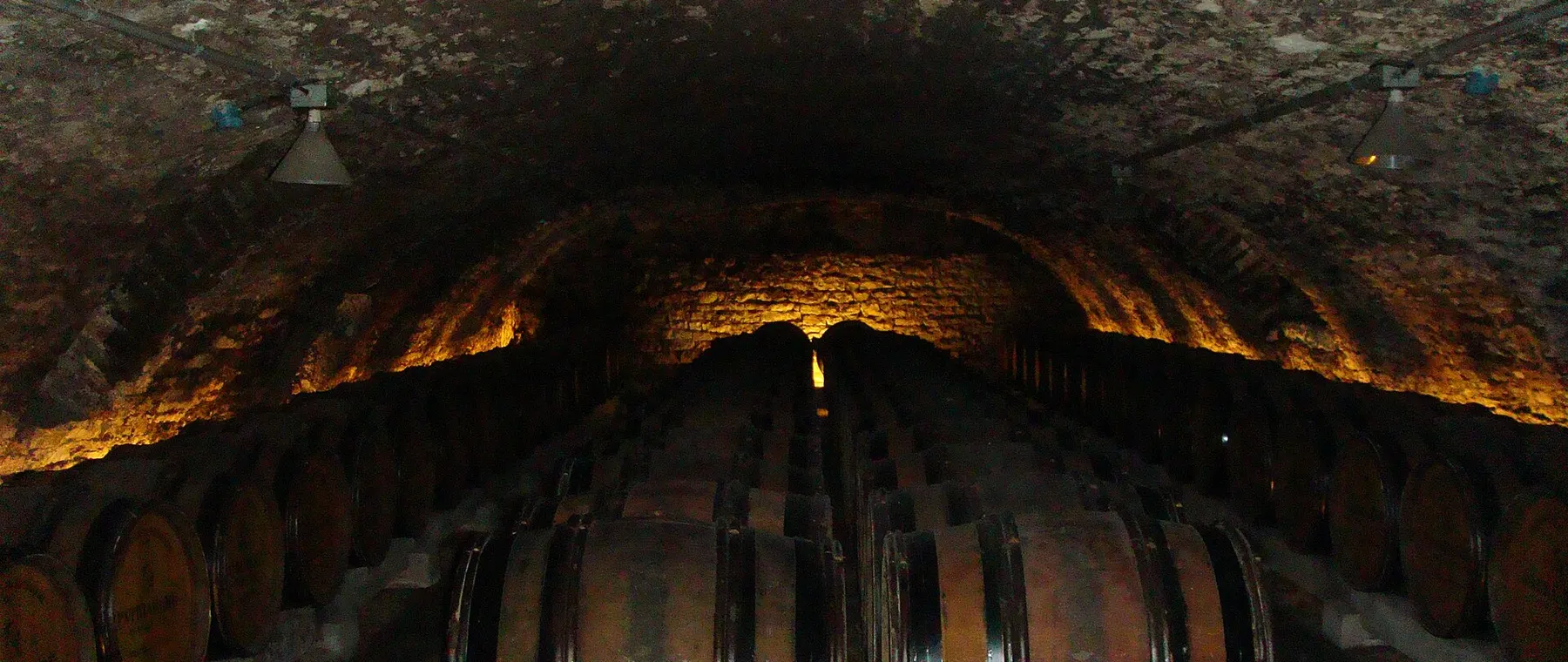
Photograph and licence: A Burgundy wine cellar photographed by Philip Larson on Wikimedia Commons, CC BY-SA 2.0; resized for web. This is a contextual photograph of wine ageing in Burgundy, not a wine cellar or any lot from the November Christie's Hong Kong sales.