Cagliari's sailing base becomes an ocean classroom
The Luna Rossa America's Cup sailing team has opened part of its Cagliari base to the Ocean&Climate Village, an exhibition exploring how marine ecosystems, climate and human activities influence one another. The show was inaugurated on 9 October 2026 as a collaboration involving UNESCO's Intergovernmental Oceanographic Commission and Prada Group's SEA BEYOND programme. Its opening has brought scientists, educators, designers and sailing professionals into a setting normally associated with competitive yacht development.
The initial programme was scheduled for two days, but organisers have extended public access until 15 October. That extension makes the exhibition relevant to visitors in Sardinia who may have missed the weekend opening. It does not change the scientific purpose of the project: the ambition is to improve understanding of the ocean, rather than to provide access to Luna Rossa's confidential racing equipment or a guided tour of every workshop.
Formafantasma reframes the ocean as one system
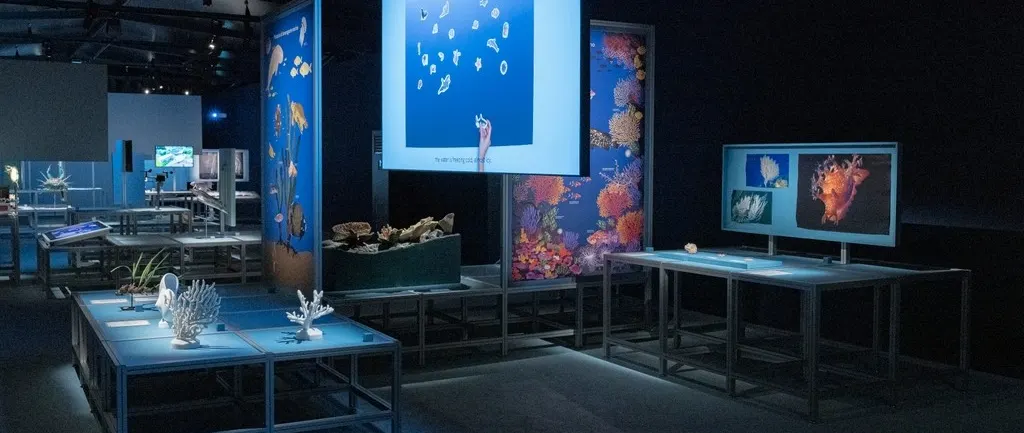
Design and research studio Formafantasma created a new exhibition concept divided into four thematic chapters: One Ocean, The Climate Engine, Biodiversity and Ocean Anomalies. Together they connect ocean circulation, living species and planetary processes that are frequently discussed separately. The installations use imagery, physical objects and sound to help visitors approach complex scientific relationships without requiring specialist training.
The emphasis on connection is relevant to sailors because conditions on the water rarely arise from a single isolated factor. Temperature, wind, currents and ecological changes interact across wide areas. A cruising yacht experiences those effects through sea state, navigation decisions and the places it visits. The exhibition is an invitation to understand that wider context, not a substitute for weather forecasts, pilotage or professional environmental research.
Science exhibits stretch from ice cores to coral
The new Cagliari display includes a three-dimensional model of a blue crab, ice-coring instruments linked to the Follow the Ice project and photographic evidence of deep-water corals documented by marine researcher Giovanni Chimienti. Visitors can also encounter a life-size representation of a tropical coral environment, describing reef restoration work by Coral Gardeners. These objects put different marine environments alongside each other to illustrate their shared dependence on healthy ocean processes.
An immersive sound installation explores the underwater acoustic world, a subject with growing significance for yacht operators. Marine animals rely on sound in ways human passengers may not immediately recognise. The display does not issue new yacht noise limits, but it encourages discussion about operating behaviour, equipment selection and the effects of marine traffic. It also helps explain why a quiet sea surface can conceal a complicated and vulnerable environment below.
A sailing team's role reaches beyond racing
Luna Rossa has contributed a workshop on nautical knots, introducing young visitors to an accessible maritime skill. The programme sits alongside ocean-literacy sessions led by SEA BEYOND ambassadors and learning activities developed by Fondazione Prada's Accademia dei bambini. Combining practical seamanship with science gives children a tangible way to connect what they can do with their hands to a broader understanding of the marine world.
The knot workshop also offers a useful contrast with the technology-driven reputation of America's Cup campaigns. Composite engineering, foil design and sophisticated instrumentation dominate headlines, yet basic maritime knowledge remains relevant across sailboats of every size. A rope demonstration cannot teach professional deck operations in a day, but it can make the world of sailing more approachable for students encountering it for the first time.
An unusual exhibition venue on the waterfront
The site is the Luna Rossa base near Molo Ichnusa in the Port of Cagliari, overlooking a working Mediterranean harbour. It offers an unusual backdrop for scientific outreach, with visitors entering a place normally tied to a major international sports campaign. The city already has a strong relationship with sailing and maritime trade, making the location relevant to residents as well as visitors travelling around Sardinia.
Those planning to arrive by yacht should not assume the exhibition entrance includes a dedicated guest berth or unrestricted port access. Marina arrangements and local harbour procedures are separate from admission to the display. Travellers should check official event registration and current opening hours before visiting, particularly because the schedule was expanded beyond the original public dates.
Photographs connect distant island ecosystems
Climate artist and SEA BEYOND ambassador Enzo Barracco is presenting photographs from the Galápagos Islands and Hawaii. These island settings are popular in travel imagination but are also places where marine conditions, biodiversity and human pressures can be observed with unusual clarity. The images provide a visual counterpoint to the exhibition's models and research instruments.
Photographic storytelling can draw attention to ecosystems that most visitors will never see in person. It can also introduce difficult questions about travel impacts and the need to respect protected areas. For yacht owners who plan voyages through sensitive destinations, independent local guidance, legitimate permissions and care in anchoring or wildlife encounters matter far more than simply admiring the scenery.
A longer partnership between Prada and UNESCO
SEA BEYOND began in 2019 as a collaboration between Prada Group and UNESCO's Intergovernmental Oceanographic Commission, with an emphasis on educational initiatives for younger generations. The programme has subsequently expanded into community projects and support for marine research. Cagliari builds on previous editions of the travelling exhibition and is part of a renewed relationship involving Luna Rossa ahead of the 38th America's Cup.
The corporate and sporting partnerships should not obscure the role of participating researchers and educators. Ocean conservation involves field measurements, scientific review and local knowledge that extend far beyond any single sponsor. What an exhibition can usefully provide is a place where visitors encounter those subjects and are motivated to learn more from trustworthy scientific organisations.
How visitors can experience the extended exhibition
The public extension runs through Thursday 15 October 2026, with organisers indicating daytime opening and a later start on Monday 12 October. Entry is described as free, but the city's tourism information notes that registration is required. Visitors should check the most recent Luna Rossa and local tourism notices because times, capacity and access requirements can change even during a short exhibition.
The project offers a valuable chance for sailing enthusiasts and families to engage with the environmental context of their time on the water. Its lasting effect will depend on whether that interest leads to stronger scientific understanding and more careful behaviour at sea. For now, the confirmed development is a real, operating installation inside the Cagliari sailing base, with newly extended public access and a programme specifically designed for ocean education.