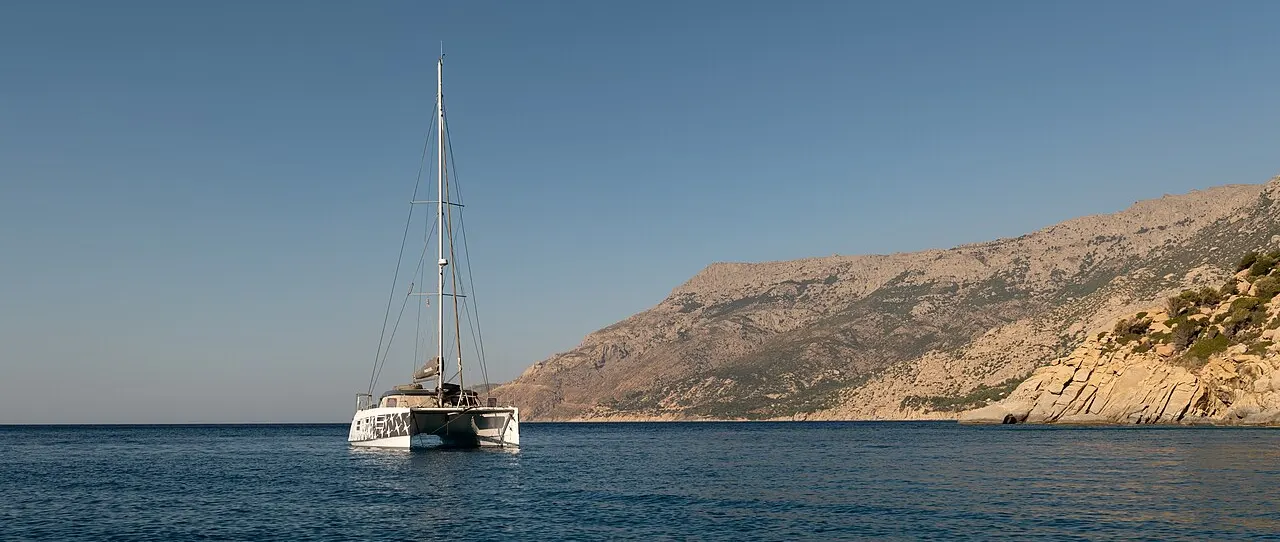
A slower island reached by sea
Ikaria rewards the owner who treats an island visit as more than a pin on a chart. In the eastern Aegean, its appeal is not a procession of waterfront boutiques but a working coast, villages climbing away from the water and a rhythm shaped by local life. For a luxury yacht between twelve and twenty-four metres, that changes the itinerary. Shore time can be spent walking, taking an unhurried meal and returning to the boat without trying to squeeze every attraction into one afternoon. The practical decision is to choose a sensible harbour and let the island reveal itself from there.
Begin with the port, not the postcard
Agios Kirykos, on the southern side of Ikaria, is identified by the island's visitor information as a principal port, with a marina in the harbour area. Evdilos is the other principal ferry gateway on the northern side. Both are useful names when studying the island, but neither should be assumed to provide an available visitor berth simply because it appears on a map. A skipper should seek confirmation from the relevant harbour authority or marina operator before committing to an arrival. The result may determine whether the day's plan involves a berth, a suitable alternative or a revised route.
What harbour life adds to a luxury stay
Choosing Agios Kirykos is about access to the island as much as dockside convenience. A walk from the waterfront introduces a place where ferries, local shops and everyday errands share space with visitors. Guests accustomed to large international marinas may appreciate the different scale. The value lies in being able to leave the yacht for a coffee, find locally prepared food and absorb the pace of a small Aegean town. Make a shore plan that accommodates working-harbour activity, restricted areas and passenger operations. A marina is a base for visiting, not a substitute for local navigation instructions.
Evdilos offers another perspective
Evdilos belongs in the passage plan even when it is not the chosen port. On the island's northern coast, it presents a different approach and can shift the balance between driving, walking and exploring nearby villages. Being near a ferry quay does not make a space available to a private yacht; the distinction is particularly important when the boat has a tender, significant draft or a tight manoeuvring radius. Check current port arrangements locally and do not plan an arrival around an unverified photograph. For guests, the attraction of Evdilos is the chance to encounter another face of the same island.
Ashore beyond the quay
The island tourism material highlights villages as well as beaches, and a good itinerary should make room for both. Rather than presenting every stop as a destination to be ticked off, choose one inland village and give it an afternoon. The experience may be as simple as sitting under trees, browsing a small shop or looking at how homes and terraces occupy the hillside. Local roads can be winding; allow more time than the distance on a screen might suggest. Arrange transport in advance and keep a realistic return time so a relaxed outing does not become an anxious dash to the harbour.
Beaches are not interchangeable anchorages
Ikaria's beaches form part of its identity, but their names and photographs do not establish safe yacht anchoring conditions. A sandy-looking shore can have exposed swell, limited holding or restrictions unfamiliar to a visiting crew. Distinguish clearly between selecting a beach to visit by land and selecting a place to anchor a yacht overnight. Use current nautical charts, local notices, appropriate weather forecasts and first-hand advice before either decision. If a beach is best approached from a road, that is not a lesser experience. It leaves the vessel safely attended while guests can enjoy the coast without improvising a tender operation.
Respect the ferry timetable
Both principal ports support connections that matter to island residents. Large passenger vessels, their manoeuvres and associated wash can have consequences for a smaller luxury yacht, especially while lines are being handled or a tender is alongside. A crew briefing should identify the ferry activity expected during the proposed stay and the port-specific instructions that apply. Avoid obstructing established routes, leave room for commercial movements and use the communications procedures requested by the harbour. A quiet-looking quay can become busy quickly. Harbour etiquette is as much a contribution to a pleasant guest stay as polished onboard service.
A tender is an option, not a promise
A tender gives owners flexibility, but Ikaria is a useful reminder that tender use depends on conditions and lawful access. Guests may see a village just around a headland and assume it is an easy short trip. The captain must consider exposure, landing rights, swimming areas, changing conditions, fuel reserves and a clear return plan. The tender operator should know where the yacht will be and how to communicate if the landing cannot be used. The best luxury service is often the quiet decision to arrange a road transfer instead of making a scenic but uncertain sea landing.
Food gives the visit its character
On Ikaria, meals can anchor the day's itinerary without elaborate staging. The crew can arrange a shore lunch around regional ingredients, allow guests time to talk with a restaurateur and treat the meal as an introduction to the island rather than an interruption in a cruising schedule. Avoid promising a particular establishment will be open, especially outside high season; hours and reservations change. A simple plan works well: ask locally for a current recommendation, book where practical, and let the chef know if the group has dietary needs. Leave room for the possibility that an unexpectedly good conversation lengthens the afternoon.
How to brief guests honestly
A short guest briefing prevents the island from being oversold. Explain that this is a working Aegean destination with strong local character, not a resort where every experience is operated to a fixed timetable. Say which transfers are confirmed, where footwear should be comfortable, and what the day's walking involves. Give a sensible estimate for time ashore without disguising uncertainty about traffic or weather. If there are mobility requirements, plan around them before anyone disembarks. Thoughtful hospitality makes the place accessible without requiring the destination to behave like an exclusive private-island property.
Water and waste deserve attention
Short island cruises can invite casual assumptions about provisioning and waste, particularly when guests are enjoying a sequence of ports. Make a deliberate plan for fresh water, fuel, refuse and sewage before the stay. Facilities cannot be inferred from a destination description and may require advance confirmation with the operator. Crew should know what can be delivered, collected or properly disposed of, and what must remain aboard for the next suitable port. A well-run yacht should leave no trace of an improvised service call. That operational discipline helps preserve the shoreline that brought the guests here.
The season changes the experience
A late-summer photograph is a poor substitute for checking the conditions on the proposed travel date. Seasonal winds, sea state, local transport and business opening patterns can all change the character of an Ikaria call. A summer itinerary can put more emphasis on swimming and long evenings; a quieter-season visit might revolve around villages, walking and food. Neither is inherently better. The important task is to match the actual forecast and local services to the guests' interests. Build the itinerary around confirmed practicalities, and retain the flexibility to spend an extra day elsewhere if conditions demand.
One day or two
A single port call can yield a satisfying glimpse of Ikaria, but it should not be filled with distant sightseeing ambitions. One day is better spent walking a town, taking a relaxed meal and visiting a carefully chosen nearby location. With two days, guests can compare the harbour atmosphere with a village or another stretch of coast. The second day also provides a little breathing room if transport or weather runs late. Avoid treating the boat like a floating coach. A luxury yacht's advantage is the ability to carry its own comfortable home, making fewer activities feel like a richer experience.
Photography without an invented story
The island's visual appeal is strongest when photographed with restraint. A harbour scene that includes working boats, a cafe terrace and the hills behind it can say more about the destination than a generic luxury-yacht shot. Photograph identifiable people only with appropriate consideration, and respect restrictions near ferry or port operations. When publishing or sharing images, identify the actual location and date rather than presenting an unrelated vessel as if it were permanently based here. Owners can enjoy a more personal record by combining wide coastal views with small details: doors, fishing gear, local craft and the light at the end of a visit.
A departure that stays flexible
Before leaving Ikaria, review the next leg against current weather, the yacht's range and each guest's tolerance for a lively passage. The owner may want one last swim, but the captain should not let a beach stop compromise the safe departure window. Confirm harbour departure requirements, have the tender properly secured and make sure the guests know when the boat will be underway. The most memorable part of the island may turn out to be its refusal to hurry. Leaving with time in hand, rather than rushing for a rigid schedule, keeps the experience consistent with its character.
Why it belongs on a smaller luxury yacht itinerary
For owners and charterers of twelve-to-twenty-three-metre luxury yachts, Ikaria offers a contrast to destinations defined primarily by shore-side prestige. Its value is rooted in ports that serve real island life, villages worth visiting at walking pace and beaches that reward informed planning. The destination should be approached with a captain's normal caution about berth availability, weather and tender permissions, not with invented promises about marina capacity or protected anchorages. Once those practical questions are answered, there is room for an indulgence that costs very little: an unhurried afternoon in a place that does not arrange itself around the yacht.