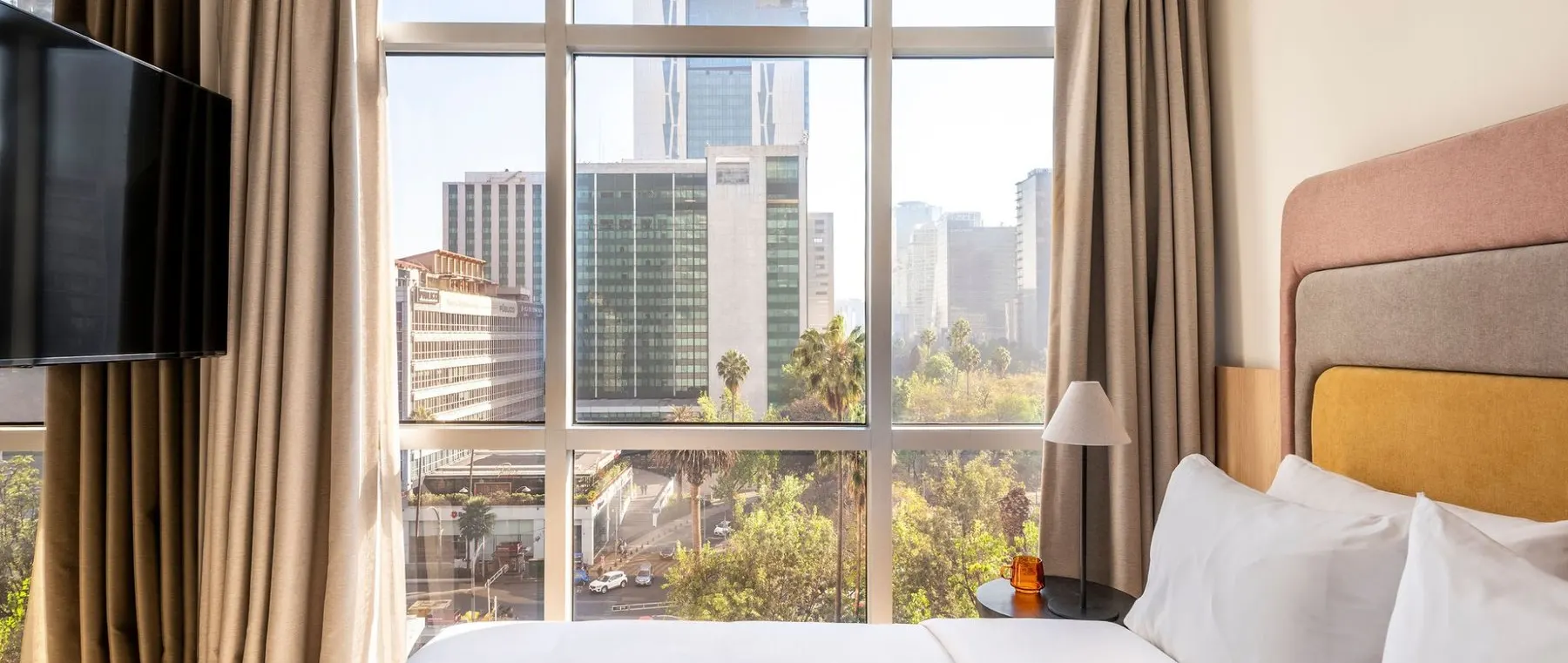
Hyde arrives in Mexico City
Hyde Hotels has opened Hyde Mexico City Reforma, its first property in Latin America, bringing the brand's music-led and socially oriented approach to one of the Mexican capital's most prominent urban corridors. Ennismore announced the opening in September 2026, identifying 106 guest rooms, studios and suites within an adapted pair of towers along Paseo de la Reforma. The launch is notable both for the brand's geographic expansion and for its decision to work with an existing building rather than presenting a wholly new structure as its central attraction.
The setting places the hotel near Zona Rosa, a district known for nightlife and LGBTQ+ cultural history, with galleries, restaurants and shops forming part of the neighbourhood's character. Such a location can be especially attractive to visitors who prefer exploring a city from street level instead of spending most of their time inside a resort. The official launch material is the basis of this independent overview, and guests should still check current operating details, room arrangements and availability before committing to a stay.
Adaptive reuse instead of a blank-slate tower
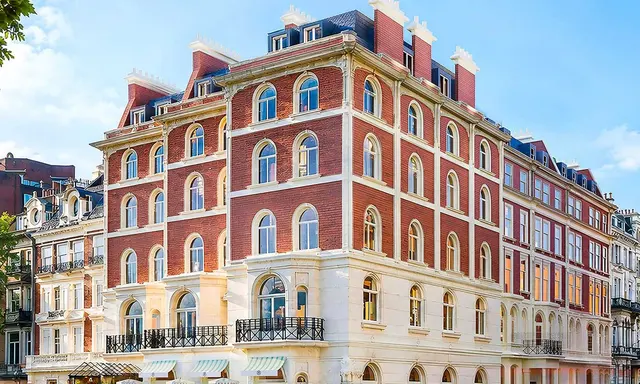
Ennismore says the hotel occupies two towers dating from an era of Mexican modernist architecture, with the original facade and essential infrastructure retained during the redevelopment. That form of adaptive reuse can give a hospitality property a different relationship with its surroundings from a new building designed without historic constraints. Rather than treating the location as an interchangeable address, the project uses the existing structure as a starting point for a new hotel identity.
Preserving a building's original features does not automatically make every guest room comfortable or every circulation route intuitive. The success of the conversion depends on acoustic separation, lifts, access, maintenance and the practical details that visitors experience after check-in. Travellers interested in architecture may appreciate the retained exterior and the contrast with contemporary interiors, while others will place greater weight on quiet rooms and efficient service. Both perspectives are reasonable when evaluating a hotel built from older urban fabric.
The location beside Reforma and Zona Rosa
Paseo de la Reforma is a useful reference point for visitors planning business and leisure activities in Mexico City. Hyde's official description places it near boutiques, cafés, cultural venues and the active streets of Zona Rosa. The neighbourhood's varied identity is part of the property's positioning: guests can move from the formal scale of the avenue into smaller streets associated with food, music, nightlife and local community life.
That proximity should inform planning rather than create unrealistic expectations. A central address may be convenient, but travel times across a large city depend on traffic, the chosen mode of transport and the hour of day. Guests who value sleep should also ask about room orientation and possible street noise. A strong city break is often built by choosing a few neighbourhoods to explore deeply, leaving time for spontaneous discoveries instead of turning every day into a demanding journey between distant attractions.
One hotel building with two distinct identities
An unusual feature of the project is its relationship with the forthcoming SO/ Mexico City Reforma. Ennismore says the two hotels share a lobby, dining destinations and some public areas, while maintaining distinct brand identities. Hyde is being developed around music, discovery and a social atmosphere, whereas SO/ is described as focused on art and fashion. The arrangement suggests a hospitality complex in which different groups of guests may use overlapping facilities without booking the same hotel experience.
Prospective customers should ask which amenities are included with their specific reservation and whether any areas are shared or restricted. A photograph of a dramatic public space may appear in marketing for both brands, but it does not necessarily tell the guest how access works. The collaboration can be appealing for people who enjoy a lively venue with multiple dining options, though others may prefer a quieter standalone hotel. Understanding the operating arrangement before arrival is the sensible way to decide which atmosphere suits a particular trip.
A dark-green marble atrium and striking sculpture
The hotel entrance is described by Ennismore as a dramatic atrium finished with dark green marble. At its centre stands Vulcano, a sculptural work by Mexican architect Javier Senosiain, made from numerous colourful ceramic elements. The company presents the artwork as a symbol of storytelling and communication. It is a strong visual statement, and one that seeks to make the lobby a memorable part of the stay rather than simply a functional place to collect a key.
Art in an everyday public space can prompt visitors to think about the people and ideas behind the work. Senosiain's involvement is also a reminder that Mexico City's design culture extends well beyond the hotel itself. A guest interested in the piece might use it as the start of a wider architectural itinerary, perhaps seeking out other museums or buildings during the visit. The hotel's ability to make that connection meaningful will depend on whether staff can share context about the work rather than relying solely on its visual impact.
One hundred and six rooms with playful names
Ennismore describes 106 guestrooms, studios and suites with contemporary furnishings, warm textures and views towards the city. The category names draw on music and performance, ranging from General Admission Queen rooms to All Access King accommodation and a Rockstar King Suite. These labels signal the brand's personality, but they do not replace the practical information required to make an informed choice. Room size, bed arrangement, bathroom layout and availability of an appropriate workspace remain important.
For couples travelling together, a compact room may be perfectly suitable for a weekend devoted to restaurants and city exploration. A longer visit or a working trip might justify paying for more space. Guests should compare the actual dimensions and photographs of the specific category they intend to book, and ask about any special accessibility requirements. A theatrical room name can be enjoyable, yet the best luxury decision is ultimately the one that fits the traveller's routine and budget.
Enzu brings Japanese dining to the mix
One of Hyde's planned dining destinations is Enzu Restaurant & Bar, which Ennismore described as opening in September 2026. Its concept draws together Japanese cooking techniques, seafood associated with Ensenada and Mexican-grown produce. The announcement mentions a robata grill using binchotan charcoal as well as sushi and dishes designed for sharing. It is an approach intended to create a restaurant with appeal beyond the hotel's overnight guests.
The release also identifies a fourteen-seat omakase counter, a detail that signals a more focused dining experience for people who enjoy a chef-directed sequence of dishes. Such a small counter will require careful reservation planning if demand is high. Guests should check current menus, allergens, pricing and whether the venue is fully operating during their dates. An international culinary concept can be enjoyable in a city known for its own food culture, but it is best approached as one option among many rather than a substitute for exploring local restaurants.
Sun and Moon offers a different pace
On the fourth floor, Hyde's Sun and Moon concept is presented as a neighbourhood living room, serving coffee, pastries and lighter food before shifting towards an evening lounge. Ennismore also refers to a connecting terrace intended for events and cultural programming. These elements suggest that the property is aiming to create several distinct moods across a single day, rather than treating its public spaces as a sequence of interchangeable bars.
For a guest, the practical value is the freedom to choose a setting that matches the moment. Morning coffee before a meeting, a quieter afternoon break and a relaxed evening can all happen without leaving the building. The danger in any design-heavy hotel is that programming and social activity become overwhelming for people seeking rest. It is therefore worth asking about event schedules, guest-only areas and the availability of quieter spaces if a calm stay is a priority.
A social hotel in a culturally rich city
Hyde's opening can be understood as part of a wider trend in city hospitality, where hotels try to function as neighbourhood venues instead of places used only for sleeping. The Mexico City project makes that intention explicit through art, restaurants, lounges and the connection to Zona Rosa. The result may appeal to travellers who welcome conversation and a lively atmosphere, especially those attending events or arranging a trip with friends.
At the same time, a hospitality brand is not the owner of a district's cultural identity. Zona Rosa's history, its local businesses and its communities exist independently of the hotel. Visitors who want to understand Mexico City more fully should walk beyond the immediate property, use reputable local guidance and approach the neighbourhood with respect. The hotel can be a convenient base, but the most memorable experiences are often the ones a traveller discovers outside any curated programme.
Choosing whether Hyde Reforma fits your visit
Before booking Hyde Mexico City Reforma, travellers should compare room layouts, the precise facilities available, dining reservation requirements and the practical implications of the shared spaces with SO/. Because the hotel's opening announcement is dated September 2026, it is also sensible to look for recent guest feedback and confirm which amenities have moved from a planned concept to normal operation. The actual price and cancellation policy should be checked directly rather than assumed from launch publicity.
The distinctive offer is a 106-room city hotel with an architectural conversion, a strong art installation and multiple social and dining venues in the Reforma corridor. It adds a new option to Mexico City's luxury lifestyle market without making every other kind of accommodation obsolete. Guests seeking an energetic stay may find the mix appealing, while those prioritising complete seclusion might choose differently. The independent editorial judgement is that the hotel's value lies in the specific combination of location and experience, not simply in being new.
Source: Ennismore — Hyde Mexico City Reforma official opening, 2 September 2026.