A historic downtown building becomes a hotel
Hyatt has opened Hyatt Centric Downtown St. Louis, bringing the brand to Missouri for the first time through a restored property at 1501 Washington Avenue. The official announcement, released on 19 October 2026, describes a 142-room hotel occupying a 1910 building once associated with the city's footwear industry. This is a completed opening rather than an unbuilt project, although individual room availability, dining hours and rates must be checked for the intended dates. The location offers a particular narrative for a visitor: St. Louis developed through manufacturing, trade and transport, and a historic commercial building can retain clues to that past even after its function changes. The hotel's interior style is intended to acknowledge its industrial background without abandoning modern comfort. For international travellers, the attraction may lie in staying within walking distance of downtown activity rather than in a remote resort setting. The building's new use connects urban preservation with contemporary hospitality, making it a specific opening worth recording.
The former Roberts, Johnson and Rand headquarters
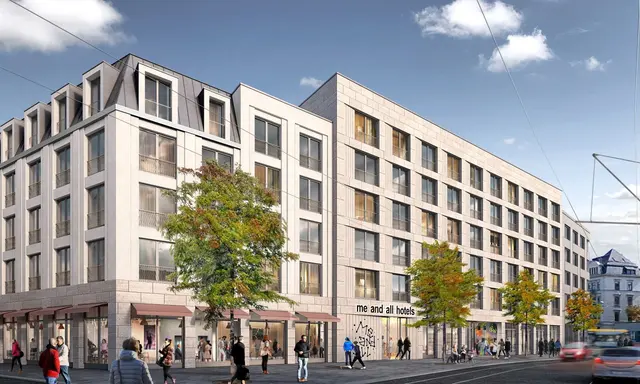
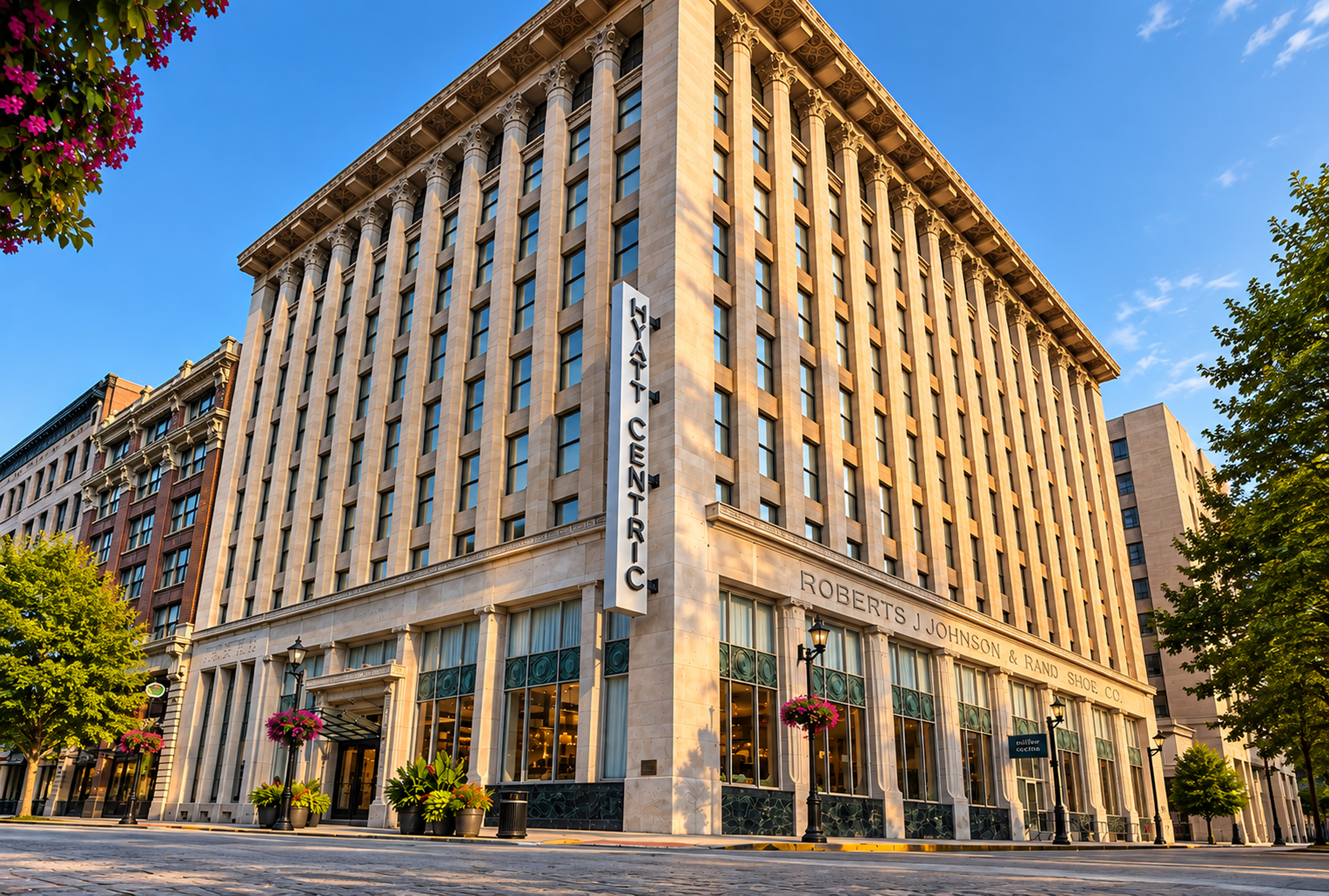
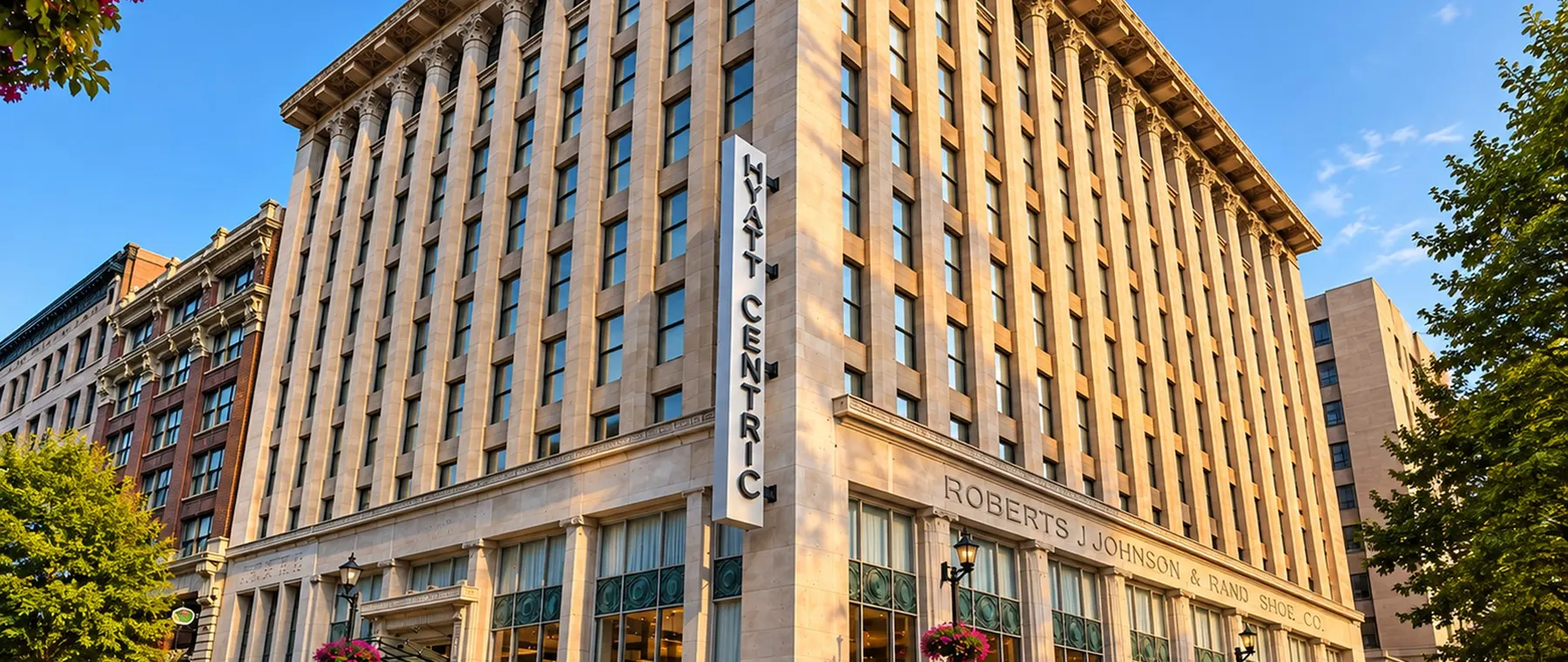
The hotel occupies the former headquarters of Roberts, Johnson & Rand Shoe Company, a major participant in St. Louis's early twentieth-century footwear business. Hyatt describes the eleven-storey building as displaying Sullivanesque architectural elements, including slender vertical lines, ornamentation and Art Nouveau influences. A design inspired by Louis Sullivan's approach to commercial architecture can express structural height and craft through the façade. But a press release is not a full architectural survey, and readers should avoid assuming that every original element has survived unchanged. The interest is that the developers chose to give a substantial historic property a new role. Adaptive reuse can retain visible reminders of a city's economic past, while it also requires updated services, fire safety and accessibility. A hotel opening within such a structure can introduce visitors to local history in a practical way, provided heritage is handled thoughtfully rather than used as superficial decoration.
Rooms balance original proportions with new requirements
The 142 guestrooms are described as having generous natural light, high ceilings, oversized windows and a contemporary, industrial-influenced appearance. Selected rooms include separate seating areas with sofas, but the operator does not say that every room has this feature. A traveller should consult the actual room category before booking. Historic commercial buildings may offer distinctive proportions, yet conversion to accommodation can produce varied layouts, noise considerations and circulation patterns. A large window can provide city views, while privacy and solar exposure may differ between floors. Hotel photographs show an intended quality of finish, not an independent measure of mattress comfort, soundproofing or housekeeping. Those details matter during a real stay and deserve later evaluation. For someone who enjoys characterful buildings, the opportunity is to occupy spaces shaped by an earlier industrial era. Successful hospitality requires those spaces to function reliably for modern guests.
A place to begin exploring St. Louis
Hyatt positions the hotel as a base for visiting destinations such as the Gateway Arch, Busch Stadium, City Museum, Forest Park and the America’s Center Convention Complex. These attractions are geographically distinct, so their actual distance and transport requirements should not be collapsed into a promise that everything is immediately next door. The property's Washington Avenue address gives access to downtown activity, but travellers should check opening hours, event schedules and transport for specific plans. A family visit to a museum may require a different itinerary from an evening at a sporting event. Guests who rely on accessible transport or have large luggage should consider those needs in advance. The official announcement emphasizes urban discovery, an appropriate concept for the Hyatt Centric brand. Yet the hotel should be treated as one starting point in a wider city, not as a substitute for independent information about local activities.
The Link combines regional food and social space
The Link is identified as the hotel's principal lobby restaurant and bar, serving breakfast, lunch and dinner. Hyatt describes a New American menu featuring St. Louis-inspired dishes including toasted ravioli and a version of pizza associated with The Hill neighbourhood. A wood-burning pizza oven and wood-fired grill are part of the announced kitchen arrangement. These details give the restaurant a specific identity, although the press release does not supply current prices, full ingredients or tasting assessments. The Link's name honours Theodore C. Link, the architect associated with the original building and known for St. Louis Union Station. That connection helps tie the dining room to the property's history. Food, however, must be judged by preparation and service rather than the cleverness of a name. Guests with allergies should confirm ingredients directly. Local dishes can offer an introduction to a city's culinary culture, but they are not a comprehensive definition of it.
A lobby bar and twenty-four-hour provisions
Alongside The Link, the property includes a Lobby Bar and a grab-and-go market named Provisions, described as operating around the clock. Such a market may be particularly useful to guests whose flights or schedules do not align with ordinary restaurant hours. It can provide snacks, salads, sandwiches and everyday essentials without requiring a lengthy meal. Still, availability and individual items can change, and a 24-hour shop does not guarantee that every product is stocked at every hour. A lobby bar can serve as a casual meeting place, though it may have different operating times and service rules. These practical options contribute to a hotel's usefulness even when they receive less attention than a rooftop photograph. An international visitor may appreciate the ability to obtain something simple after arriving late. Good hospitality includes reliable everyday services as well as memorable dining experiences.
Expedition makes use of the rooftop
The hotel also introduces Expedition, a seasonal rooftop bar and pool setting with views across downtown St. Louis. Hyatt describes a programme of drinks and shareable dishes during warmer months, with spring and summer operation anticipated. That seasonal qualification matters: a guest arriving in winter should not assume the rooftop pool or full dining service is active. Weather, private events and access rules may influence availability even during the advertised season. A rooftop space can give a converted commercial building an additional social role, using the height of its structure to provide another perspective on the city. Yet views from a promotional image do not guarantee an unobstructed view from every table. Visitors should confirm reservations, minimum ages where applicable and any restrictions relating to pool use. A pleasant atmosphere depends on safe access, thoughtful service and appropriate operation, not simply on elevation.
Meeting rooms bring new activity to the building
Hyatt identifies approximately 11,750 square feet of meeting and event space within the hotel, including a ballroom capable of accommodating more than 200 guests. The property is positioned for corporate meetings, celebrations, weddings and other occasions that attract visitors from outside St. Louis. Historic architecture can add character to an event, but planners must evaluate operational requirements such as capacities, catering, accessibility, equipment and sound management. A broad advertised space figure is not sufficient to design a detailed programme. Event packages may have different cancellation terms and restrictions, and the best configuration depends on attendee numbers. The integration of guestrooms, restaurants and meeting areas can reduce the need for transfers between venues, but it also means that a lively public event may affect the atmosphere experienced by overnight guests. Effective management should balance these different uses.
Fitness facilities and travel with pets
The hotel lists a 24-hour fitness centre and pet-friendly accommodation among its amenities. These can help travellers maintain routines and bring companion animals when suitable. However, pet-friendly does not necessarily mean that all animals or room categories are accepted without conditions. Fees, weight limits, cleaning rules and other policies should be checked before booking. A fitness room described as open around the clock may still have specific equipment availability or age restrictions. Guests needing particular accessible facilities should confirm them directly rather than inferring support from a general amenity list. The distinction between a feature being advertised and its suitability for an individual visitor is important in travel reporting. Good advice recognises the range of needs that guests may have and avoids treating one marketing description as universal. A historic hotel can provide modern conveniences, but those services still operate under specific terms.
The hotel's place in the wider travel landscape
A new downtown hotel can be relevant to business travellers, families and those passing through the Midwest as part of a longer international journey. Some owners of private yachts also maintain homes, businesses or interests far from coastal destinations, but the St. Louis opening should not be presented as a marine facility. It is an urban accommodation option tied to a distinctive American industrial setting. Visitors may arrive by air or rail, or drive from another city, and need to make separate arrangements for any onward travel to the coast. The hotel's value lies in providing a local base and connections to cultural and business life. For those who enjoy architecture, the reuse of a historic footwear headquarters adds depth to the stay. Independent reviews and the actual experience of the building will determine whether the operator's ambitions are realised.
The verified October opening
Hyatt's official 19 October 2026 statement establishes that Hyatt Centric Downtown St. Louis opened in the historic Washington Avenue building with 142 rooms, The Link restaurant, a lobby bar, Provisions market, rooftop Expedition venue, a fitness facility and meeting spaces. It identifies the former Roberts, Johnson & Rand headquarters and the building's architectural heritage as central parts of the concept. The property is operating, but individual services, rates and seasonal schedules still require direct verification. Luxury Yacht Guide records the opening for readers interested in cultural city breaks and design-led hospitality. The accompanying photograph is sourced from Hyatt's first-party media room and credited to its original rights holders. This article does not claim to be an independent overnight review or an inspection of the building. It reports a documented new use for a historic St. Louis landmark and the contemporary services the operator says it now offers.
Sources and image credits
Reporting based on Hyatt first-party official 2026 announcement or auction catalogue for Hyatt Centric Downtown St. Louis Opens in a Former Shoe Headquarters.
Lead photograph: Hyatt Centric Downtown St. Louis Opens in a Former Shoe Headquarters — official Hyatt media illustration, Luxury Yacht Guide 25 November 2026. © Hyatt and original photographer, artist, designer or publisher; first-party image from the credited official Hyatt announcement or catalogue. Any artwork copyrights remain with rights holders. Original official image source.