A new luxury address is planned for Monti
Hilton has signed an agreement with Benso srl to introduce its LXR Hotels & Resorts brand to Rome through a property named Hortus Monti Rome. Announced on 20 November 2026, the project is expected to open in 2028 with 147 guestrooms across six historic Umbertine-era buildings in the Monti district. This is a management and development announcement, not an operating hotel or a verified opportunity to book accommodation today. The plan reflects a particular idea of city hospitality: staying within a neighbourhood and engaging with its streets and crafts rather than experiencing Rome solely through major monuments. For readers planning journeys around the Mediterranean, a few days in the capital can complement time by the coast, but Rome's city-centre hotel is not a marina. Its relevance lies in cultural travel, design and the possibility of a quieter base within a densely layered historic city. Construction, licensing and eventual service quality still require verification.
Six historic buildings create a complex setting
The proposal brings together six buildings associated with Rome's Umbertine era, a period of urban development around the late nineteenth century. Preserving historic character while accommodating modern hotel infrastructure is not a purely decorative task. Access routes, lifts, fire safety, heating, sound separation and the movement of staff must work within the realities of the existing structures. Hilton describes the hotel as an intimate expression of Roman luxury, but it has not published detailed architectural plans or a conservation assessment for each building. A guest might appreciate the individuality of rooms within historic fabric, while another might prefer the consistency of a purpose-built property. Actual room dimensions and configurations should be verified when bookings become available. The arrangement presents opportunities for architectural character, but also practical challenges. The success of a restored building is measured by how respectfully and effectively it operates, not only by the attractiveness of the design renderings.
Monti as more than a backdrop
The Monti district has a distinct place in the life of central Rome, with independent shops, workshops, cafés and smaller streets that encourage exploration on foot. Hilton wants the hotel to connect with local makers, flavours and everyday rituals. That positioning can offer a more personal itinerary than moving between only the most heavily visited landmarks. However, a hotel cannot guarantee an authentic cultural encounter merely by adopting the language of neighbourhood life. The quality of a local programme depends on genuine relationships with artists, shopkeepers and residents, including appropriate recognition of their work. Visitors should also consider that a lively historic area can bring practical issues such as street noise, traffic restrictions and uneven paving. A thoughtfully managed hotel can help guests navigate these conditions, but the announcements do not establish how all individual transfers or routes will work. The declared goal is to make discovery feel unhurried and connected to place.
A central garden shapes the hotel's identity
Hortus Monti is planned around a tranquil central garden, giving the property a natural point of reference within its urban setting. A garden can provide visual continuity between separate buildings and offer a place to pause between city activities. Its usefulness will depend on access, design, seasonal maintenance and whether different guests can enjoy it without conflicting with events or service operations. The release does not specify the final planting scheme or the exact area reserved for public and private use. In a historic city, gardens also raise questions about water use, shade and the careful preservation of surrounding architecture. Hilton's proposal is compelling as a spatial concept, but readers should distinguish a proposed layout from a completed amenity. The official rendering may show an intended atmosphere rather than final landscaping details. Those differences are normal in development reporting and should not be hidden.
A rooftop view without a completed sky bar
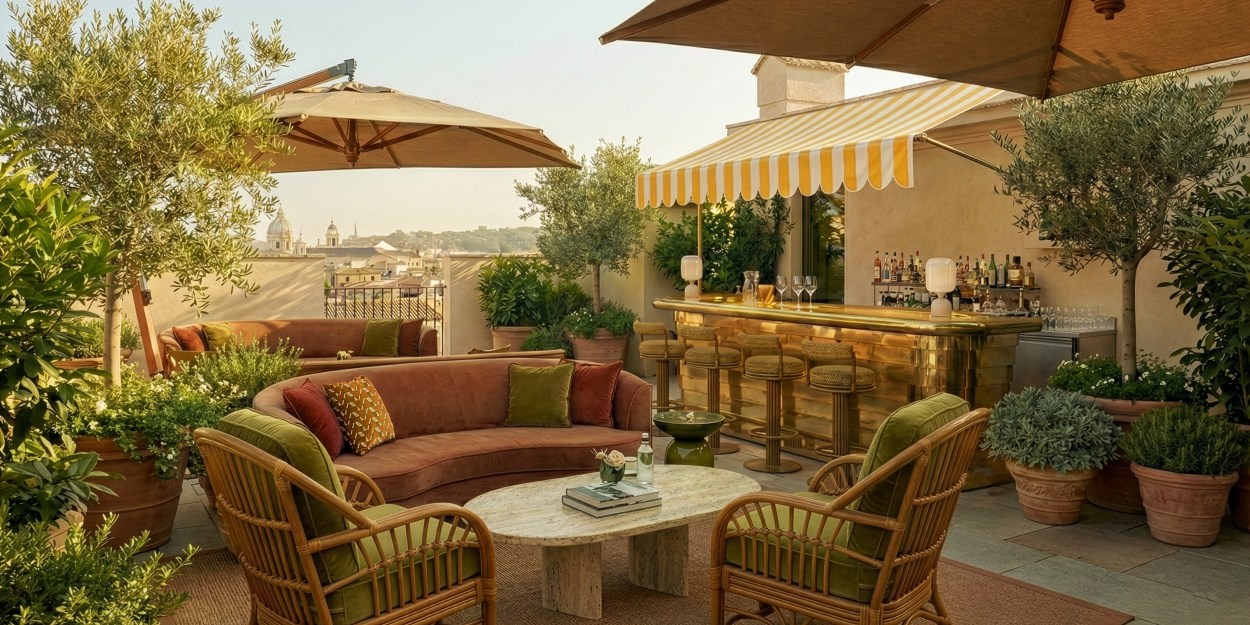
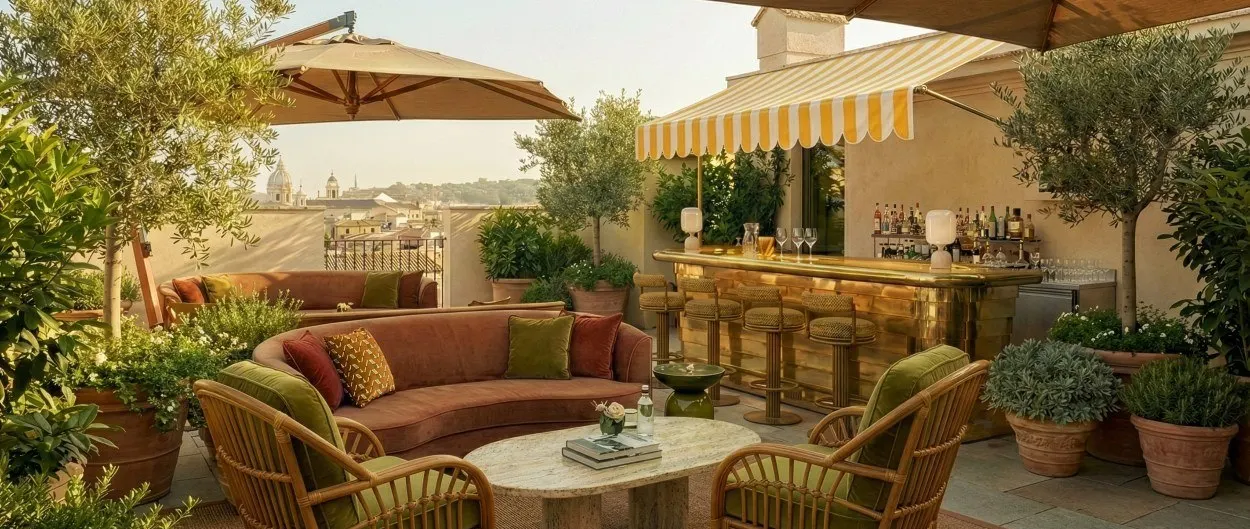
The hotel plans a rooftop terrace and sky bar with views over the city. Rome's skyline is an important part of the destination experience, but a published concept image cannot establish exactly which monuments will be visible from each seat or room. Roof access may also be affected by weather, private events, opening hours and capacity limits. The company describes the venue as a setting for aperitivo and sunset gatherings, consistent with its wider plan to connect hospitality with local social traditions. Yet there is no confirmed drinks menu, pricing structure or public reservation policy in the announcement. A future visitor should check the actual services and availability before planning an evening around them. Rooftop spaces can be enjoyable, but their success depends on safe access, service and how well they are integrated with the rest of the building. The hotel remains a future project, so these qualities cannot yet be independently evaluated.
A spa and restaurant add different experiences
Hilton also proposes a restorative spa, a signature restaurant and a lobby bar. The combination is intended to offer options for quiet relaxation and social activity within the same property. A spa should be assessed through staff qualifications, facilities, hygiene and the actual suitability of treatments, not only its visual design. A restaurant inspired by Roman cuisine can introduce regional ingredients and traditions, but the 2026 release does not name a chef, provide a complete menu or confirm opening hours. The operator refers to handmade pasta, seasonal herbs and regional wines as examples of the culinary direction. Those are intentions rather than independent tasting notes. A traveller with food allergies or special requirements should wait for published, current information. The planned venues may create a convenient range of options, while the experience of a neighbourhood restaurant outside the hotel will remain different and worth exploring.
Local artisans and an illustrated neighbourhood guide
One of the more specific elements of the project is the proposed illustrated guide to Monti, accompanied by opportunities to meet local makers. An effective guide can direct travellers toward independent workshops and lesser-known spaces that might otherwise be missed. But the value will depend on which businesses participate, how recommendations are selected and whether the experience benefits the local community. A connection with an artisan should not be presented as a private access privilege unless the details have been formally arranged. Hilton describes these ideas as part of the hotel's future guest experience. They are not a completed public programme with confirmed dates. Visitors can use them as an indication of the intended style, while making their own decisions about museums, shopping and cultural exploration. Rome rewards curiosity, but curiosity should be balanced with respect for working neighbourhoods and the people who inhabit them.
LXR's independent-character approach
LXR Hotels & Resorts is presented by Hilton as a collection of independent-spirited properties, each with its own story and connection to location. Hortus Monti would become the brand's first hotel in Rome. The company's announcement places the signing within a wider portfolio of more than forty properties operating or under development, mentioning destinations such as Santorini, Beverly Hills and Bengaluru. The distinction between open hotels and those still being planned is important; a single combined development figure does not mean all locations currently welcome guests. A collection built around individuality may offer travellers varied architecture and service styles, while participation in Hilton's systems can provide familiar booking and loyalty arrangements. Specific Hilton Honors benefits and rates depend on the applicable conditions. The appeal of LXR lies in the proposed balance of distinct local identity and international support, a balance that each completed property must prove through actual operation.
A city stay within a Mediterranean itinerary
For guests arriving in Italy before or after time aboard a yacht, Rome may form a cultural stop connected to the coast by road, rail or air. A Monti hotel could provide access to museums, dining and the everyday activity of the capital. However, the announcement does not supply private-yacht transfers, coastal berthing services or guaranteed journey times. Such arrangements need separate planning according to actual starting points and transport conditions. A family might prefer a quieter residence on some trips and a central hotel on others; the 147-room project could offer a different accommodation format when it opens. Room layouts and suitability for groups will depend on the finished building. A private terrace or garden view cannot be promised to every future guest without a specific category description. The development is relevant to luxury travel, but its role in any itinerary must be grounded in confirmed services rather than a promotional rendering.
What matters between signing and opening
A 2028 target gives prospective travellers a general horizon but should not be confused with an unconditional completion promise. Renovation across six older buildings may encounter technical or regulatory requirements, and the final operating programme can evolve. The 2026 release does not publish a verified booking calendar, nightly prices or final interior specifications. A responsible account of the hotel should therefore recognise that the announcement establishes the partners, intended location and design direction rather than an already functioning business. Future milestones might include construction completion, staffing, restaurant concepts and formal opening dates. These can be checked when the operator publishes them. For now, photographs and drawings should be described as development imagery rather than images of an occupied hotel. Treating prospective features honestly helps travellers understand what is available now and what remains a plan.
The verified Rome development
Hilton's 20 November 2026 announcement confirms an agreement with Benso srl for Hortus Monti Rome, an LXR Hotels & Resorts property expected to open in 2028. The proposal involves 147 rooms across six historic Monti buildings, a central garden, spa, restaurant, lobby bar and rooftop sky bar. The brand intends to introduce visitors to the district through local makers and culturally informed experiences. These are first-party plans, not independently reviewed accommodation or a completed service offering. Luxury Yacht Guide reports the project because of the way it combines heritage architecture, contemporary hotel design and cultural travel in a major Mediterranean city. The accompanying official Hilton rendering is credited to its publisher and creators and is not presented as proof that the rooftop is already open. The next meaningful reporting stage will be the confirmation of construction progress and final opening details.
Sources and image credits
Reporting based on Hilton first-party official 2026 announcement or auction catalogue for Hilton Plans Hortus Monti as Its First LXR Hotel in Rome.
Lead rendering: Hilton Plans Hortus Monti as Its First LXR Hotel in Rome — official Hilton media illustration, Luxury Yacht Guide 25 November 2026. © Hilton and original photographer, artist, designer or publisher; first-party image from the credited official Hilton announcement or catalogue. Any artwork copyrights remain with rights holders. Original official image source.