A family collection with philanthropic purpose
A collection formed by Wilma and Laurence Tisch is being offered by Christie’s as a new chapter in the family’s long relationship with the arts. This development is relevant to owners and guests who pursue luxury motoring, hospitality, private travel or collectible objects alongside their yachting interests.
The collection is expected to realise more than $15 million across a sequence of auctions extending into 2027, although this remains an estimate rather than a completed result. The group includes sculpture and painting by artists such as Henry Moore, Jean Arp, Jean Dubuffet, Fernand Léger and Pablo Picasso.
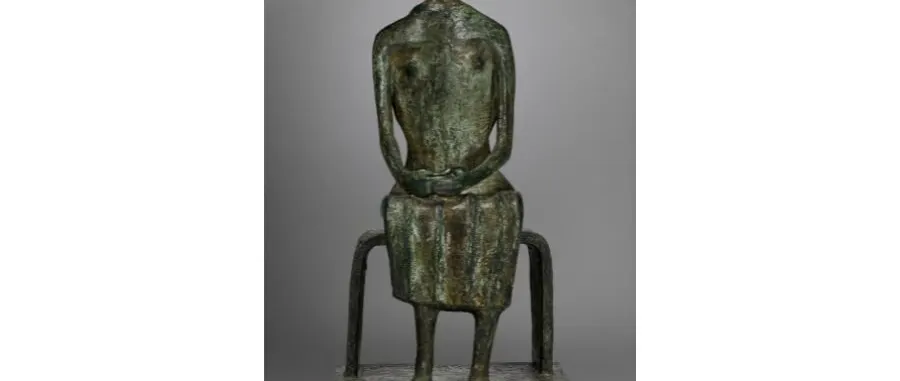
Henry Moore’s Seated Figure leads the offering
The lead work is Moore’s bronze Seated Figure, conceived in 1952–1953 and estimated at $5 million to $8 million. Christie’s notes its relationship to the stylised human forms found in Moore’s King and Queen, a work that established an important new auction benchmark for the artist earlier this year.
Billie and Laurence Tisch acquired their cast in 1965, giving it a documented association with the family extending across six decades. For major works of twentieth-century sculpture, that continuity of ownership can be as significant to a collector’s research as exhibition history and references in the artist’s catalogues.
Edition size, casting history and the sculpture’s condition will remain essential points for prospective buyers. An auction estimate reflects the house’s guidance within a particular sale context and should not be confused with a binding reserve, insurance value or any eventual hammer price.
Modern figures in a wider collecting narrative
Christie’s describes the wider collection as exploring varied treatments of the human figure, and the list of artists provides an unusually broad range of formal approaches. The abstractions associated with Arp and Dubuffet can sit in dialogue with the different pictorial languages of Picasso and Léger, rather than simply reproducing a conventional art-historical survey.
The sale programme begins in London on 21 October with a Barry Flanagan bronze offered in the Modern British Art Evening Sale. Most of the collection will then appear in New York across several November categories, meaning collectors may need to register separately and review the terms attached to different sessions.
The dispersal also offers a case study in how a family collection can evolve over time. Works brought together for decades in a private setting may gain a new public profile when they are photographed, exhibited and researched for the auction catalogue.
Planning around the costs of acquisition
Prospective bidders should look beyond the stated estimate to the total cost of ownership, including buyer’s premium, possible taxes, shipping, specialist handling and ongoing insurance. Some large bronzes present significant installation challenges that must be resolved before delivery to a residence or sculpture garden.
For international clients accustomed to moving between homes, yachts and private offices, provenance documents and logistical planning deserve special attention. Whether the final destination is New York, London or elsewhere, customs treatment and conservation needs should be reviewed with qualified advisers.
The Tisch sale is notable not just for its high-profile names but for the continuation of the family’s philanthropic intentions through the dispersal. The eventual auction results will show how buyers respond to individual works, while the charitable destination of the proceeds remains a separate feature of the story.
For readers combining cruising with international travel or collecting, the announcement provides a useful reference point when planning a private itinerary or acquisition. Individual costs, access and conditions should be verified with the company concerned before making a commitment.