An auction spanning more than a millennium
A centuries-spanning London auction will bring together artworks from several historic cultures, led by rare textiles and architectural objects. This development is relevant to owners and guests who pursue luxury motoring, hospitality, private travel or collectible objects alongside their yachting interests.
For collectors, the auction offers a chance to compare very different forms of making within a single specialist sale. Its range also illustrates why the term Islamic art describes several connected cultural and historical traditions rather than one material, period or visual style.
A rare Caucasian Dragon carpet
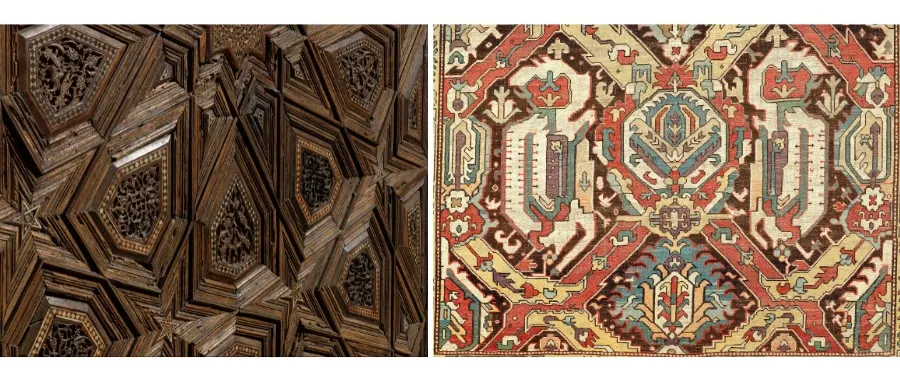
Among the works highlighted by Christie’s is a rare Caucasian Dragon carpet, carrying an estimate of £100,000 to £150,000. The designation refers to an important tradition of patterned carpets whose dramatic forms and dense design can make them striking focal points in a private collection.
Historic carpets need to be examined with different criteria from contemporary decorative floor coverings. Weave, structure, dyes, repairs, wear and provenance all matter, while a work’s rarity or age does not eliminate questions about condition and suitability for display.
Some collectors may choose to present significant textiles as wall-hung artworks rather than use them underfoot. That can help manage wear, but proper support, lighting and environmental conditions still require advice from a specialist conservator.
A medieval wooden panel among the leading lots
Christie’s also highlights a Syrian wooden panel associated with the Ayyubid or Mamluk periods, estimated at £300,000 to £400,000. Historic architectural woodwork can contain evidence of decorative techniques and changing artistic ideas, even when the surviving object has been removed from its original setting.
Understanding the history of such a panel requires careful attention to scholarly attribution, construction, previous restoration and the circumstances of its movement between owners. These questions are especially important when dealing with historic architectural fragments and cultural material from regions with complex collecting histories.
The panel and the carpet therefore invite two different types of due diligence. One is primarily concerned with historic carving and cultural context, while the other requires close analysis of textile structure and long-term preservation.
Responsible ownership of cross-cultural collections
The sale includes objects made over a long period in many locations, giving buyers substantial choice but also demanding more than a general appreciation of attractive craftsmanship. Export history, applicable import restrictions and any required cultural-property paperwork should be reviewed before bidding or arranging shipment.
The published estimates provide a starting point for market comparison, not a final all-in price. Auction premiums, taxes and transport costs can add to the amount paid, particularly for objects requiring special packing or conservation support.
For established collectors and their advisers, the value of the London sale lies in combining public access to notable historic objects with the chance to research their provenance and construction. A thoughtful acquisition begins with documentation and expert examination, not merely the drama of an auction evening.
For readers combining cruising with international travel or collecting, the announcement provides a useful reference point when planning a private itinerary or acquisition. Individual costs, access and conditions should be verified with the company concerned before making a commitment.