A design language returns after a century
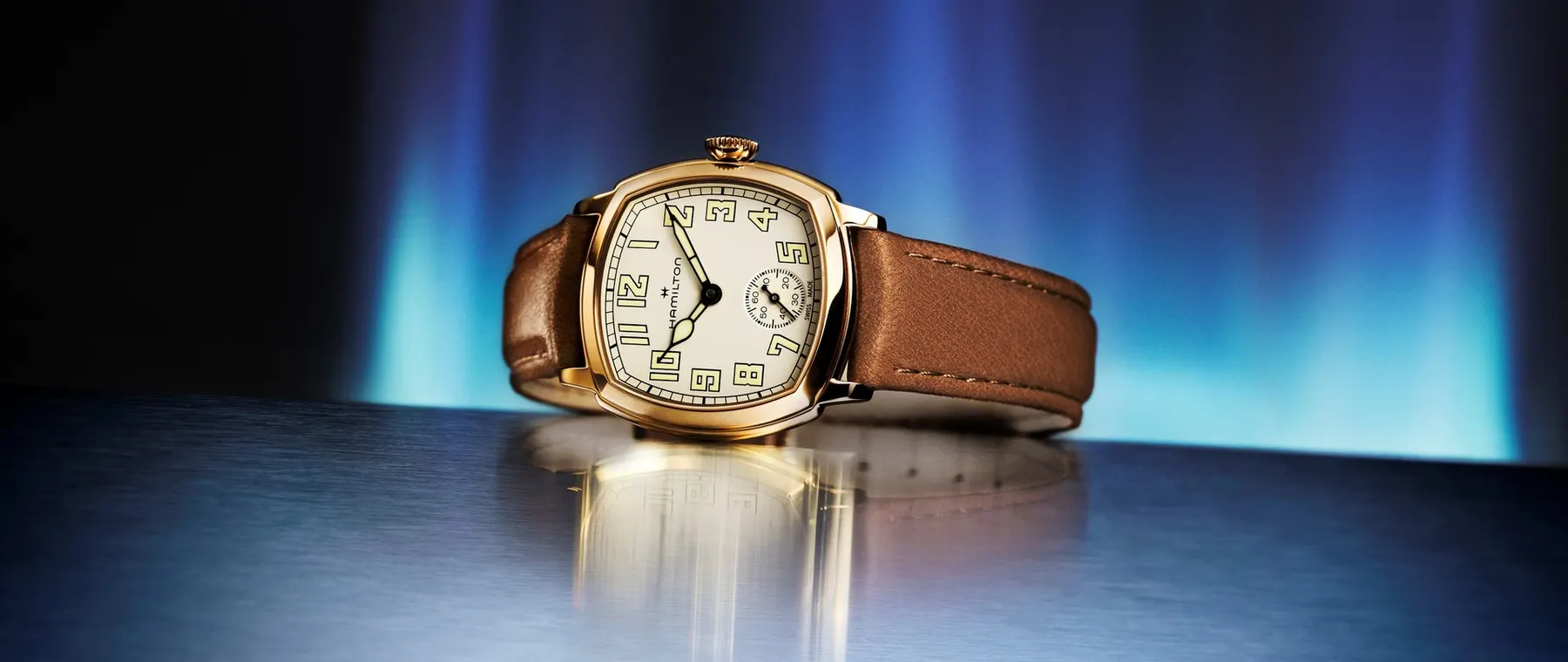
Hamilton's American Classic Cushion Mechanical collection revisits a case shape associated with the company's watches of 1926. Announced on 1 October 2026, the line draws on the Cushion Plain and Cushion Engraved models, reflecting the geometries and proportions of the Art Deco period. The release marks a design revival rather than an assertion that the new watches are unchanged examples from a century ago.
Cushion-shaped cases sit between rounded and square forms, making them recognisable without being as conventional as a circular watch. Their appeal can be particularly strong for collectors seeking variety in a group dominated by round wristwatches. The shape's historical association provides context, but its practicality must still be judged on the wrist.
The period that inspired the collection
Art Deco placed value on geometry, ordered patterns and a sense of modern urban confidence. In the 1920s, wristwatches were becoming familiar objects of daily wear and opportunities for personal expression. Hamilton's cushion watches belonged to that shift, in which timepieces began to communicate style through their form as well as their ability to tell time.
The new American Classic interpretation looks back at the proportions and architectural influences that shaped the originals. This matters because a convincing revival should refer to specific historical decisions rather than merely apply an old label. The company identifies its 1926 models as the direct inspiration for the contemporary design.
Shape as part of everyday experience
A cushion case can change the apparent size of a watch and the way it sits against the wrist. Corners, lugs and the relationship between dial and case all contribute to comfort. Buyers should therefore look beyond published diameter figures and consider how a shaped watch actually fits, particularly if they are more familiar with smaller round cases.
The visual impression may also change with different straps and clothing. A watch chosen for formal occasions can require different proportions from a daily instrument worn outdoors. A classic design is successful when its historical style remains enjoyable and useful in modern life, rather than appearing suitable only for occasional display.
Mechanical watchmaking and visible craft
The Mechanical designation points to a watch that relies on a wound movement rather than simply being presented as a decorative fashion accessory. Interest in manually operated watchmaking often reflects the pleasure of interacting with a physical mechanism, including the act of winding and setting the time. That can create a different relationship with an object from the convenience of an electronic clock.
Specific movement references, case measurements, accuracy claims and prices should be confirmed from current product specifications. The press announcement emphasises design heritage and does not in the accessible summary give a complete technical table for every variant. A responsible purchasing decision should not be based on invented details about power reserve or water resistance.
Hamilton's historical identity
Hamilton has a long watchmaking history associated with American culture, including design, cinema and practical instruments. Reviving a 1926 case allows the brand to explore a different part of its archive from the familiar field, aviation and screen-associated watches. It broadens the visual vocabulary without requiring a new brand identity.
Collectors often appreciate being able to see how different eras influenced form. A cushion model demonstrates that historical development did not move in a straight line from pocket watches to today's standard round cases. Design diversity can be a meaningful aspect of a collection even when the pieces are not intended as rare auction trophies.
Assessing the revived collection
The confirmed news is Hamilton's return to cushion-shaped mechanical watches informed by the 1926 Cushion Plain and Cushion Engraved designs. The brand links their geometry with an Art Deco period when practical objects increasingly became expressions of personal taste. It has not, in the summary reviewed, claimed that the edition is a recovered stock of original watches.
Prospective owners should check the reference, movement and aftersales support for the exact model that appeals to them. The best argument for this watch is the meeting of history and wearable proportion. Whether that connection succeeds is something a visitor can assess directly at a retailer rather than accepting from a photograph alone.