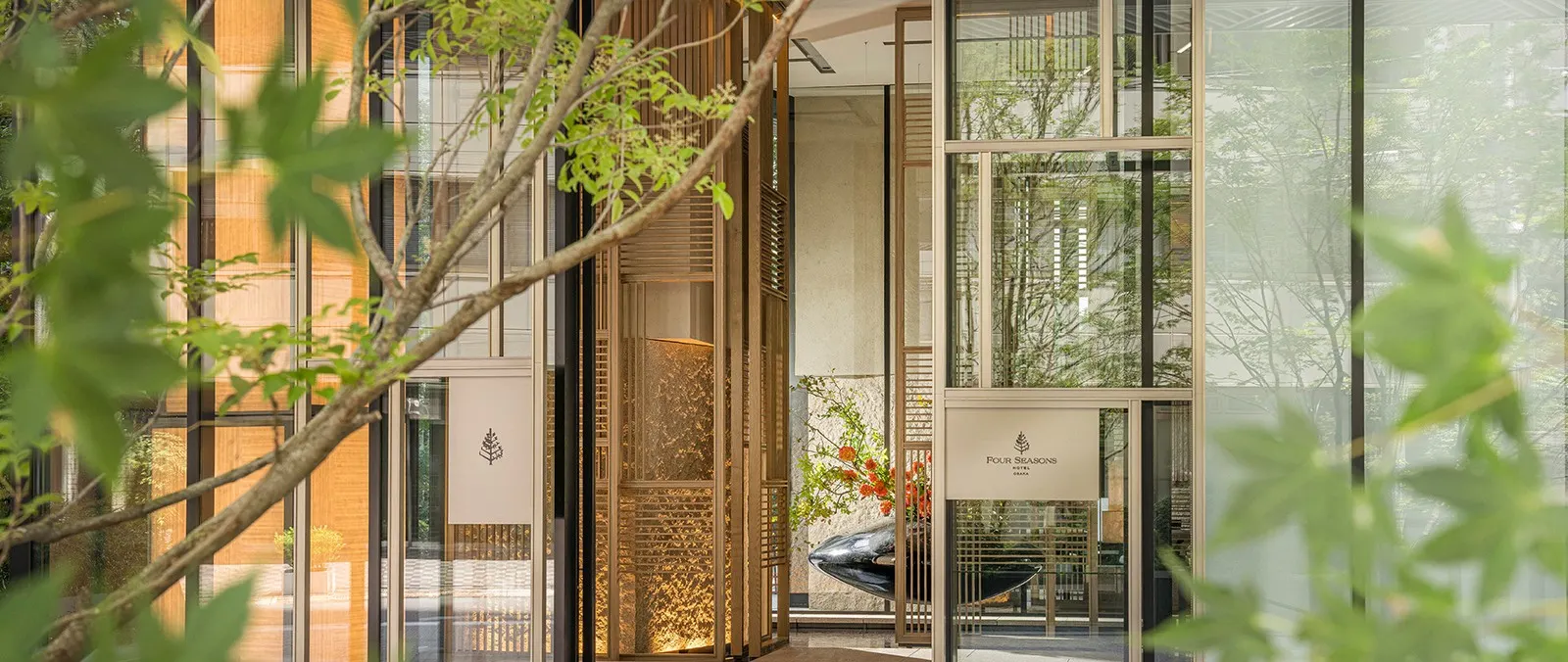
Four Seasons Hotel Osaka has retained one Michelin Key in the 2026 Michelin Guide hotel selection, giving the property consecutive recognition since its 2024 opening. Michelin describes one Key as a very special stay, assessing hotels on design, character, service, value and the strength of their relationship with the destination.
The award is useful because it looks beyond the conventional checklist of room size and amenities. A hotel can be technically luxurious without feeling distinctive, while the Key system is intended to recognise places where design and service create a stronger personality and a clearer sense of where the guest actually is.
What changes for the guest
At Osaka, the most unusual element is GENSUI, the hotel's modern ryokan floor. Tatami rooms and suites reinterpret the traditional Japanese inn in a contemporary high-rise setting, pairing city views with quieter materials, rituals and access to the dedicated SABO lounge.
That idea gives international guests a way to experience some ryokan conventions without leaving central Osaka or committing to a fully traditional countryside stay. It can also appeal to repeat visitors who want Japanese design and hospitality expressed through a more modern and flexible hotel format.
The experience is built around place
The dining programme reinforces the mix of local and international influences. Sushi L'Abysse Osaka Yannick Alléno combines French haute-cuisine thinking with Edomae sushi, Jiang Nan Chun focuses on Cantonese cooking, Bar Bota uses botanicals in cocktails and Jardin provides a lighter all-day option.
Those choices make the hotel usable over several nights because guests can vary the tone without leaving the building. At the same time, Osaka's own food culture remains one of the city's strongest attractions, so the hotel works best as a base rather than a reason to ignore the restaurants outside.
Why it fits the LYG lifestyle brief
For LYG readers, Four Seasons Osaka can fit naturally into a wider Japan journey that combines city stays, rail travel and coastal destinations. The GENSUI floor is particularly interesting for travellers who value design and ritual but still want the predictability, concierge support and facilities of an international luxury hotel.
The spa occupies the thirty-sixth floor and includes treatment rooms, an indoor pool and Japanese-style bathing through the Ofuro facilities. That creates a useful recovery environment after long flights, rail journeys or full days exploring the city, especially during warmer or busier seasons.
What to know before booking
A Michelin Key should be treated as guidance rather than a guarantee that every traveller will prefer the hotel. Guests who want a deeply traditional ryokan may find GENSUI too contemporary, while travellers who prioritise nightlife or a particular neighbourhood should still compare location carefully.
The strongest case for the property is the combination of Japanese reference points with modern high-rise comfort. Retaining the Key suggests that the hotel has maintained that balance after the opening period, which is often more meaningful than the attention a new property receives during its first few months. For repeat visitors, that consistency can be more persuasive than launch-year publicity because it shows the service culture has matured with the property.