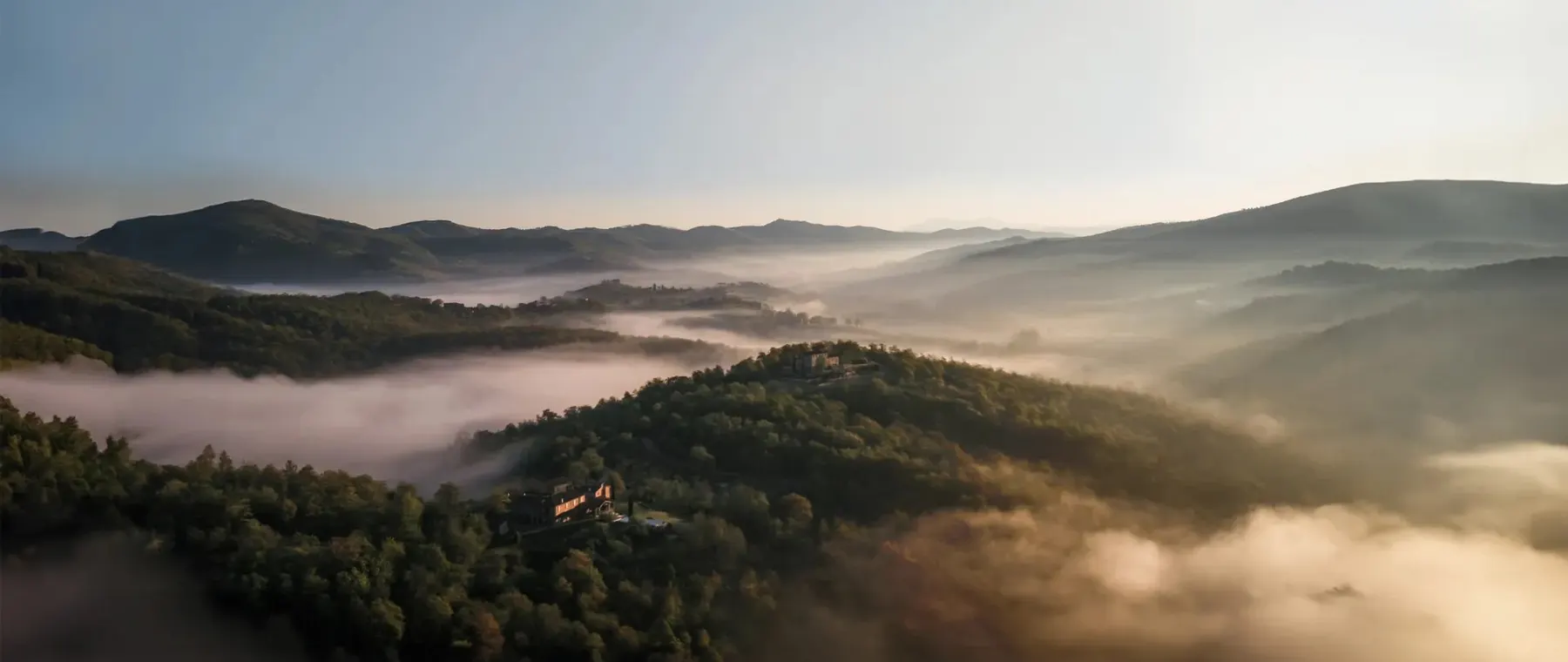
A thousand-year starting point
The attraction of Castello di Reschio begins with an unusual architectural fact: its castle dates to 1050. Today the carefully restored building forms the heart of a hospitality estate in Umbria, with historic stonework placed in dialogue with contemporary design. A visit offers something more layered than the conventional idea of a countryside hotel, because the physical character of the past remains unmistakably present.
Restoration of this kind can succeed only when the old structure is allowed to retain its personality. At Reschio, the atmosphere is not one of a reconstructed period set. Its appeal lies in the interplay of craft, collected objects and lived-in spaces, allowing guests to experience a historic building while enjoying the practical comfort of a modern property.
The importance of individual rooms
A castle is not a standard hotel shell, and differences between rooms can be part of the attraction. Guests should look beyond bed size and nominal category to understand the particular configuration, light, access and outlook of the accommodation they are considering. A room with historic architectural details may be more memorable than a larger space with a less distinctive position.
That individuality also asks for sensible planning. Travellers requiring lifts, step-free routes or connected family rooms should discuss their needs in detail. Reschio’s setting may reward a romantic sense of discovery, but accessibility and convenience should not be left to chance. A careful room choice is the first step toward a genuinely relaxing stay.
The estate beyond the castle walls
Reschio’s experience extends well beyond the building. Woods, walking trails and a broader agricultural landscape create a setting for exploration at different levels of exertion. The official estate programme includes activities such as horse riding, e-biking and tennis, giving guests opportunities to engage with the countryside rather than merely admire it through a window.
A good day might involve a morning on horseback or a guided walk, followed by a quiet afternoon in the gardens. Guests should confirm the availability of instruction, suitable equipment and any fitness or age requirements before booking. The purpose of these activities is not to fill a timetable but to experience the region at a pace that makes its details visible.
A pool with a garden setting
The castle swimming pool sits within a leafy landscape with views toward the evening light. Its setting reflects the hotel’s wider design approach: contemporary comfort integrated into the character of the estate. The pool offers a gentle counterpoint to excursions and helps establish Reschio as a place that can be enjoyed without leaving the property each day.
For groups with varied interests, this is important. One guest can spend time actively exploring while another remains at the pool or in the shade with a book. Shared meals then bring the group together again. The value of an extensive estate is the freedom to separate and reunite without logistical complication.
Wellbeing in former cellars
Reschio describes a bathhouse developed within and beyond the castle’s former wine cellars. This is a more interesting use of historic space than simply hiding a spa behind a standard contemporary interior. Treatments and bathing rituals are presented as part of a slower rhythm, connecting the experience to the building and its centuries of use.
Guests should choose treatments for their personal needs and confirm the current menu and reservation requirements. A castle retreat can invite an ambitious schedule of indulgence, but time between appointments often matters just as much. The bathhouse works best as one element of a longer, restorative stay rather than a destination to rush through.
An encounter with Umbrian culture
Umbria rewards travellers who enjoy smaller-scale discoveries. Hill towns, crafts, local food and rural landscapes provide a context distinct from the major Italian city circuit. The estate can serve as a base for exploring the region, although the most rewarding excursions should be planned with realistic driving times and an appreciation of seasonal opening patterns.
A local guide may help connect architecture and landscape to the history of the area, while unstructured time can reveal everyday details missed on a tightly managed tour. For guests familiar with Italy’s better-known coastlines, a few nights inland offers a contrasting perspective: quieter, more rural and less dependent on a crowded waterfront scene.
Design that is not merely decorative
The relationship between heritage and modern design is one of Reschio’s defining themes. Successful restoration requires decisions about what to preserve, what to add and how contemporary needs can fit within historic walls. Guests interested in interiors, craft and architecture will find more to observe here than in a conventional luxury property that could have been built anywhere.
Details such as material transitions, lighting and room proportions are worth taking time to notice. Rather than judging the hotel solely by its list of amenities, visitors can appreciate how these choices create atmosphere. The environment makes a strong argument for staying long enough to absorb the architecture across different times of day.
The case for a slower Italian journey
Reschio’s appeal is strongest when the estate itself becomes part of the trip. A couple may value quiet mornings and the bathhouse; a family might appreciate riding and countryside excursions; a design enthusiast may be drawn to the restored castle. These interests coexist without requiring a rigid programme.
Travellers should confirm the current accommodation arrangements, activity access, seasonal restaurant operations and transport options directly with the estate. The practicalities are especially important in a rural destination. With those details resolved, the castle offers a distinctive expression of Italian luxury rooted in a real landscape and a building with a remarkable history.