A Forested Retreat Beyond Central Shanghai
Amanyangyun presents a markedly different view of Shanghai from the famous riverside skyline. The Aman resort occupies a broad landscape of mature camphor trees, lakes and carefully restored buildings in the city's Minhang area. Aman describes 140 hectares of grounds intended for quiet exploration, cultural activities and wellness. The setting is a conscious contrast to the pace of urban business districts, offering travellers a place to spend meaningful time outside rather than moving directly from one appointment to another.
The property is not a waterfront city hotel or a resort directly beside Shanghai's best-known attractions. Getting to meetings, galleries or restaurants elsewhere in the metropolis requires forward planning and a realistic understanding of traffic. That separation is part of the appeal for guests seeking seclusion. Travellers should choose Amanyangyun because they want access to the gardens and historic buildings, not simply because they need a bed for a single night in the centre of Shanghai.
A Conservation Story in Brick and Timber
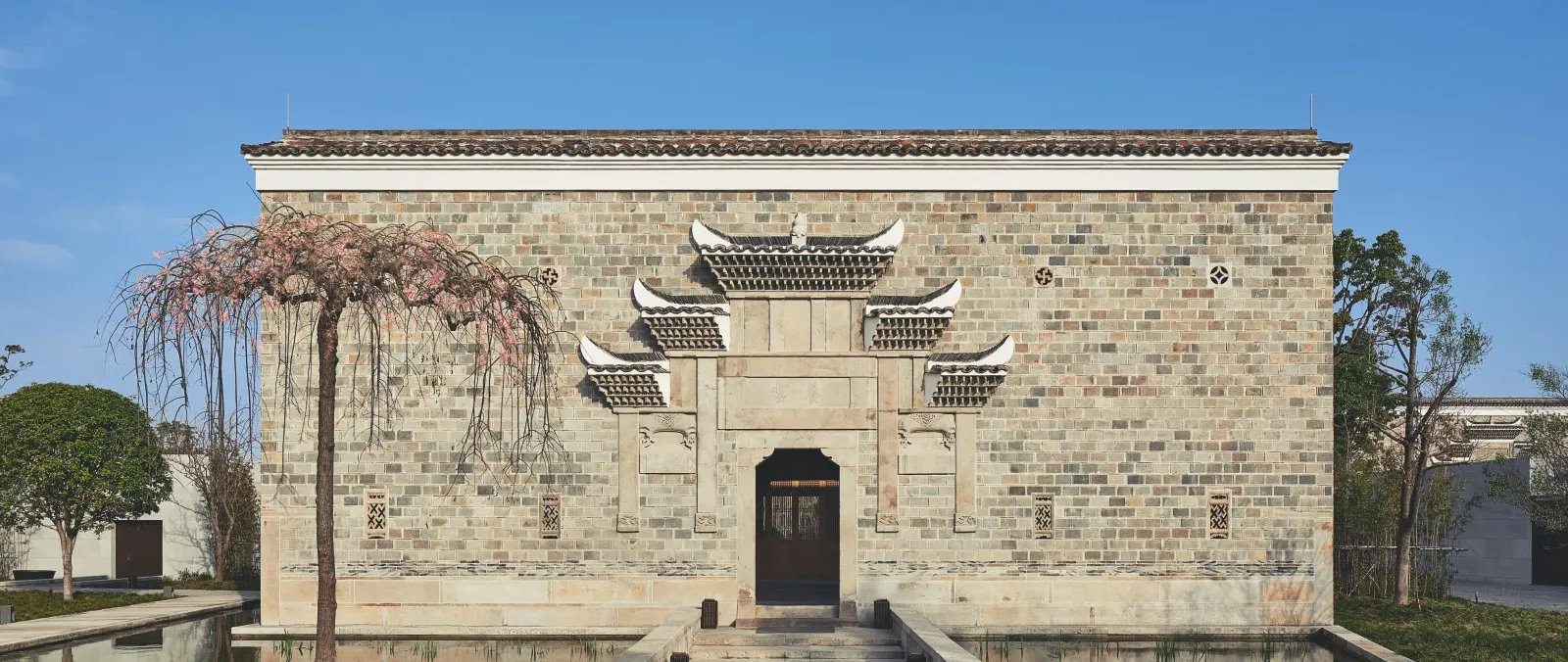
The resort's Antique Villas are at the centre of an unusual heritage project. Aman explains that historic buildings were saved from their original setting in Jiangxi province and moved to the Shanghai property for restoration. Elements of these homes date to the Ming and Qing dynasties, making them examples of architectural conservation rather than newly constructed replicas with historic-style decoration. Their careful relocation creates a setting in which the past remains physically present alongside modern accommodation.
Moving historic structures is a complex intervention, and the significance of the project is more interesting than a simple claim of age. Materials, original construction methods and the context of a building's first location all deserve attention when evaluating preservation. Guests can appreciate the workmanship while acknowledging that the houses are now part of a contemporary hospitality environment. The resort's published account provides a strong reason to explore the site slowly, with questions about how the buildings were reconstructed and adapted.
Eleven Antique Villas and Twenty-Four Suites
Aman lists 11 Antique Villas alongside 24 suites at Amanyangyun, giving the property the scale of a small village rather than a large urban tower. The villas include four-bedroom arrangements built around courtyards and private swimming pools, suitable for families or groups who want shared living space and individual bedrooms. The suites take a more compact approach, with light-filled accommodation linked to the resort's woodland setting. The two forms of lodging serve different needs and should not be chosen only by comparing headline floor areas.
A four-bedroom house can be especially attractive for a multi-generational trip or a group combining private time with shared meals. Yet the practical details are as important as the grandeur of an old doorway. Prospective guests should check room connections, stair access, pool safety, heating and the relationship between the living spaces and gardens. The villas are individual restored structures, so booking the exact layout and included services matters more than relying on a generic property photograph.
The Camphor Trees and the Grounds
Ancient camphor trees are another defining feature of Amanyangyun's landscape. They contribute scale and shade, and their preservation is part of the property's broader story. Aman encourages guests to explore the grounds on foot or by bicycle, discovering lakes, gardens and quiet paths. The ability to spend time among mature trees within reach of a major Chinese city is one of the resort's most distinctive attractions.
Outdoor activity can be informal rather than demanding. A gentle cycle before breakfast, a walk beside water or an afternoon spent reading in a courtyard may provide the most satisfying moments of the stay. Weather and the condition of pathways can influence what is comfortable, and families should confirm the suitability of routes for younger guests. The landscape is not merely decorative: it is central to the kind of slower holiday the property offers.
Nan Shufang and Cultural Practice
At the heart of Amanyangyun stands Nan Shufang, a building dedicated to sharing aspects of Chinese cultural heritage. The resort presents opportunities to engage with traditional practices and spend time in an environment designed for learning and contemplation. Such programming offers a natural complement to the conservation story of the villas. Guests who enjoy art, craft and architecture can make this part of a stay rather than treating cultural discovery as something that only happens away from the hotel.
Availability may vary with the programme, and a meaningful session is best arranged in advance. Some visitors may favour tea culture or calligraphy, while others might prefer guided discussion of architecture and the site's history. It is worth asking who leads each activity and what guests can reasonably expect to learn. Cultural experiences are strongest when they make room for questions and careful observation rather than simply offering a photogenic demonstration.
Wellness and Time for Restoration
The Aman Spa forms another major component of the resort, with facilities intended to support relaxation and wellbeing in a quiet setting. Aman also describes its restaurants and shared spaces as part of a wider atmosphere of retreat. Guests may organise a treatment after a day of sightseeing or use the grounds themselves as the principal way to unwind. It is not necessary to fill every hour with booked services to make the most of the property.
As with any wellness offering, guests should distinguish recreational spa experiences from specialist medical care and confirm the qualifications of anyone providing a clinical service. Treatment menus and opening hours can change, and advance requests help ensure that a preferred appointment is available. What matters most to many travellers is the balance between comfort, solitude and a sense of place. Here the preserved buildings and forest contribute as much to that atmosphere as the spa rooms.
Dining and a Private Village Atmosphere
Amanyangyun's dining venues offer several ways to gather without leaving the resort. Aman identifies five signature restaurants in its broader description, in addition to spaces for tea and informal conversation. A family staying in one of the villas may value the option of a quieter meal, while a couple could use a restaurant evening as a change from the privacy of their courtyard. The actual dining programme and private-service possibilities should be confirmed for the dates booked.
One of the pleasures of a spacious property is that guests can choose between solitude and company. A day might begin with a walk beneath the camphor trees, continue with a cultural session and finish with an unhurried dinner. This kind of itinerary is very different from a compressed tour of Shanghai's most famous sights. The resort rewards travellers who build time around the setting instead of assuming that every evening must be spent elsewhere in the city.
Making Amanyangyun Part of a China Journey
For yacht owners and international travellers, Shanghai may be a point of arrival, business or cultural interest within a much wider Asian trip. Amanyangyun offers an inland retreat that can follow coastal travel or precede other destinations. It is important to separate the hotel stay from onward transport planning and to obtain up-to-date information about entry requirements, visas and airport or rail connections where applicable. A transfer should be based on real travel conditions, not an optimistic estimate from a map.
The resort's official material establishes its unusual combination of rescued historic homes, ancient trees, spacious villas and cultural programming. It does not establish a universal room price or guarantee that every experience will be available on the same day. A considered reservation should specify the selected residence, services and desired activities. Amanyangyun's strongest appeal is the opportunity to encounter architectural history within a living landscape while retaining the comfort and privacy of a contemporary luxury retreat.