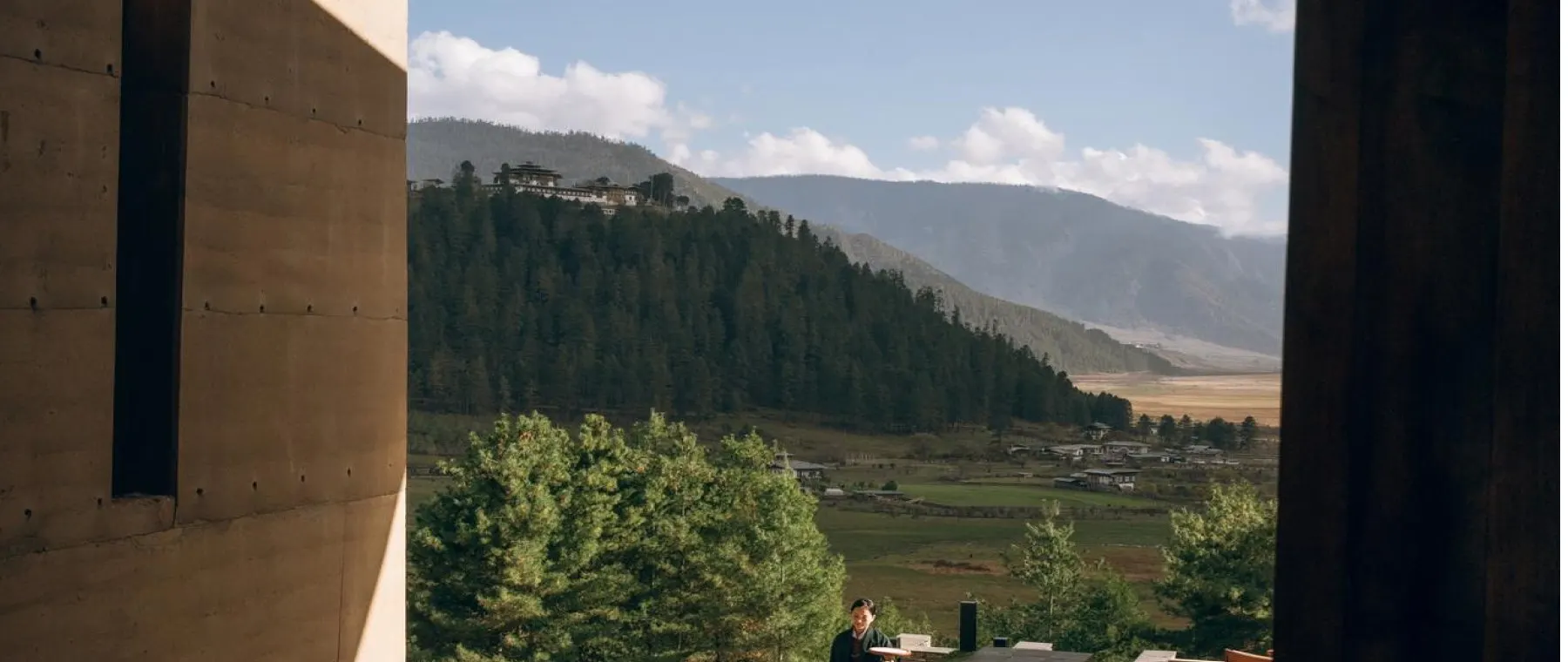
A Journey Rather Than a Single Hotel
Amankora is best understood as a network of five lodges rather than one resort. Aman operates properties across Bhutan's western and central valleys, offering travellers the possibility of moving between landscapes, monasteries and communities while retaining a consistent standard of accommodation. The lodges are in Paro, Thimphu, Punakha, Gangtey and Bumthang, each positioned for a different view of the Himalayan kingdom. That geography makes Amankora particularly appealing to guests who want meaningful travel rather than a single secluded address.
Bhutan also requires more planning than a conventional resort holiday. Road transfers between valleys, local access arrangements, prevailing weather and cultural itineraries influence how much a visitor can reasonably experience. Aman says its team can help coordinate the journey and assist with visa-related administration. Guests should nevertheless verify current entry requirements and any fees through the appropriate authorities and obtain a detailed day-by-day plan. Time spent moving between properties is part of the experience, not an inconvenience to be ignored in the schedule.
Paro: Forest and the Tiger's Nest
The Paro lodge has 24 suites within a pine-forest setting, according to the operator, with a two-storey spa and convenient access to cultural highlights. Paro is an important arrival point for many international visitors and an understandable first stage of the journey. The surrounding landscape is dominated by forested slopes and historic sites. The famous cliffside Taktsang, often called the Tiger's Nest, is a major attraction, but visiting it should be treated as a purposeful outing rather than a casual walk from the hotel.
An excursion to the monastery involves changing terrain and altitude, so appropriate footwear, pacing and local advice are important. Travellers who prefer a gentler programme can focus on heritage sites and time in the lodge's quiet surroundings. A stay of sufficient length allows flexibility for weather and recovery after international travel. The property's proximity to Paro should not lead visitors to underestimate how different Bhutan's mountain environment can feel from a coastal holiday.
Thimphu: A Capital in the Woods
Amankora Thimphu comprises 16 suites set in a wooded location overlooking Bhutan's capital. It provides an opportunity to explore a city whose cultural traditions remain highly visible while returning to a relatively private place for the evening. Markets, religious sites and craft traditions can become part of a carefully guided day. The lodge's surroundings help maintain a contrast between urban discovery and the more secluded experience associated with Aman.
For visitors who enjoy art, design and the history of places, Thimphu deserves more than a passing stop. The value of an individual guide is the ability to explain the context of rituals and craft practices rather than simply move travellers between landmarks. Scheduling should allow for site opening arrangements and local events, which can change. A lodge near a capital provides access, but the depth of a cultural visit comes from knowledgeable interpretation and a willingness to slow down.
Punakha: An Old Farmhouse and Rice Fields
The Punakha property contains just eight suites and is built around a historic farmhouse that Aman dates to roughly three centuries ago. The surrounding rice fields and river valleys create a different atmosphere from the forests of Paro and Thimphu. Punakha Dzong and the region's agricultural landscapes offer opportunities for understanding how architecture, religion and everyday life intersect in Bhutan. The small scale of the lodge is part of its appeal to guests seeking quiet accommodation.
The character of such a place is different from a purpose-built large resort. Historic materials and the relationship between buildings and terrain contribute to its visual identity, but prospective guests should still ask about room layouts and accessibility. A good programme can balance a visit to a major monastery with an afternoon spent looking out across the valley. Travellers who want every day filled with strenuous outdoor activity may prefer a different pacing from those who regard the lodge itself as an essential part of the holiday.
Gangtey: Open Valley and Monastic Heritage
Amankora Gangtey has eight suites in a landscape of farmland and hiking routes overlooking the monastery known as Gangtey Goemba. The valley's open setting brings a sense of scale that contrasts with Bhutan's enclosed forest roads. Aman also highlights opportunities to observe the country's distinctive wildlife and rural environment. Sightings of particular animals, including migratory birds, are seasonal and never guaranteed by the fact of a resort stay.
This is a rewarding destination for travellers who enjoy walking and quieter encounters with nature. Routes should be selected with local knowledge and realistic attention to altitude and weather conditions. A private guide can help distinguish respectful cultural observation from intruding on daily life. The hotel's setting supplies a starting point for exploration, but a well-planned visit leaves space for the unanticipated moments that often make rural journeys memorable.
Bumthang: Bhutan's Spiritual Heart
The Bumthang lodge contains 16 suites and lies near the Royal Wandichholing Palace, giving visitors access to a region rich in monasteries and historic sites. Reaching this stage of the Amankora circuit brings travellers farther into the kingdom's central valleys. Aman presents the area as a gateway to Bhutan's spiritual traditions, with opportunities to learn from local cultural landscapes. The surrounding scenery changes with season and elevation, so itinerary details should reflect the conditions expected during the actual visit.
Bumthang can be particularly rewarding for guests interested in architecture, religious history and artisanal traditions. It is not necessary to attempt every site in a single day. A thoughtful programme might concentrate on a few places with a knowledgeable guide, leaving time to return to the lodge and process what has been seen. The reward of the multi-lodge concept is diversity across one country, not merely the number of different hotel rooms occupied.
Wellness and the Human Side of Travel
Across its properties Amankora combines accommodation with treatments and activities informed by local settings. Aman lists mountain-oriented experiences and access to wellness practitioners in parts of the circuit, although exact programmes may depend on the lodge and date. Guests should distinguish a general spa treatment from a specialist health service and verify qualifications and suitability where relevant. The quiet of the forests and valleys may be as valuable to some travellers as a structured wellness appointment.
The operator's journey-planning assistance extends to choices about activities, dining and the pace of travel. Families and couples will not necessarily want the same sequence of lodges, especially when interests range from hiking to temples or photography. Open conversations about walking ability, interests and the desired number of transfers can produce a much more satisfying stay. Luxury in Bhutan often means the freedom to spend meaningful time in each place rather than rushing to the next scenic overlook.
Planning the Route and the Season
Amankora's official overview confirms the five-lodge circuit, room counts and broad areas of interest, but it does not promise that every activity is available every day or in all weather. Visitors should secure current information on Bhutan's entry policies, travel permissions, guiding arrangements and regional access before making non-refundable plans. A detailed quotation should specify the particular lodges, accommodation categories, internal transport and any included excursions. It is wise to confirm each element rather than treat the brand name as a single all-inclusive package.
The five settings provide a rare opportunity to experience a country through successive landscapes while preserving a sense of retreat. Paro's forests, Thimphu's culture, Punakha's fields, Gangtey's valley and Bumthang's sacred sites each contribute something distinct. For a yacht owner looking beyond the coast, Amankora offers a considered alternative to the familiar sequence of island resorts. Its true attraction is the depth that comes from travelling carefully between places rather than remaining in one.