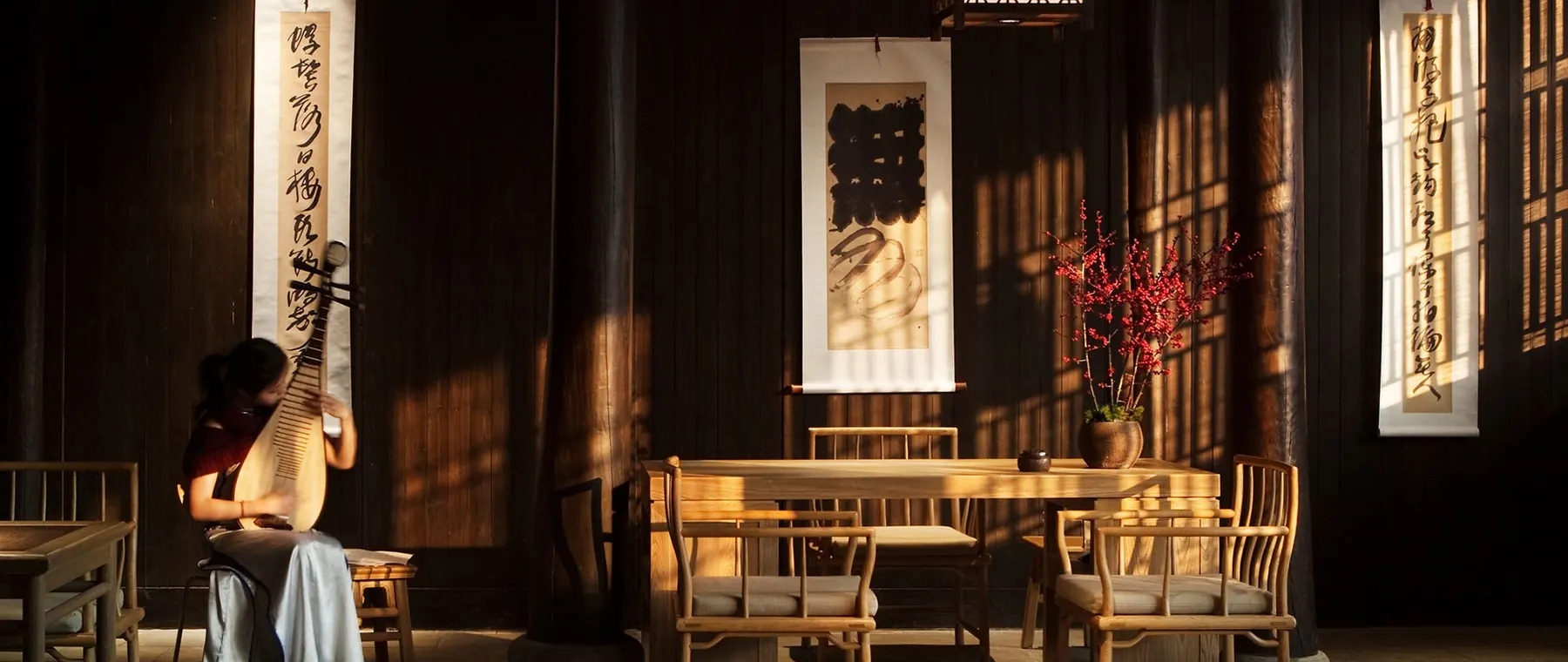
A village retreat beneath the hills of Hangzhou
Amanfayun occupies a quiet landscape of bamboo, tea bushes and traditional buildings near Hangzhou’s celebrated West Lake. The resort evokes the atmosphere of a Chinese village rather than the formal symmetry of a large contemporary hotel, with individual accommodation arranged along lanes and within garden walls. For travellers who enjoy discovering a destination slowly, its sense of continuity with local history offers a different luxury from an isolated private island.
Aman places the property close to Lingyin Temple, whose foundation is dated to the fourth century, and within reach of West Lake’s scenic and historical landscape. These places have religious and cultural importance that extends beyond their appeal to international visitors. Guests should plan visits with an informed local guide and understand where photography, access and behaviour are restricted.
The property’s forested and village-style environment invites walking, but distance and terrain need to be considered realistically. Travellers accustomed to lift access and short hotel corridors should ask how far their room lies from dining and spa facilities. A peaceful path can be a joy for one guest and an obstacle for another, making a careful room allocation a worthwhile part of the booking.
Rooms and villas designed for private stays
Amanfayun offers accommodation that interprets Chinese domestic architecture through refined materials and restrained contemporary comforts. The atmosphere depends on the relationship between the room, its courtyard and the surrounding lanes rather than on spectacular high-rise views. Ask for photographs and dimensions of the specific category selected, because village houses can have distinctive layouts even when they share a common architectural language.
For families or friends, the resort describes a three-bedroom villa of approximately 350 square metres with a private garden, separate en-suite bedrooms and shared living areas. That configuration can be more appropriate than several disconnected rooms when a group intends to share quiet evenings and meals. The trade-off is that a large villa may be positioned further from communal facilities, so convenience should be weighed alongside privacy.
Natural materials and traditional-inspired spaces deserve thoughtful use, particularly when travelling with children. Families should clarify where everyone will sleep, whether steps connect rooms and what supervision is needed around garden areas. A luxury property’s reputation can never substitute for a floor plan and a practical conversation about the needs of the people actually travelling.
West Lake, tea culture and Buddhist heritage
West Lake has inspired generations of artists and writers, and its setting makes it a particularly rewarding destination for travellers who appreciate landscape design and Chinese cultural history. A guided visit can explain the significance of causeways, gardens and associated monuments rather than reducing the area to a sequence of scenic photographs. Visitors should allow the surrounding city and its residents to remain part of the experience.
Hangzhou’s tea-growing traditions are another reason to plan time ashore. Learning how leaves are cultivated, processed and served can offer a meaningful introduction to the region, especially when led by people with genuine expertise. A tasting should be treated as an opportunity to ask questions, not a guarantee of access to every plantation or workshop during a busy harvest period.
The resort’s spa programme refers to traditional Chinese wellbeing practices within a serene landscaped setting. Travellers may enjoy restorative treatments and quiet time, while understanding that spa descriptions are not substitutes for medical evidence or personalised clinical advice. The strongest part of the visit is often the balanced combination of cultural discovery, calm surroundings and thoughtful hospitality.
Arrivals and the right length of visit
Aman places Amanfayun about thirty-two kilometres from Hangzhou Xiaoshan International Airport, with an indicative drive of around fifty minutes. Traffic and arrival procedures can extend that timing, and private transfer arrangements should be agreed with the resort in advance. A yacht call elsewhere on China’s coast requires a separate onward journey with appropriate documentation and transport planning.
The village setting is particularly rewarding during a stay long enough to separate major excursions from quiet days at the property. Combining Lingyin Temple, West Lake and tea-country activities into one hurried afternoon would miss much of their character. Instead, choose a few experiences around individual interests and preserve room for a slow walk or a private meal within the grounds.
Amanfayun’s appeal is the way traditional architecture, tea landscapes and religious history meet a carefully managed hotel experience. The most sophisticated itinerary is often an understated one, with fewer commitments and deeper encounters. Match the accommodation to the party, arrange respectful local guiding and approach Hangzhou as a place to learn rather than simply to pass through. Seasonal weather and public holidays can affect the atmosphere of popular sites, so itinerary design should account for changing visitor numbers. An early excursion followed by a relaxed afternoon in the village can be a particularly balanced pattern.
Primary property source: https://www.aman.com/resorts/amanfayun. Current rates, inclusions, local access and operating arrangements should be confirmed directly before travel.