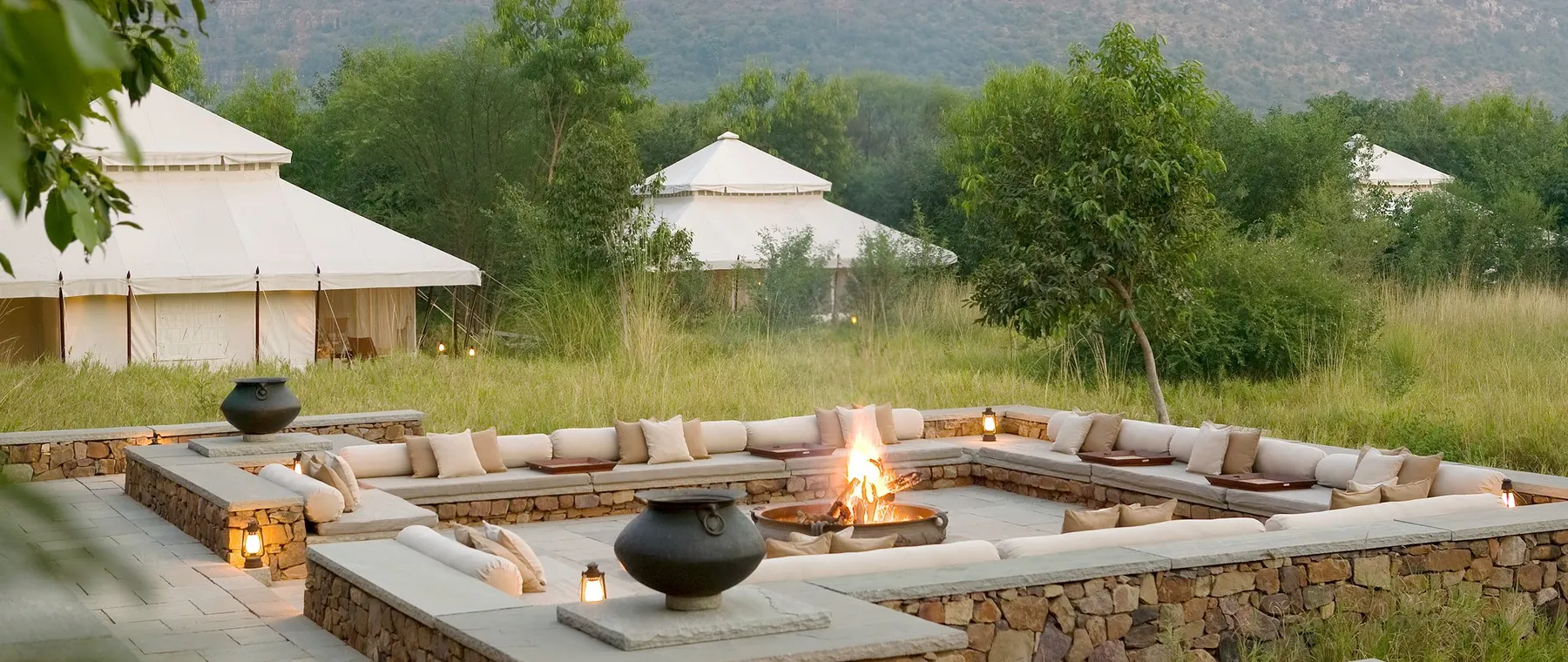
A different sort of private retreat
Aman-i-Khás sits near Ranthambore National Park in Rajasthan, offering a distinctive wilderness experience away from conventional coastal resorts. The property consists of Mughal-inspired tented accommodation in a landscape known for its wildlife and historical sites. For luxury travellers accustomed to finding solitude at sea, the prospect of observing a natural environment with expert local guidance can provide an entirely different but equally memorable sense of escape.
The camp’s intimacy is part of its character. Aman currently describes fourteen guest tents, a detail more useful than broad promises of exclusivity because it gives some sense of the scale and social atmosphere. A small property can offer discreet service, but individual safari vehicles, guiding arrangements and shared facilities should still be checked rather than presumed to be fully private.
Ranthambore is a protected wildlife landscape, not a stage on which sightings are guaranteed for paying guests. Tigers are an important reason for many visits, but their movements are governed by nature, park rules and seasonal conditions. Travellers who measure success only by one animal may overlook the extraordinary birds, smaller mammals and wider ecology that make the reserve worth understanding.
Canvas accommodation with carefully planned comfort
The tents at Aman-i-Khás draw on the elegance of traditional campaign-style living, combining spacious canvas structures with modern guest comforts. The design is deliberately different from a masonry villa with a private beach, and the outdoor setting remains close at hand. Those who are sensitive to temperature, sound or walking distances should discuss the practical implications of tented accommodation with the resort before booking.
Aman describes separate areas for dining, spa treatments and relaxation, encouraging guests to move between camp activities throughout the day. This rhythm can become a pleasure if there is time between excursions, but the schedules of dawn and afternoon drives need to be understood. Travellers should ask what meals are provided, how private dining works and whether particular facilities are reserved exclusively for staying guests.
The camp’s styling evokes a historical idea of exploration, yet modern travel should be grounded in responsible care for the environment and the people working there. Staff knowledge, fair guiding practice and adherence to reserve regulations are far more significant than decorative nostalgia. A thoughtful guest approaches the accommodation as a base for learning about wildlife, not a licence to intrude upon it.
Safari etiquette protects wildlife and visitors
Aman describes guided safaris into Ranthambore, with outings designed around park access and natural conditions. Wildlife viewing requires patience, appropriate distances and the willingness to return without a particular sighting. Feeding animals, leaving designated routes or urging guides to approach too closely undermines both conservation and the quality of the experience.
Professional guides can explain habitats, animal behaviour and the larger challenges of protecting a reserve visited by many people. Guests should follow instructions about staying inside vehicles where required, keeping noise down and avoiding flash photography that disturbs wildlife. Photographs are more rewarding when they document an encounter made responsibly rather than an animal forced into an uncomfortable position.
Outside the park, the area also contains important historical heritage, including Ranthambore Fort. Visits should respect local rules and the needs of nearby communities, with transport and guiding arranged through legitimate operators. If young children are travelling, parents should check age restrictions and the practical demands of early starts and extended drives before committing to a full safari programme.
Seasonal access and a realistic itinerary
Aman describes Aman-i-Khás as a seasonal property associated with the October-to-May safari period. This makes the exact opening dates, park access zones and weather particularly important to confirm for any specific holiday. Travellers should not mistake a general season for a guarantee that every excursion or section of the national park is available on their requested dates.
The property gives possible arrival routes from Delhi and Jaipur, including an onward road journey to the camp. Travel time, luggage handling and local transport arrangements require advance planning, especially when connecting with an international flight or a complex yacht itinerary elsewhere. A well-rested arrival is more valuable than a rushed late-night transfer followed immediately by a dawn safari.
Aman-i-Khás is at its best when the stay allows several opportunities to observe nature without pressure. Its combination of a small tented camp, expert guiding and a remarkable reserve is strong enough without sensational promises. Choose dates carefully, respect the park’s boundaries and allow the wildlife itself to determine the pace of the visit. Guests planning a photography-led safari should discuss the equipment they intend to bring, the limitations of vehicle space and how different light conditions affect the day. Quiet observation can be far more effective than constantly changing position in pursuit of a picture. Even when no headline animal appears, listening to an informed guide can reveal a complex and fascinating ecosystem.
Primary property source: https://www.aman.com/resorts/aman-i-khas. Current rates, inclusions, local access and operating arrangements should be confirmed directly before travel.