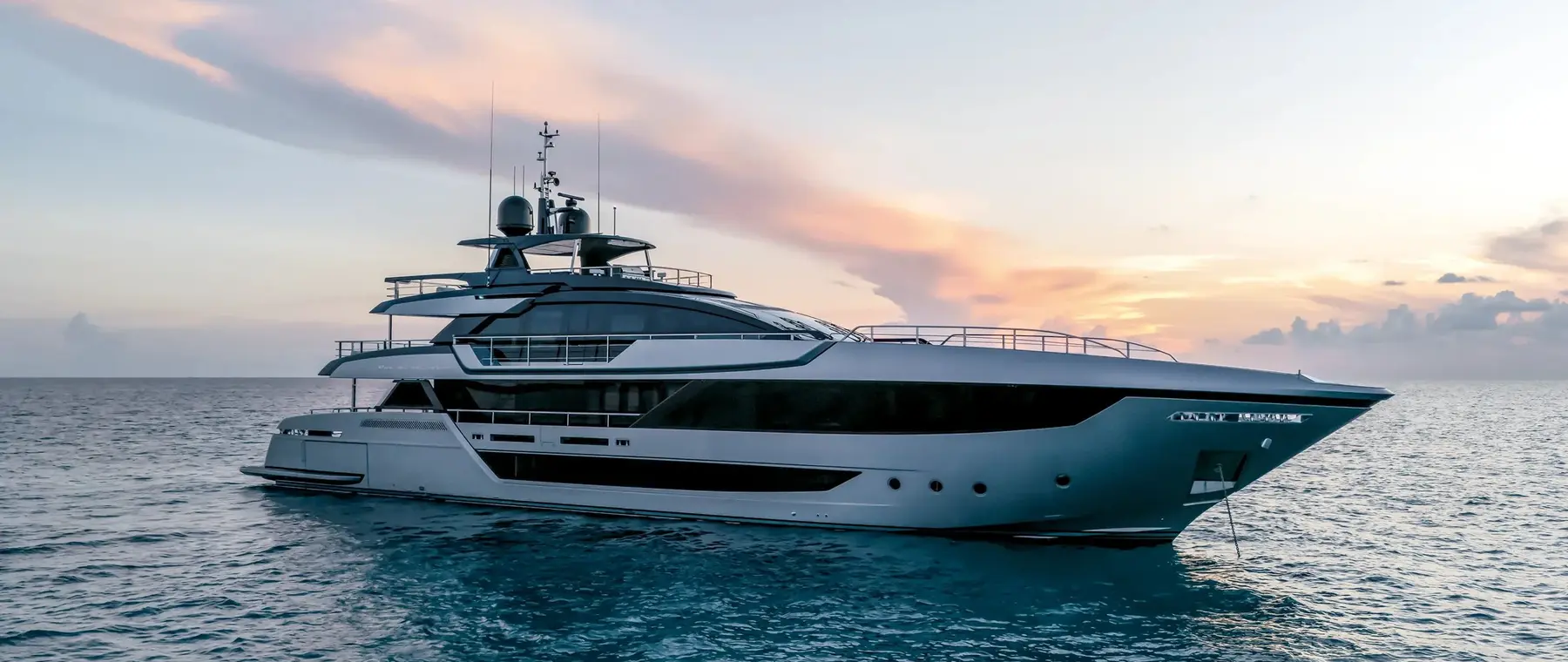
Riva's large-yacht interpretation
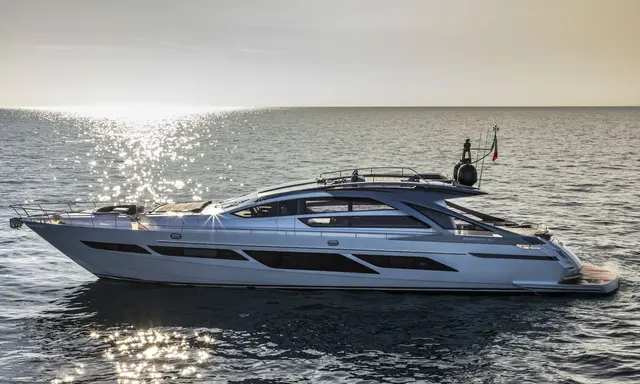
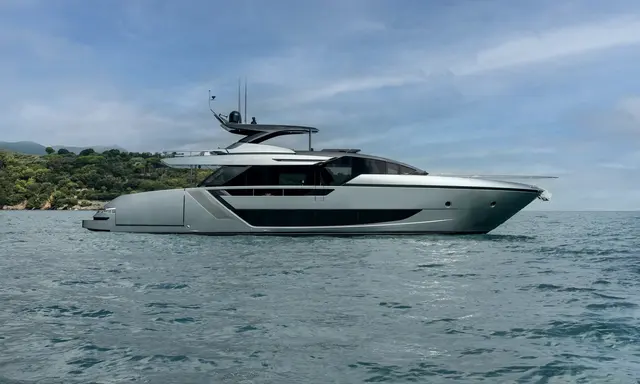
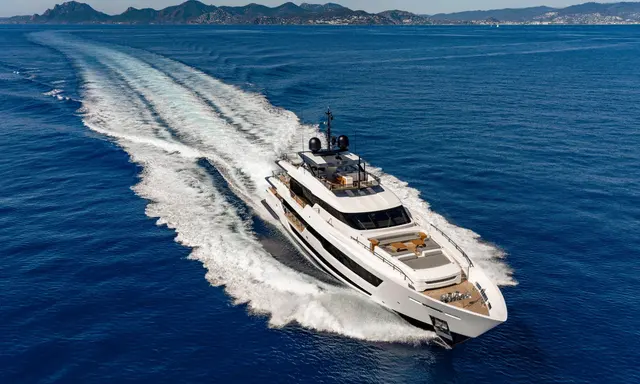
At forty metres, the Riva 130 Bellissima translates the brand's characteristic approach to Italian motor-yacht design into a distinctly larger vessel. It is described by the builder as its first planing flybridge model to extend over three genuine decks, giving the design a more substantial onboard programme than a conventional two-level arrangement.
The full-wide-body concept makes use of the 7.87-metre beam to create generous interior rooms and more complete separation between guest and crew activities. That allocation matters because the owner of a forty-metre yacht is likely to expect comfortable extended stays, not only a dramatic profile at the marina.
Riva's official specification presents the model as an established platform rather than a new October launch. The relevant contemporary story is the way its deck arrangement continues to illustrate changing expectations in the upper end of the planing market.
Three decks with different roles
The additional deck changes how guests experience the yacht, because public relaxation areas can be distributed over several levels instead of concentrated around one flybridge. A family can enjoy an elevated social space while other guests remain near the stern or in a sheltered interior room.
The yacht's broad exterior surfaces also make the relationship between open-air dining, sun protection and access to the water central to the design. Buyers should assess how each deck functions when underway, not only when the vessel is photographed at anchor.
The architecture is a reminder that more decks are useful only when they produce genuine choices for guests and practical routes for crew. A well-designed circulation scheme can make forty metres feel effortlessly spacious, while poor separation would diminish the benefit of the extra volume.
An owner's five-cabin platform
The builder lists five guest cabins and four crew cabins, a distribution suited to private family use with professional service. Exact interior arrangements and optional equipment need to be checked for the individual yacht, as no model brochure can replace the specification of a finished hull.
Riva gives the model's full length as 40 metres and draft as 2.18 metres, dimensions relevant to the ports and anchorages an owner hopes to visit. The 17,000-litre fuel capacity provides a starting point for passage planning but does not dictate a universal operating range.
The full-wide-body structure and glazing are intended to support a refined sense of space inside. Owners should nonetheless consider light control, air-conditioning demands and how the accommodation will work during longer cruises in varying weather.
Performance and ownership decisions
The model's technical sheet lists twin MTU 16V 2000 M96L engines, with a stated maximum speed of 22 knots and a cruising speed of 19 knots. Riva quotes approximately 360 nautical miles at cruising speed, a performance figure that must be read in the context of the maker's assumptions.
For an owner with a demanding itinerary, the key questions include expected consumption at preferred speeds, maintenance support, crew access to equipment and the time required for tender operations. These practical considerations are as important as the yacht's considerable visual appeal.
The 130 Bellissima is ultimately a demonstration of how a familiar brand identity can be adapted to a more ambitious scale. Its combination of three decks, five cabins and planing performance gives buyers another choice between high-speed luxury and the more measured pace of full-displacement cruising.