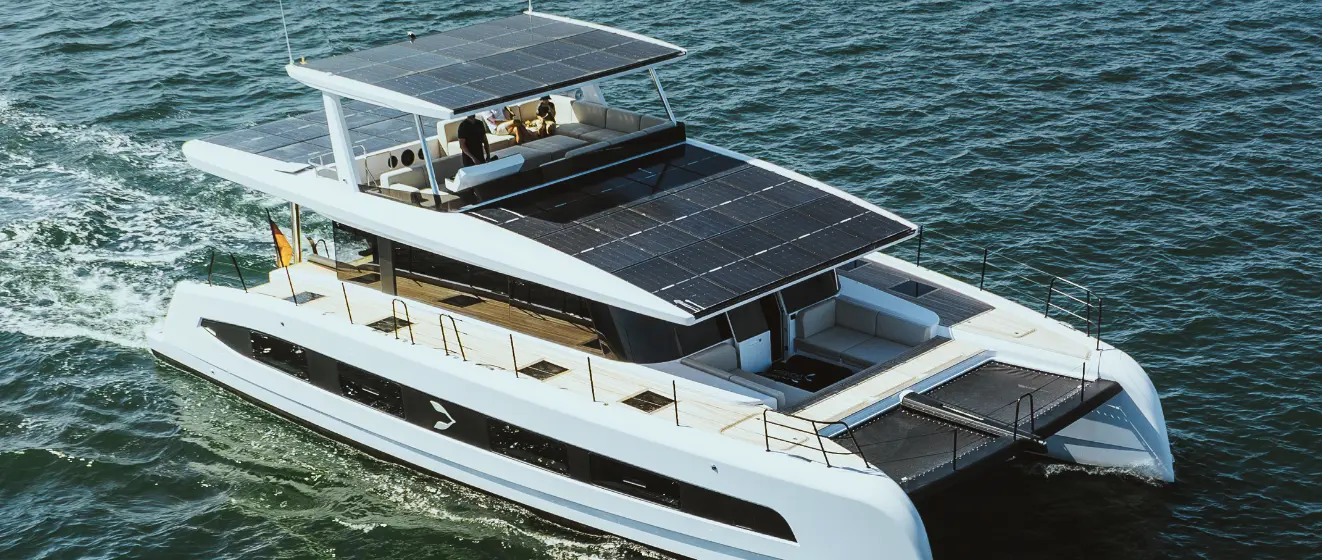
Solar power is integrated into the yacht rather than added later
Pioneer Yachts developed the PY60 around an integrated energy architecture linking propulsion, solar generation and onboard storage. The expansive roof surface feeds a 246kWh battery bank, allowing propulsion and hotel systems to draw from the same coordinated electrical platform.
This matters in the 18-metre market because owners often want longer periods at anchor without continuous generator noise. A large solar contribution can reduce engine hours, improve acoustic comfort and make quiet bays more enjoyable without asking guests to adapt their normal onboard routine.
Measured sea-trial data gives the concept practical context
The builder says recent trials produced an average total motor requirement of 6.75kW at five knots. Estimated electric range is 150 nautical miles at that speed, while continuous APU support can extend hybrid range to around 5,000 nautical miles.
Those figures position the PY60 as a cruising yacht rather than a marina-based electric demonstrator. Owners can use battery power where silence matters most while retaining additional generating capacity for longer passages and less predictable weather or charging conditions.
Cossutti and Ganz shaped the hull around efficiency
Naval architecture and exterior design come from Cossutti and Ganz, with slender waterlines, hull interaction and propeller flow refined through CFD. Pioneer quotes a lightship weight of around 30 tonnes, keeping displacement under control for a catamaran with significant battery capacity.
Efficiency in this size range is not only about fuel cost. Lower resistance can increase range, reduce installed power requirements and create a calmer onboard experience, especially for owners who prioritise steady long-distance cruising over high top speeds.
The layout keeps comfort central to the technical proposition
The PY60 uses a large cockpit opening and one-level transition into the saloon, with panoramic glazing and wide side decks intended to make movement simple. The design team has tried to prevent the propulsion technology from dictating how owners experience the living spaces.
That balance is important for luxury-yacht buyers. Advanced energy systems only become attractive when they improve normal use rather than forcing owners to accept compromised accommodation, restricted storage or awkward circulation in exchange for environmental credentials.
Official sources: www.pressmare.it.