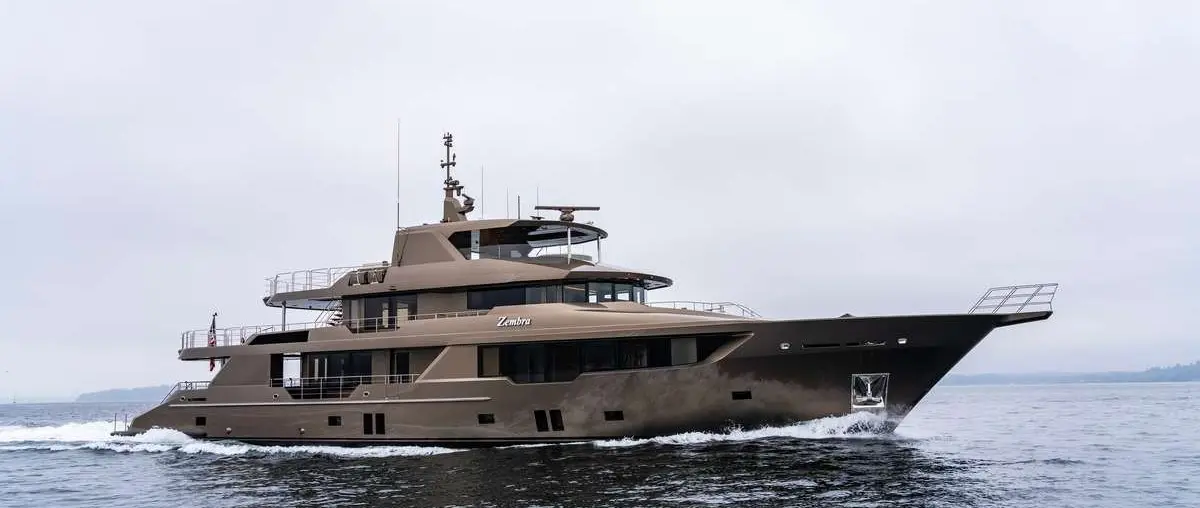
A new custom yacht becomes available
PROJECT ZEMBRA, a 46.3-metre Delta Marine motor yacht completed in 2026, is being offered at an asking price of US$69 million. Burgess says it has been appointed joint central agent for a yacht whose design priorities combine large-volume comfort with an extensive inventory of expedition equipment.
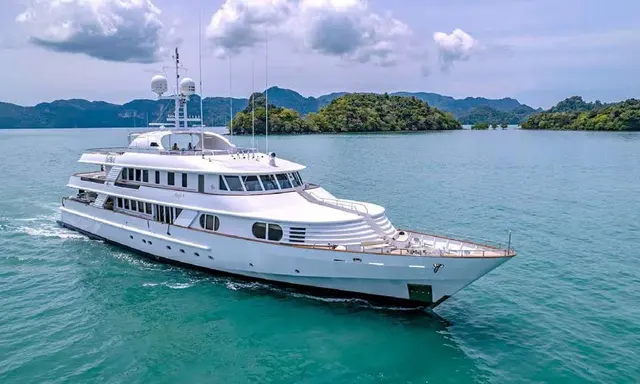
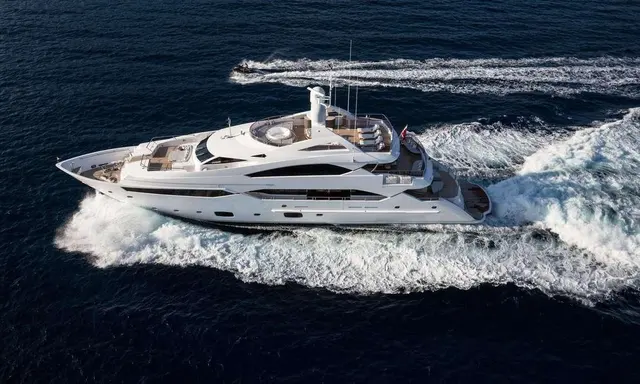
A bronze-toned metallic finish makes the yacht visually distinctive, but the technical and guest-access features are more consequential than the colour alone. The vessel has a full-displacement hull and four decks, with broad glazed areas and long horizontal lines.
A listing this soon after completion presents buyers with a different set of questions from those associated with an older refitted yacht. Commissioning records, warranty assignments, final delivered specifications and any outstanding handover items should be examined in detail.
Accommodation shaped around access
The yacht accommodates twelve guests in five cabins, with a full-beam main-deck master suite and four lower-deck guest cabins. Burgess identifies one of those guest cabins as wheelchair accessible, an important design decision in a category where barrier-free circulation remains uncommon.
An elevator links the decks, allowing greater flexibility for guests who find stairs difficult. As with any specialist accessibility feature, owners should verify dimensions, operating restrictions and evacuation procedures against the needs of individual travellers.
A lower-deck gym can provide additional sleeping flexibility using two pullman berths, according to the brokerage. The actual permitted guest total and crew responsibilities must remain consistent with class, flag and safety documentation.
The indoor-outdoor balance
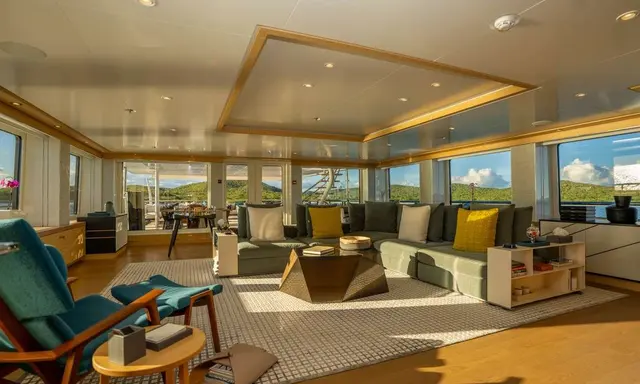
Delta Design Group is credited with the yacht's design, while the interior work involved Roger Thomas, Woogmaster Studio and Delta. The main-deck lounge opens to an aft lounge, encouraging a continuous flow between enclosed comfort and outdoor living.
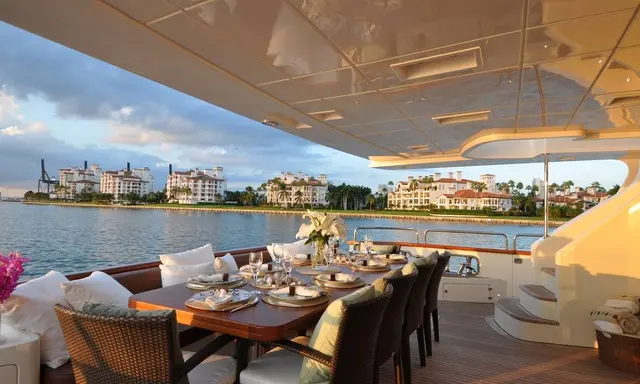
On the bridge deck, a sky lounge is accompanied by outside dining, while the sun deck provides panoramic views, informal seating and a forward jacuzzi. The separate zones offer guests a choice between social gathering and quieter time outside.
This type of multi-level layout works best when service routes, protection from weather and crew visibility have been planned with equal care. Buyers should examine how easily guests can move between entertainment spaces while underway and while the vessel is at anchor.
A serious inventory of water toys
Burgess lists an ICON A5 amphibious aircraft, a U-Boat Worx submersible, jet skis, a Williams tender and a waterslide among PROJECT ZEMBRA's equipment. This is an ambitious collection that creates real logistical demands, not merely a display of optional toys.
The yacht is described as having a substantial boom crane and stern gantry to handle expedition equipment, alongside a designated private helicopter landing area. Helicopter operations and specialist craft use require their own permissions, trained personnel, checks and weather assessments.
Owners attracted by this capability should ask what equipment is included in the actual sale, what training and certification transfer with it and whether support can be arranged in intended cruising areas. Capabilities advertised in a brochure are only useful when they can be operated safely.
Performance and due diligence
The broker reports twin Caterpillar engines and a maximum speed of approximately 15.5 knots. Quantum zero-speed stabilisers and twin watermakers are among the supporting systems described, reflecting the yacht's intended long-range cruising role.
Its price places PROJECT ZEMBRA in a specialised sector of the brokerage market, where an individual owner's equipment requirements can be unusually influential. A serious purchase assessment needs to consider the full operating model rather than the hull and interiors alone.
The currently advertised $69 million figure is an asking price. Independent surveys, legal review and a complete list of the vessel's delivered and included equipment should precede any conclusion about its suitability or value.