A yacht builder steps into top-level racing
HanseYachts AG has announced support for the Germany SailGP Team presented by Deutsche Bank, linking a major production-yacht group with one of international sailing's most visible professional competitions. The partnership was publicised in August 2026 and remains a useful example of how yacht manufacturers connect their brands with elite racing.
The agreement concerns support for the German team, not the development of a new Hanse racing yacht. SailGP boats are supplied as one-design F50 foiling catamarans, and the operating demands of those craft are very different from those of a cruising monohull or motor yacht.
That distinction matters when interpreting technical marketing. A connection to a high-performance race series can generate interest and raise brand awareness, but it does not automatically mean a production yacht incorporates the same foils, construction system or onboard controls.
Sassnitz provided a home-water showcase
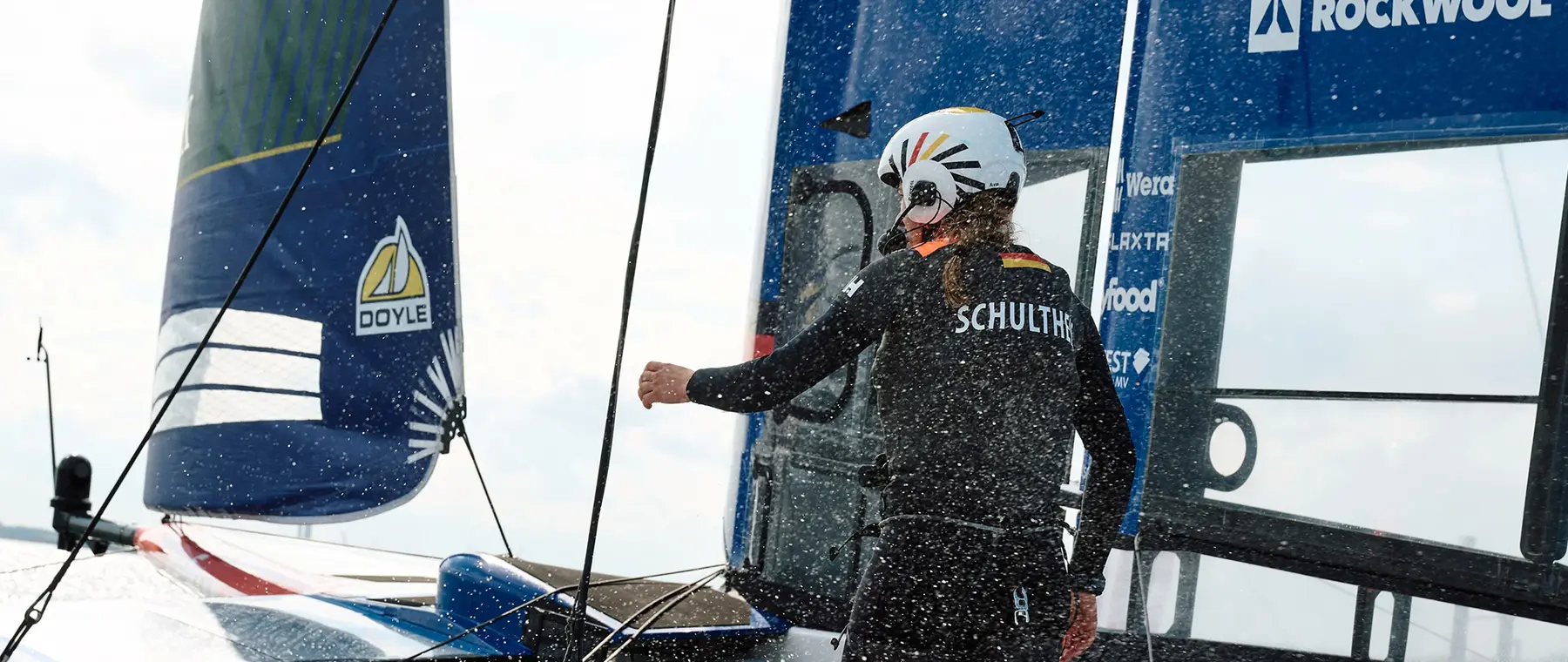
Representatives of HanseYachts attended the ROCKWOOL Germany Sail Grand Prix in Sassnitz on Germany's Baltic coast on 22 and 23 August. According to the company's account, the German crew recorded two race victories across the event, a first for the team in one SailGP weekend.
These are results from the August stop rather than a prediction about subsequent events. The championship's schedule and standings can change as the season progresses, so readers should consult the current series record when comparing teams later in the year.
The Baltic venue gave the German builder an opportunity to engage with enthusiasts familiar with both recreational sailing and top-level competition. For the production-yacht sector, such events can also expose new audiences to brands whose normal customers may not attend a traditional boat show.
Foiling craft and ordinary cruisers serve different jobs
The SailGP F50 class uses hydrofoils to lift the hulls above the water at speed, reducing the drag associated with conventional displacement sailing. The championship describes performance that can approach about 100 kilometres per hour in suitable conditions, underlining the specialist nature of the racing equipment.
A family cruiser optimises a different collection of priorities, including reliability, habitability, predictable handling and systems that can be maintained at a marina far from the factory. The compromises required in the two environments should not be blurred into a claim of direct technology transfer.
Even where racing inspires new thinking, practical changes to production yachts normally depend on engineering validation and cost. Owners should look for documented features and service arrangements rather than assume that a sponsorship itself signals an imminent equipment upgrade.
Brand alignment rather than boat development
HanseYachts' involvement illustrates the commercial attraction of high-profile sporting partnerships. A racing team provides an identifiable story, international exposure and opportunities to meet sailing enthusiasts who may later become customers or brand advocates.
Such exposure can be valuable, yet there is no public basis here for assigning a sales figure or claiming that race wins will convert into particular numbers of orders. The measurable effect of any sponsorship can vary according to how closely it is integrated with dealer activity and owner engagement.
The relationship also demonstrates that the marine industry comprises overlapping communities of builders, sailors, engineers and spectators. Marketing connections between them are common, but each should be reported according to what the companies actually announced.
A wider conversation around sailing
HanseYachts presented its support for the German team as a connection between two very different types of sailing united by enthusiasm for the water. Its original statement included comments from the group's finance leadership expressing pleasure at the crew's Sassnitz results.
An owner considering a Hanse, Moody or another production cruiser can appreciate that sporting connection without confusing it with yacht specification. What matters on delivery day will still be the chosen boat's build quality, suitability for its intended use and available maintenance support.
The development is best understood as a partnership and an August racing milestone, not a fresh technical launch. As the 2026 SailGP season continues, the group's involvement provides an interesting business perspective on the links between professional racing and recreational yachting.