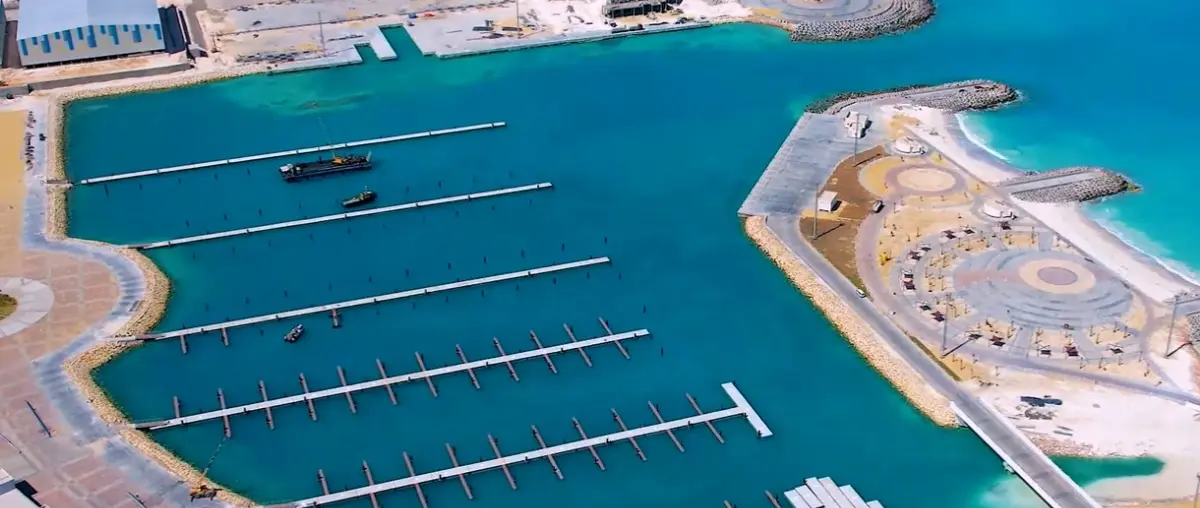
Concrete floating docks mark progress on Egypt's new marina
Marinova Floating Systems has reported substantial installation progress at El Alamein New Marina on Egypt's Mediterranean North Coast. Its September 2026 project update states that all 100 principal concrete pontoons had been positioned within the harbour basin, alongside 59 steel mooring fingers installed across the first four docks.
The work is part of a six-dock arrangement intended to create more than 230 berths for vessels up to 36 metres in length. These are the project's stated future capacities, not confirmation that all berths are operational or that the marina has opened for public bookings.
Marinova combines engineering work in the Netherlands with manufacturing and installation support in Egypt. The project shows how regional expertise and imported design practices can be brought together for marine infrastructure, where materials and construction methods must suit constant exposure to water and changing weather.
What has actually been installed
Each main floating concrete pontoon measures 12 metres by four metres with a depth of 1.6 metres. Marinova describes reinforced concrete suited to marine conditions, an expanded-polystyrene buoyancy core and nominal freeboard of approximately 0.65 metres.
The 59 installed steel fingers are 15 metres long and form part of the berth separation and mooring arrangement at the first four docks. Further installation of 20-metre fingers and remaining services is planned as work progresses towards the marina's full intended capacity.
Shore connections are arranged through six gangways and landing points, while the package includes routes for electricity and fresh water. Safety equipment includes ladders, fire-response facilities, emergency pedestals and provision for pumping out sewage, all of which matter to owners using a harbour for more than a brief stop.
Multiple contractors have different roles
Kased Khair serves as the project's general contractor and is responsible for dredging and piling associated with the fixed harbour infrastructure. Marinova's work focuses on the floating pontoons, mooring fingers and related marina systems, under supervision by the Engineering Authority of the Egyptian Armed Forces.
Rolec is supplying electricity and water pedestals intended for differing boat requirements, including visible energy-meter readings. For owners and captains, reliable shore utilities can reduce the need to run generators while alongside and help clarify the charges associated with an extended stay.
The interface between shore connections and floating structures is particularly important: water levels, movement and expansion must be accommodated without imposing unwanted loads on cables and pipework. Successful commissioning requires the components to operate together rather than merely having the pontoons in position.
A wider effort to attract visiting yachts
Egypt has been developing measures to improve its appeal to visiting recreational boats, including the Sail to Egypt campaign launched in June 2025. A Yacht Single Window is intended to provide a digital route for foreign yacht permissions and procedures, although operators should confirm actual requirements and processing times for each voyage.
The Mediterranean north coast offers opportunities for cruising itineraries, but reliable marinas need more than protective sea walls and a sufficient berth count. Owners will also expect dependable security, customs guidance, repair access and the ability to obtain fuel and provisions.
The photograph used in this report was provided with Marinova's real construction update, showing the ongoing project rather than an invented completed harbour. The announcement confirms progress on the floating infrastructure, while opening dates and final yacht services remain to be confirmed.