A design explanation, not another model launch
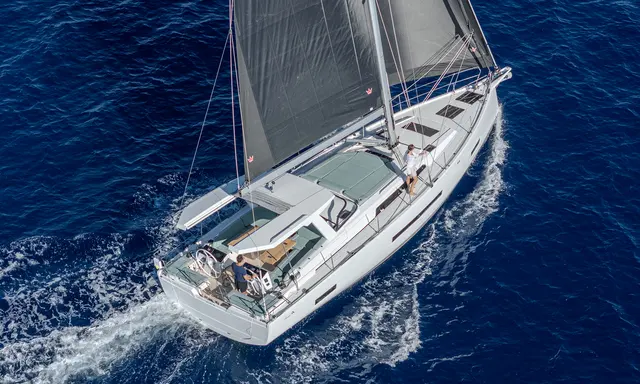
Dufour has published a detailed explanation of five decisions behind the Dufour 41 sailing yacht, connecting its hull form, steering arrangements, sail plan and construction methods. The October 2026 technical account is useful to owners because it describes the compromises beneath the finished styling.
The French builder developed the model with naval architect Umberto Felci and its own design and engineering teams. A yacht in this 41-foot class must balance interior room, ease of handling, stability and performance without assuming that any single hull shape can optimise every condition.
The resulting description should be read as a statement of design intent rather than a substitute for a measured sea trial. Owners comparing yachts of similar overall length still need to check displacement, sailing inventory and the precise configuration of the individual boat.
Beam, bow volume and living space
Dufour identifies a maximum beam of about 4.30 metres and a forward form designed to carry useful volume into the accommodation. Greater beam can make family cruising spaces feel unusually generous for the hull length, particularly when paired with careful placement of berths and storage.
The shaping also matters underway because hull volume and the position of the chine influence how a vessel meets waves and supports its sail plan. A full bow should not automatically be described as faster or more comfortable in every sea state; the outcome depends on loading, wind and steering.
Buyers should look beyond headline cabin counts and inspect standing room, access to lockers, ventilation and the way weight is distributed when the yacht is provisioned. A spacious brochure arrangement can behave differently once water, fuel, sails, safety gear and personal equipment are aboard.
Rudder and keel choices
The builder explains that a deep single rudder is part of the design approach, while owners can choose a standard keel drawing approximately 2.10 metres or a shallower option drawing about 1.75 metres. That choice may be decisive for cruising areas with restricted harbour entrances.
A deeper keel can support different upwind characteristics, whereas a shallower configuration may provide access to anchorages that would otherwise be marginal. Neither arrangement should be sold as universally superior, because sailing efficiency and access requirements differ by owner and by itinerary.
Steering confidence also depends on sail balance and the forces acting on the rudder, not just on whether the rudder is single or twin. Prospective owners should ask to test manoeuvring under engine and sail, particularly when the boat carries the cruising load it is expected to use.
Rigging options and the handling brief
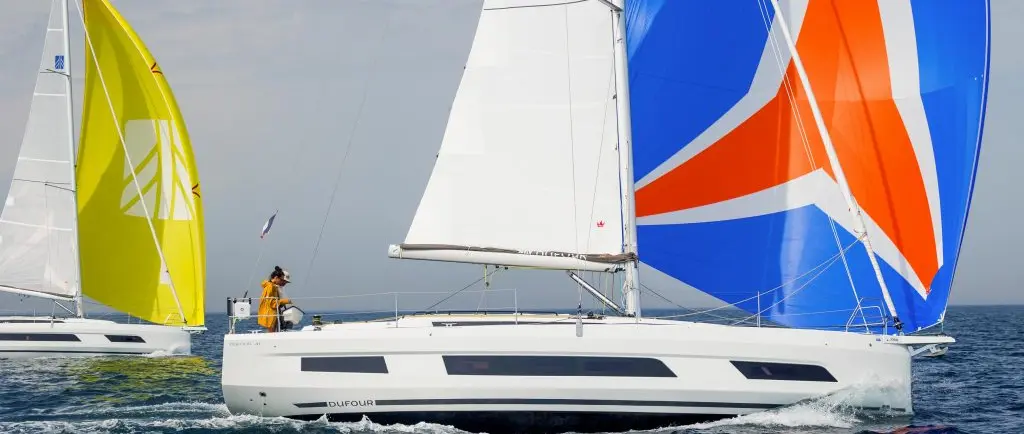
Dufour sets out a sailing arrangement that can include a self-tacking jib or an overlapping genoa of roughly 108 percent, together with downwind sails such as Code 0 or asymmetric options. These alternatives suit owners with different crew numbers and expectations of the boat's performance.
A self-tacking headsail can simplify short-handed manoeuvres, especially when tacking repeatedly in a confined cruising area. A different headsail arrangement can offer advantages in other conditions, but adds sail-handling decisions and potentially more work for the crew.
The designer and yard also considered the mast and interior arrangement together, rather than treating equipment positions and living space as unrelated decisions. For an owner, practical questions include winch placement, sightlines from the helm and whether critical controls can be reached without leaving a protected position.
Structure, build quality and a sea-trial checklist
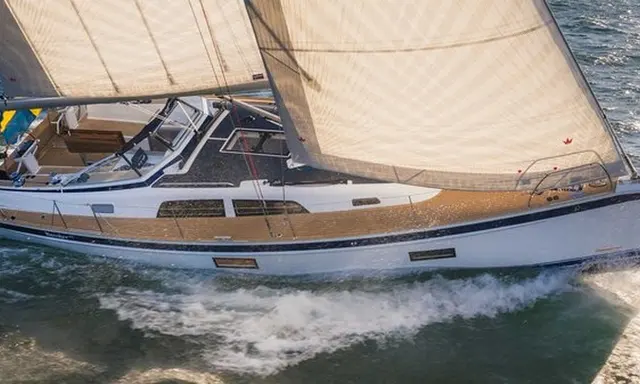
The official description cites vacuum-infusion construction as part of the manufacturing process. Controlled resin use can help a yard pursue repeatable laminate properties, although the strength and longevity of any particular hull still depend on engineering, workmanship and quality assurance.
A technical presentation is most valuable when it leads to specific questions at a viewing. Buyers can ask for construction documentation, keel attachment details, rig specifications, the standard-versus-optional equipment list and maintenance access to pumps and electrical systems.
The Dufour 41's design story is therefore about choices rather than a single headline specification. Its balance of living volume, draught and sail-handling options deserves evaluation on the water, using the buyer's intended cruising grounds and crew capability as the real measures of suitability.