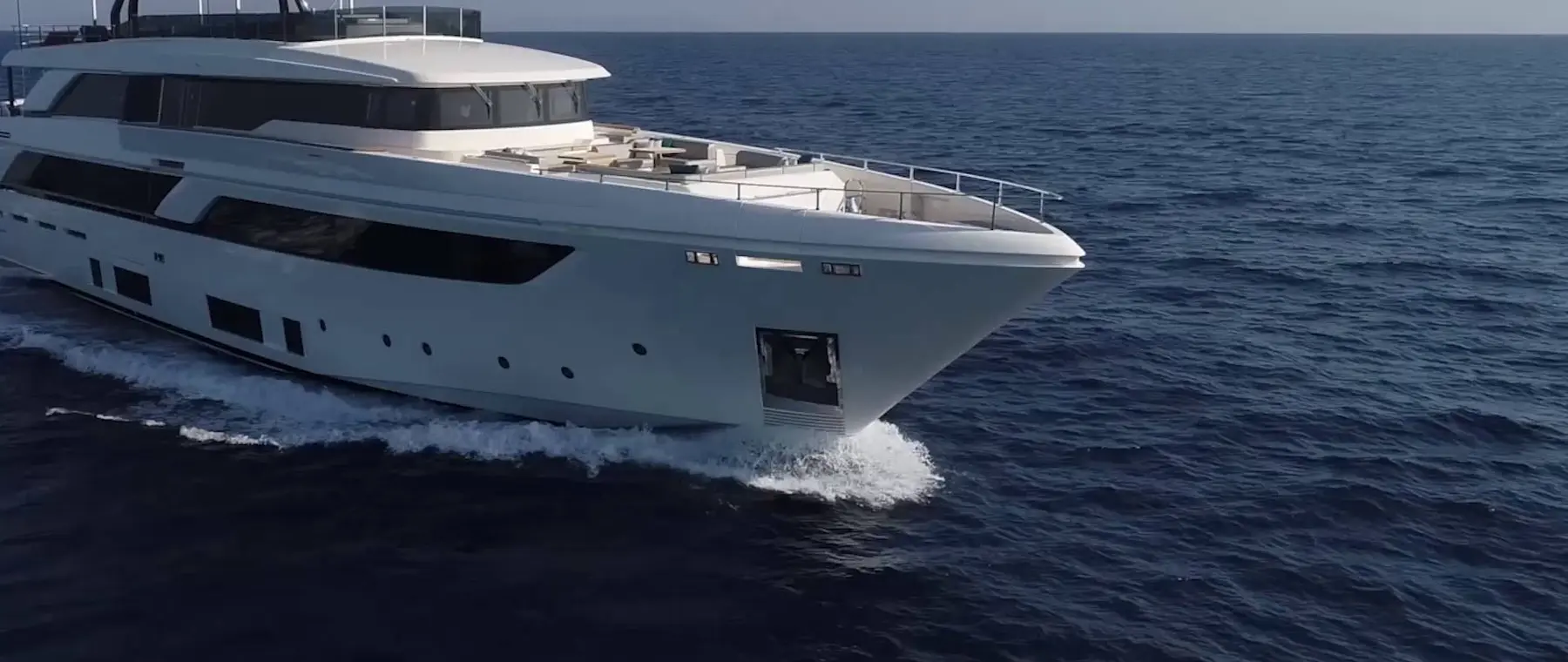
An expedition of comforts rather than compromises
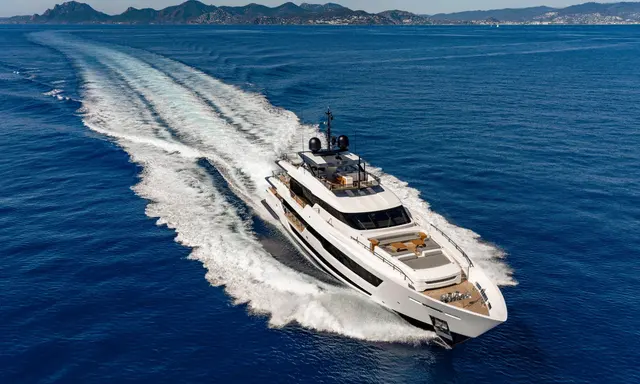
The Navetta 42 sits in a segment where the most telling design question is how comfortably guests can spend weeks aboard. Custom Line's published 41.8-metre length and 8.1-metre beam provide substantial volume for private areas and shared spaces.
Its appearance signals a long-range cruising purpose without adopting the severe look of a working expedition vessel. The yacht instead leans into the Navetta family's idea of measured travel, with accommodation and service arrangements intended for sustained use.
For owners considering an extended Mediterranean season or an island-hopping itinerary, the appeal is as much about living rhythm as about a maximum speed figure. Daily access to the water, quiet overnight arrangements and crew logistics become decisive.
Guest and crew spaces planned together
The yard's layout specification provides five guest cabins and four crew cabins, a distribution that recognises hospitality as an operational task. A large yacht may promise privacy, but the quality of that privacy depends on how efficiently provisioning, cleaning and service can happen behind the scenes.
A broad beam also matters in the social areas, where furniture can be organised as purposeful seating groups rather than simply filling a long corridor. Separate exterior spaces give guests reasons to move between decks as light and wind change.
Owner inspections should focus on how those areas work together under way as well as at anchor. A glamorous aft-deck table means less if getting from the galley to the dining area demands awkward service routes.
Range is a matter of operating discipline
Custom Line's technical literature describes an economic range of around 3,000 nautical miles at the stated economical running condition. It is a meaningful design reference, but actual passage planning must incorporate reserves, weather, speed, hull cleanliness, machinery condition and the chosen hotel load.
The same published information gives fuel capacity around 37,000 litres and freshwater capacity around 4,000 litres. Neither capacity should be translated directly into an advertised number of carefree days without examining the crew and guest demand.
The use of Caterpillar propulsion and a full suite of auxiliary systems also makes machinery access and service planning essential to the ownership discussion. A long-range yacht is only truly persuasive when its maintenance regime is realistic for the ports it will visit.
A deliberately measured pace
The stated performance envelope reaches about 15.5 knots maximum and 13 knots cruising, while the longer-range philosophy comes into its own at a lower economical speed. This is not a yacht whose main proposition is arriving ahead of every planing competitor.
Its appeal is a more composed approach to travel, in which guests can keep their preferred private routines while the vessel moves between destinations. That can be valuable on itineraries designed around remote anchorages and longer passages.
For prospective owners, a comparison between the Navetta 42 and faster vessels should include more than headline knot figures. Cabin separation, deck shade, service access and real-world fuel planning help determine which yacht will be more enjoyable long after the initial sea trial.