A modern hotel inside an older Roman story
Thompson Rome opened on 27 October 2026, marking the arrival of Hyatt's Thompson Hotels brand in Italy. The 69-room property occupies a reworked 1940s building on Via delle Botteghe Oscure, a street within walking distance of some of Rome's most important historic sights. This is a different proposition from a resort where guests spend the entire day behind the gates: here the pleasure is to step from a contemporary hotel into a city whose history is visible at almost every turn.
The location is close to Piazza Venezia and within walking distance of the Roman Forum, Pantheon and Colosseum, according to the company's opening announcement. That gives guests a realistic opportunity to structure a day around neighbourhood walks, museums and a long lunch without moving repeatedly across the city. The hotel is nevertheless in a busy urban environment, so travellers should check taxi access, luggage arrangements and the best walking route rather than assuming every journey is equally convenient.
Architecture with rediscovered art
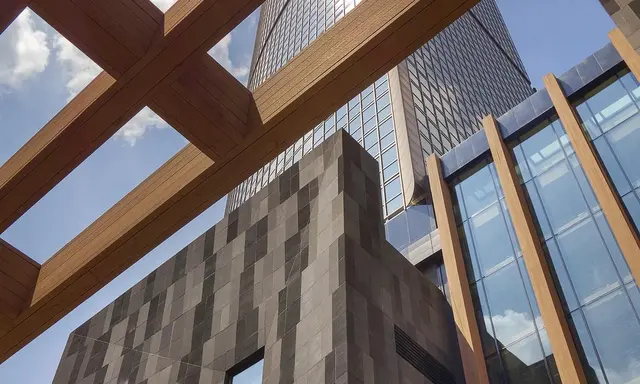
Hyatt says the renovation retained an original sweeping marble staircase and restored the presence of works by Italian artist Gio Pomodoro. A sculptural wall and inlaid floor, hidden for decades, were rediscovered and made visible again. Their preservation provides a meaningful design story, because the building did not need to erase its previous life to become a contemporary hotel. Guests can encounter original artistic elements alongside newly created furnishings and materials rather than a pastiche of historic Rome.
That balance is difficult to achieve in a city where almost every street has an established architectural language. Thompson Rome uses warm, natural materials and custom details to connect the rooms with a residential sensibility. The building's character is not simply a visual marketing device; it shapes circulation, sightlines and the experience of moving from the entrance to a guest room. The best way to appreciate such a hotel is to notice both the preserved components and the deliberately modern additions.
The accommodation is deliberately intimate
With 69 rooms and suites, Thompson Rome is relatively small by the standards of a major international hotel brand. Hyatt identifies 19 suites, including layouts with patios or terraces and a 104-square-metre Thompson Suite with a private terrace of roughly 80 square metres. Those proportions create distinctive options for guests who value outdoor space in a dense city. Not every room includes a terrace, however, and a photograph of the flagship accommodation should not be mistaken for the standard offering.
Some guestrooms overlook Via delle Botteghe Oscure, while others face Rome's historic rooftops or adjoining buildings. The precise outlook may be important to a traveller celebrating a special occasion, particularly if a private outdoor area is part of the appeal. Before booking, guests should confirm the named suite category, balcony access and whether the view is from the bedroom, terrace or a shared hotel space. A thoughtful room choice can transform a brief Roman stop into an extended city retreat.
LYVE brings the Mediterranean to the table
The hotel's principal restaurant, LYVE, is led by Executive Chef Fabio Fioravanti, who brings international kitchen experience to a menu grounded in Mediterranean ingredients. Hyatt's opening statement emphasises fish, shellfish and dishes that revisit coastal traditions with contemporary technique. That culinary direction gives Thompson Rome a natural connection to the wider Mediterranean lifestyle, even though the property itself is not on the coast. For guests arriving from a yacht holiday, the food may offer a familiar link between sea and city.
The chef's background includes experience with the Alain Ducasse group and at Le Louis XV in Monte Carlo. That pedigree can shape expectations, but the new restaurant deserves to be judged on its own service, ingredients and atmosphere. Guests should consult current menus and reservation conditions before deciding whether LYVE suits a quick business dinner or a long celebration. A new hotel restaurant will also develop its identity as local diners discover it, so repeat visits may reveal an evolving experience.
A rooftop above the Roman streets
LYVE Rooftop provides a second perspective, pairing city views with cocktails, aperitivi and food intended for sharing. It has the potential to become the hotel's most memorable social space because Rome's roofs tell a story different from the one seen while walking at pavement level. Guests may choose to arrive before sunset and stay as the city changes colour, though terrace access and the availability of outdoor seating remain subject to weather and the venue's own operating policy.
A separate Lobby Lounge supplies a quieter all-day meeting point. These three distinct food and drink areas suggest a hotel designed for more than simply sleeping between sightseeing trips. An afternoon coffee, a relaxed dinner and an evening above the streets can each take place within the property. That convenience is attractive, but it should not become an excuse to miss Rome's neighbourhood restaurants and public spaces, which remain a large part of the reason for coming.
A new base for discovering Rome
Hyatt also describes cultural programming that will connect guests with the city's creative community. Among its proposed experiences is a photography-led encounter called Empire of Light, using a viewpoint from the hotel's seventh floor. As with any announced programme, a prospective guest should verify dates, prices and availability rather than assume it is included in the room rate. These curated options may be especially useful to repeat visitors seeking an angle on Rome beyond the standard monument tour.
Thompson Rome's opening adds a modestly scaled, art-conscious address to the capital's hotel selection. Its strengths appear in the relationship between location, preserved artwork, substantial suite options and the rooftop. A traveller who wants to explore on foot while returning to a deliberately designed urban residence may find that mix compelling. The sensible next step is to compare individual room categories and restaurant availability against the dates of the intended visit.