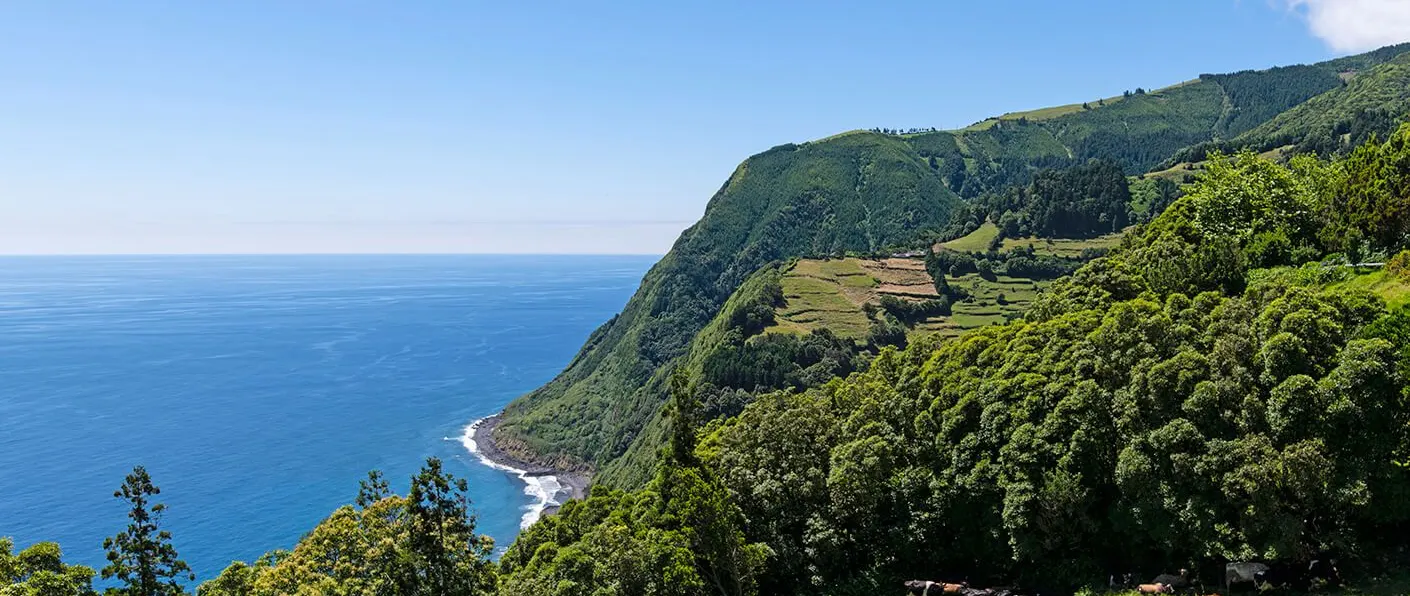
An Atlantic arrival with a different idea of luxury
The Azores do not attempt to compete with the Mediterranean through crowded beach clubs or a procession of fashionable waterfront boutiques. São Miguel offers a different reward for a yacht arriving after days at sea: volcanic landscapes, gardens nourished by Atlantic weather, and a compact capital where a proper shore day can begin almost as soon as lines are ashore. Ponta Delgada places the yacht within reach of an island whose most memorable attractions lie inland rather than on a conventional resort strip.
For an owner or charter guest, the pleasure is the contrast between the precision of a port arrival and the freedom of a day devoted to nature. One morning may begin with harbour activity, coffee and a slow walk through Ponta Delgada. Another can unfold among crater lakes, mineral-rich thermal waters and gardens. The important distinction is that these are land excursions from a maritime base, not promises of sheltered coves where any private craft may anchor without local guidance.
Ponta Delgada as the practical yacht base
The Azores' official tourism authority identifies Ponta Delgada Marina as an established facility for cruising yachts, while the port authority publishes detailed information for visiting skippers. The marina is within the city's commercial waterfront and is connected to the wider Portas do Mar development, which includes transport, leisure and passenger facilities. That combination is valuable after an ocean passage because provisions, shore transport and somewhere to unwind are within reach without immediately moving the vessel to another island.
Portos dos Açores describes the marina as having 640 berthing places divided between an older eastern area and the western Portas do Mar facilities. Those overall numbers should not be mistaken for a guarantee that a large yacht will be accommodated on a particular day. A captain needs a berth confirmed against actual length, beam, draft and service requirements, especially during periods of high demand or unsettled conditions. The official port authority remains the right source for access instructions and current operational limitations.
The port authority specifies a low-speed harbour environment and gives an approach description that matters to the bridge team. Such details belong in the captain's passage plan using current nautical publications and port advice, not in a leisure article used as a substitute for navigation directions. Guests can still appreciate the setting: yachts share a working Atlantic waterfront with ferries, commercial traffic and a capital city. It feels like a genuine maritime stopover, rather than a purpose-built private enclave separated from local life.
A slow city morning before heading inland
Ponta Delgada is a good place to reset the pace after the formalities of arrival. The waterfront offers a sequence of promenades, places to eat and views across the harbour, while the surrounding city invites exploration on foot. A well-designed shore programme does not need to rush guests directly into a vehicle at sunrise. Giving the first part of the day to the city creates room to recover from a passage, check the weather and tailor the rest of the visit to everyone aboard.
Restaurant choices and private transfers are best confirmed locally instead of relying on a generic list that may be out of date. A charter party may want a guide and a carefully arranged lunch, while an independent owner may prefer simple food and time to wander. Neither approach requires treating the Azores as a set of photogenic stops to be completed at speed. The waterfront is an introduction to São Miguel's character, and a useful reminder that this is a place where maritime life remains part of everyday activity.
Furnas: geothermal landscapes and gardens
The Furnas Valley provides one of São Miguel's most distinctive excursions, shifting the day's scenery from sea level to a volcanic interior. Visit Azores describes the valley's steaming springs, crater-lake setting and continuing geothermal activity. The sulphurous air, warm ground and visible vapour make this more than a scenic viewpoint; they reveal the processes that shaped the island. An experienced local guide can explain the landscape and adjust an itinerary around weather and suitable walking routes.
Terra Nostra Park is a compelling centrepiece for guests interested in gardens and wellness. Its operators describe historic botanical grounds and a thermal pool, while the official tourism authority highlights the collection of trees and the visitor experience. The attraction has its own admission rules and opening times, so a shore coordinator should check the garden's current booking information before setting a departure. Warm thermal water may appeal after a passage, but travellers with medical concerns should seek appropriate advice before entering any geothermal pool.
Plan the visit as an unhurried walk with a choice of restful stops rather than a race between dramatic landmarks. Rain, mist and shifting Atlantic conditions are part of São Miguel's character, and they can transform the atmosphere of the gardens. Comfortable shoes, clothing that tolerates showers and a dry change for anyone using a thermal pool make the day more pleasant. Guests who do not wish to bathe can still enjoy botanical paths and the experience of being surrounded by a lush volcanic landscape.
Crater-lake viewpoints and the weather question
São Miguel's lakes and high viewpoints create another contrast with the busy harbour. From the island's elevated landscapes, green slopes and stretches of freshwater reveal a geography that may be difficult to imagine from a yacht's deck. A private guide can choose between the western Sete Cidades area, viewpoints nearer the centre and other stops according to time and conditions. It is more rewarding to see one area in good visibility than several ridges hidden in fog.
A captain will recognise the same principle ashore as at sea: weather is part of the itinerary, not an inconvenient interruption. A forecast that allows comfortable mooring in Ponta Delgada does not automatically mean clear skies over the crater rims. Private transfers and guides should have an alternative route ready, and guests should resist the temptation to demand every landmark regardless of conditions. Flexibility is a luxury in its own right when visiting a mountainous Atlantic island.
Private charters, licences and responsible wildlife encounters
The archipelago's tourism authority describes a range of local sailing and motor-boat operators, including skippered charter services based on São Miguel. For visitors arriving without their own vessel, an appropriately licensed operator can offer a different view of the coast. Yacht guests interested in a shorter local excursion should still ask about conditions, vessel capacity, safety equipment and the permitted route. The presence of a marina does not make all waters equally suitable for a casual excursion.
The same care applies to marine wildlife watching. Observing animals should never become a promise of close encounters or guaranteed sightings, and guests should choose experienced operators who follow local requirements. The Azores are attractive precisely because the sea is active and conditions can change. A thoughtful excursion allows the crew to make the safe decision, including shortening a trip or remaining in port when weather or wildlife considerations demand it.
How to make a yacht stay genuinely memorable
A sensible two-day call might reserve the arrival day for port formalities, city exploration and a relaxed evening near the waterfront. The following day can be devoted to Furnas, Terra Nostra and a limited selection of viewpoints, allowing enough time to return to the yacht without making the transfer feel rushed. A longer visit creates the possibility of splitting botanical gardens, western crater lakes and a coastal outing into separate days. None of these combinations should be treated as a rigid timetable.
Before departure, the captain should confirm the next port, suitable weather window and the marina's operational information directly with the authorities. Shore staff can then reserve transport, check venue opening hours and align guest preferences with a realistic itinerary. São Miguel rewards that preparation: its appeal comes from the meeting of an Atlantic cruising culture and a fertile volcanic island, where understated experiences often make a stronger impression than a highly choreographed display of luxury.